
Yes it was Albert who said: I would spend 55 minutes defining the problem and then five minutes solving it – not.
You’ll not need even five minutes of flat simple search to discover that most probably, this either was in ‘Source: Private conversation’ or ‘[debunked]’. The same with Abe Lincoln’s Give me six hours to chop down a tree and I will spend the first four sharpening the axe. which is close but upon closer inspection, is just that slight little different – but also valid, in the same sphere.
But if we’d ask either or some LLM whether their statements hold true today, they’d all agree. Since that is what’s happening in the LLM space with search-character prompts: On-going refinement of your context definition(s) till finally, you get the answer you were looking for anyway and that could have been solved with a straightforward search. Though with a well thought-out one, as the sayings advise.
Which, in particular in the prompting/context case, aligns with the Deming ‘method’ of continuous quality improvement that has been debased to mere Plan-Do-Check-Act organizational slop. But still – at the level of LLM inquiry, this works as it ever would have: By having an idea (Plan), trying a prompt (Do), seeing that it didn’t deliver (Check) and tuning our context within the very question or in refinement of the ‘in-line’ context-setting statements (if these two aren’t equivalent, there’s something wrong with the model) as the Act part, we can gain in quality of the answer we get.
Where of course the scene-setting context statements are halfway railing-in of the context in quite the same way as a good ‘architectural’ design of the solution space will help your problem definition down the funnel of viable solutions; pre-empting trying just anything as solution. The better you are at this, the less you need prompt cycles down a rabbit hole. No use laying out half of all parts of a car, and then near-infinite-improvement-cycle assembling your way to a perfect car.
Somehow, this seems to align with simple text lay-outing as well. If you do an extensive CSS design, you’ll have less need for all too extensive ad hoc inline styling and coding. As with all coding: Start wide-net and get mostly-garbage; start boxed-in and you’re halfway there. Still needing PDCA rounds, though.
And as a side note: the Law of Requisite Complexity will in the case of software development require requirements setting to handle more bandwidth than the most lean and mean solution as generated, will deliver. To correct (loosen up!) through appropriate problem definition(s)… almost going the wrong way of tying down your LLM answers’ narrowing down.
But the reason all those big SAP projects got derailed: Started off with too narrow functionality definitions, plus all the Mandatory changes in the course of the years implementing, plus the static character of the v0.01 requirements (due to the volume, necessarily fixed at some point), plus the world that changed ever faster around the system… Onto Low Code / No Code we went. More flex, but still…
The same, now with the magic of quick results — sped-up v0.01’s.
Towards the quotes; the sharpening of the context as of the axe, the time spent contexting and re-prompting eerily similar. The results, often, still going into the camp fire (or burner; not all nerds are outdoorsy types) and the five minutes could be underestimated once the token processing starts in earnest.
There’s the analogies, or congruences you needed. And a debunk of the quick-result dream of prompting – Einstein still holds, Abe is cold on average.
Now what?
Well, now you’ll see why it’s not about letting end users just fiddle around with generic IP-/secrets-leaking LLMs but about hiring professionals to haul you through the nitty-gritty of building serious ‘AI-driven’ applications to transform your business processes and your business altogether. I know a couple…
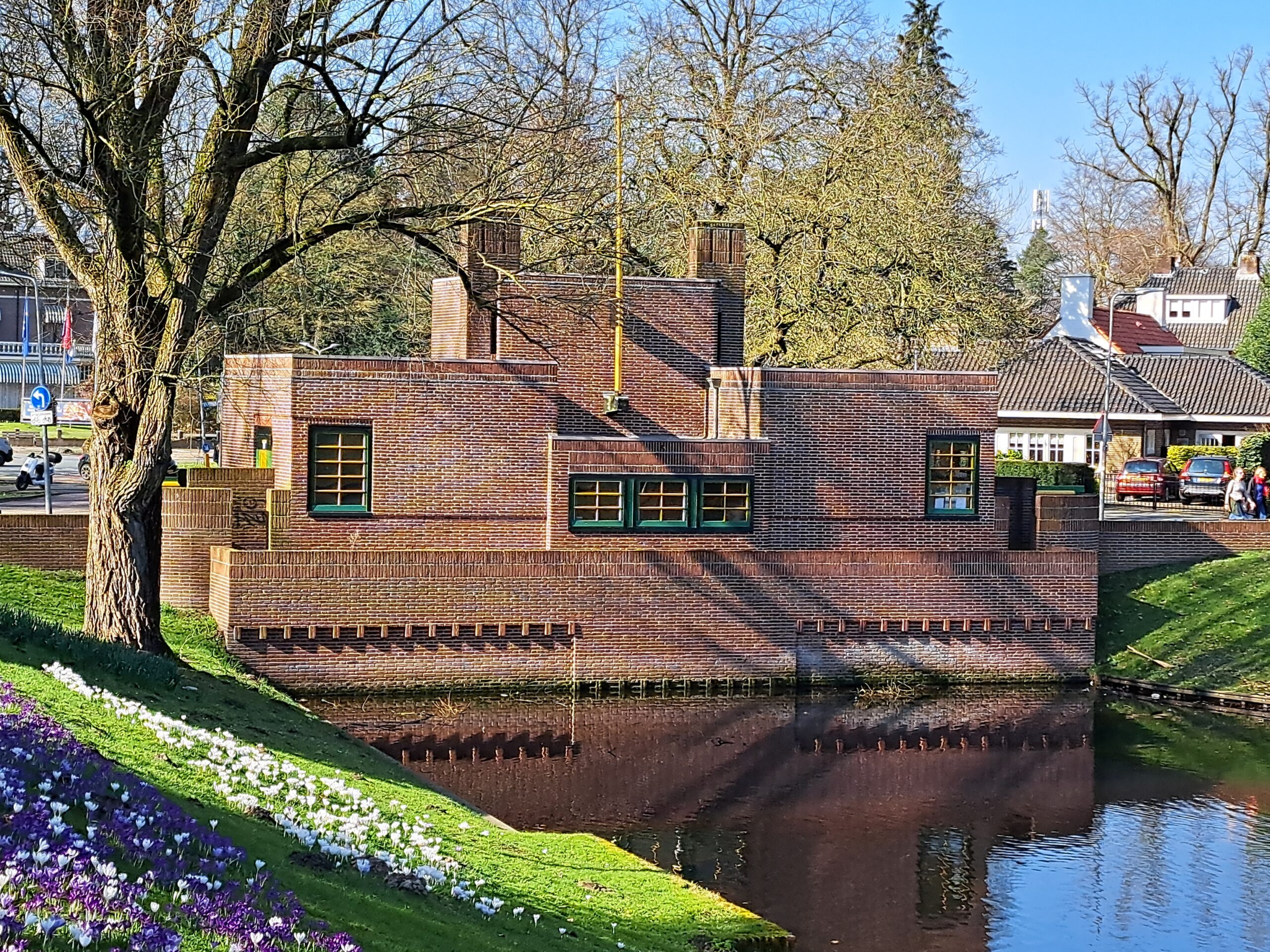

Contemporary old and new, so close by. Park, no parking.