Just a note that the world is in great need for more on Dunbar’s numbers in antidote to totalitarian-bureaucratic compliance efforts.

Nah, wanted to, but have more urgent issues to discuss. E.g., tomorrow. See you then!
Oh why did we think that mere straightforward compliance with one definitive set of rules (however principled, or detailed) would achieve anything worthwhile ..?
Why didn’t we consider the inherent, innate beauty of variance and variation, beyond mere secondary usefulness in resilience/robustness ..?
Because reasons. The perennial one being Fear, probably. Fear of uncertainty. As there’s downside risk in that. Where all the risk management still focuses on. Yes, no, no denying that; all models still have any ‘impact’ of any ‘event’ as a single negative number. If (in the every-part-but-when sense) we would inculde positive, good possibilities and outcomes to count as well, wouldn’t we end up with zero average impacts in many places ..? Like the great many places where non-compliance is conscious just because the enterpreneur wants to achieve something worthwhile hence other than compliance ..?
But what if we turn risk management into the brushing off of the rough edges of beautiful sculpturing that enterpreneurs and true managers do ..? Chiseling away grey/gray unusable material to keep the beuatiful statue that was in the stone already to be released ..?
Those that want nothing to bloom may await nothing but their ignomous and insignificant death. In the mean time, don’t bother the one sthat want to achieve something, please.
After which I remind you: That’s all secondary talk. Primarily, seek the beauty of variation for its own richness. Hence:

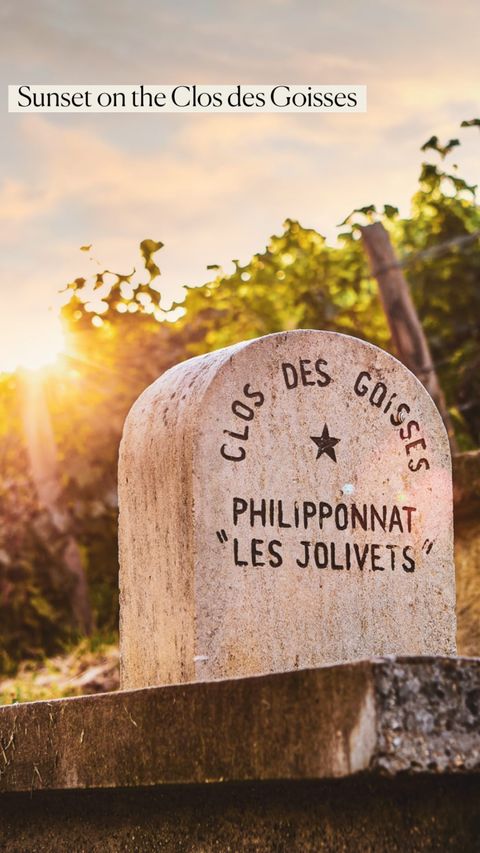
[The view from my field office, once. Y2K was a party on St. Lucia…]
I was recently informed by a respected colleague in a peer-to-peer discussion (see; they’re useful!) about a development of his in the Compliance arena.
About not having just one single Statement of Compliance that all too often wipes deficiencies under the rug for the sake of agreement everywhere. But having two, one on (first-lines’) management awareness of deficiencies as things to actively manage and actively discuss with second and third lines, and one on abstract, ‘anonymous’ no-blame control effectiveness.
So, when the Three Lines of Defense would actually work (yes I’ve ranted against that on this blog frequently as the simpleton approach inherently can’t work!), first-line management can provide their own list of control deficiencies, and the second and third lines can only confirm and not add much of at all. Then, the first line is in control (all is well and/or known-and-WIP), over their own stuff. Hence, awareness ✓ effectiveness X. When the first line doesn’t have much but the 2nd/3rd lines add quite some (other) things, awareness is X and effectiveness is undetermined. Only when the first line doesn’t have much and the second/third lines cannot add quite a few things, will awareness be ✓ and control effectiveness be ✓
Which sounds like a far better, and in practice far better palatable approach than just one messy jumble-together undetermined opinion. For which I leave you with:

[The bus buck stops here at this chaotic (?) shelter; Aachen. In Control statement: similar]
In assessing ‘compliance’ of your … [fill in the blanks and then colour the picture], do you actually go for correct set-up and design, and operating effectiveness ..?
If so, you’d be ready when the design is suitable.
Though a great many of you would still consider operating effectiveness proven by repeated measurement and establishing everything runs smoothly according to procedures, including the capture and re-alignment of exceptions.
But you would be wrong. That’s just verification in the weakest form.
Actual operating effectiveness would have been dictated (meant literally, not ‘literally’-figuratively) by an appropriate design. The design should be such that there is no way in which, e.g., any transaction could escape procedures, ever.
Which would require very careful study of procedures, the result of design. Which would fail when the design wasn’t aimed for totalitarian control. Which is the case; the design almost always is focused on obtaining the most basic of functionalities of a system – that includes catering for some exceptions, the bulk of the foreseeable ones; at most – not capture all and everything as that would indeed be impossible ex ante. Hence, the inherent impossibility of total operating effectiveness. There’s always unheard-of, thought to be impossible exceptions at the lowest levels of detail. (Let alone in the infrastructure on which any system would have to run, at about all abstraction layers of ‘system’ that one can study.) And there’s Class Breaks, and penny-wise but pound-foolish type of ‘exceptions’ at higher abstraction layers (all the way up to ‘the CEO wishes this. He (sic) only has to wish for it to be done already’).
So, already in the design phase, you know to fail at Operating Effectiveness later, however perfect you think you’re doing. And you delude yourself further if you’d think that the design will be implemented perfectly. On the contrary, in the implementation the very reality will have to be dealt with, where the nitty-gritty will derail your ideas and something that is a bit workable at all, will be the most you can achieve. Always, ever.
Hence there too, you lose a lot of ‘perfection’.
Whihc may show in operations or not. If you don’t look careful enough, you might arrive at a positive conclusion about somewhat-effective control operations. That has little to do with effective operations by the way; the latter (client service) being greatly disturbed by your ….. (insert expletive describing subpar quality) controls.
If you look careful enough … you don’t even have to; just point out where controls didn’t operate effectively and qualify that as total SNAFU.
Oh yes, in theory (contrasting practice) it just might work, by having all sorts of perfectly stacked control loops on top of control loops (as detailed here) but these have their leakage and imperfections as well and would have to be infinitely stacked to achieve anything approaching closure so nice try but no cigar.
Conclusion:
Set-up/Design and Implementation are everything, Operating Effectiveness follows: OE fails logically.
ISAx Statements Type I or II: Logically inherently deficient hence superfluous money- and paper waste.
Revert to Understanding and opining on your guts. It takes guts, yes, as risky as that is, but pretension of logical reasoning and/or sufficiently extensive proof-of-the-pudding auditing (on the paper-based pudding …) cannot but fail: Non-compliance found: negative rating; no non-compliance found: failed at the task.
I’m done now. For you:
[Just a side corridor, neatly controlled (for!) decoration]

Just a note: Why do we see so many sites, posts, models, templates how to organise innovation ..?
Wasn’t Innovation about not being squeezed into models or templates ..?
Or are the ones actually innovating, not interested and the ones that are, not innovating ..?
I’ll come back to this later, if needed. For now:
With all the discussion on the future of work, and how finally! we would be able to do ‘only’ creative, (physically/mentally!) non-repetitive work and/or where and how jobs for that could be craeted or would we all be doomed to be some (un/underpaid) Leisure Class, I suddenly realised:
The future of work depends very much on your myopia of what all ‘workers’ would want.
As about 60%+ of ‘workers’ at all levels of intelligence at/of work including pure mental, knowledge workers, would prefer simple 9-to-5 type jobs, with the predictability and security it brings (requirement…). Established per hard science. Only 40% or less actually wants the wild, the change, the uncertainty-is-beautiful.
So, will 60%+ not be able to make the transition or only not want to and maybe be able to after sufficient pressure is applied ..?
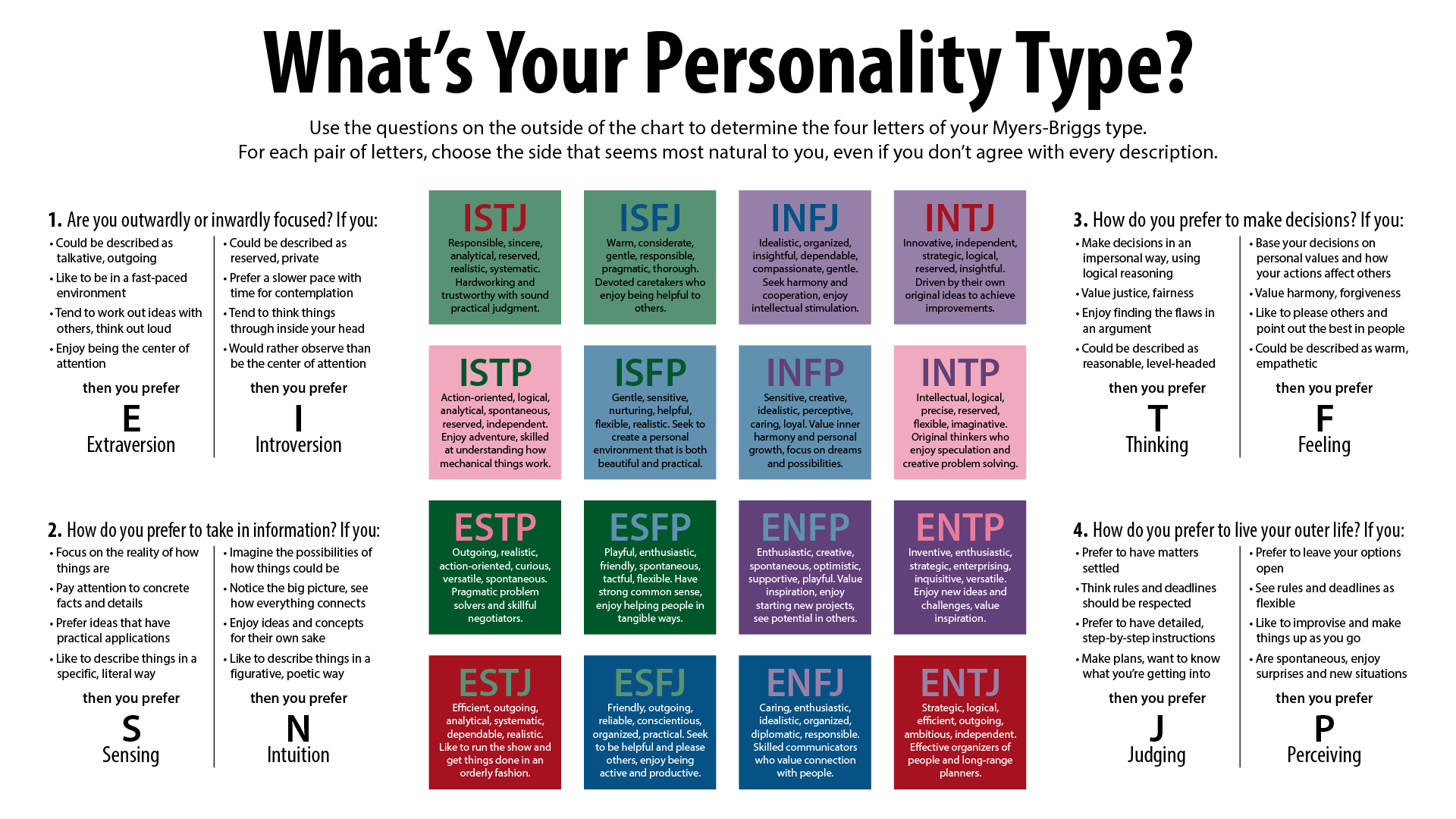
Which brings me to the find I did. Myers-Briggs.
Yes, yes, it indeed is discredited by some, to some extent. But it’s still the most recognised, most recognisable and easily applicable method to establish one’s own interests [with inclusion of the caveats and recognition of its time dependency and outcome variability]. I mean,

Is easily assessed (though I’d recommend the more extended questionnaire versions, e.g., from some books). And personally attempted-falsified.
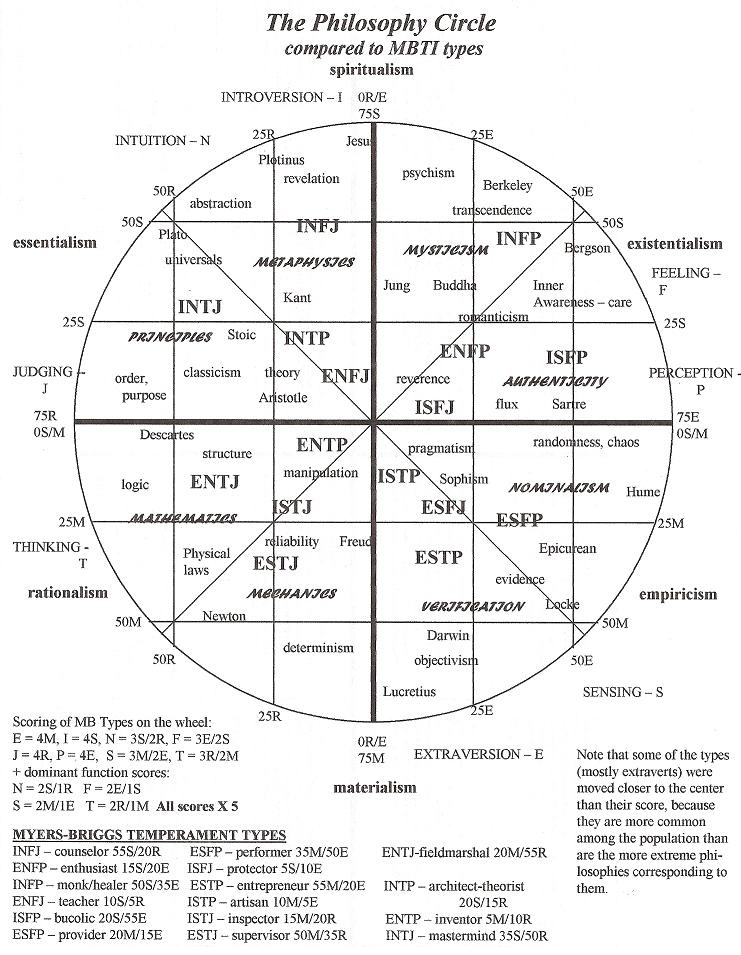
Some take it to the limit. Resulting in:

but really I’d say that’s pushing it, and why?
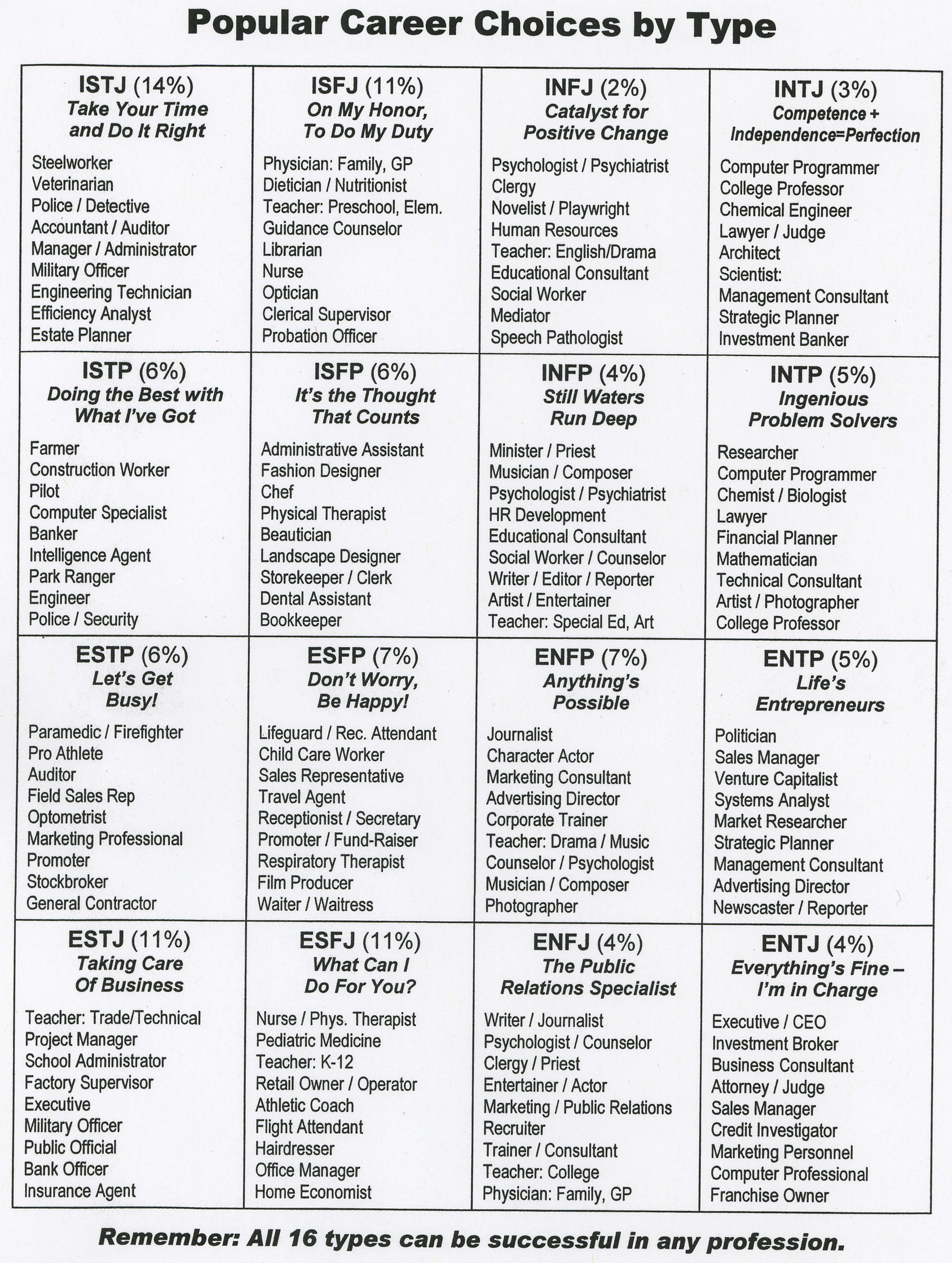
To which above type ‘scores’ there’s also career advice, also in books and on-line. Like:

Note the remarks at the bottom. Variants apply, like this one which is skewed to sales/marketing business, I think..
But nevertheless, the overall trend is clear: When you’re an I, and/or S type in particular, and maybe too much of the T and J into the mix, you may find it harder and harder to adapt to the on-going exponential (?) fuzzification of work. If you’re in any of the ‘typical’ trades, you may either become the Expert of Experts, retreating into an ever smaller corner until retirement, if you can hold out that long, or bring your characteristics to other trades (remember, yin and yang both have an element of the other within them – this applies here as well), or retrain yourself psychologically to better fit the trades that may be left until ASI overtakes us. [As in this post]
If you can …
I’ll leave you with:

[For no reason – or, how many trades have come and gone in this environ… Sevilla]
Ah, maybe I’m the one not having paid attention, but I see so little response (which would be: digesting and repeat) of the ideas of the great Morozov in his To Save Everything, Click Here, as e.g., here (to be clicked).
Which is quite a contrast with his content, having a major discussion area in itself, about every other paragraph throughout. Yes, that makes it just a little bit harder to retain the main plot (?) line and the ‘details’ as well; it seems a bit like the asymmetry in information security where the defence will have to fight (? debate, rather) on all sides when attackers (the ones with the blindingly large blinds/blinkers on, headless chickens) can move their individual spearhead attacks forward anywhere – but in this Morozov case, one can count on the defense having the much more and more importantly, much better, arguments on its side. One should not count arguments, but weigh them (Cicero).
“Huh, no content of the book here …” Indeed not. Get it and read! I’m off now to finish reading, leaving you with:

[Ah, the one little part where The Hague is somewhat like a big Milanish / Parisian city; unedited hence the off light conditions]
In the Utopian versus Dystopian post-Singularity discussion, two additions.
One; some folks said that once humanity would figure out how the world turns, one/some deity/deities would immediately replace the world with an infinite more complex one. Some claim this has happened already. [Dunno how many times, can’t tell.]
Would it be possible that this happened during the Age of Aquarius (yes), with its Egyptian sphinx riddles, and/or the phase shifts of the Greek Golden Age (et al.) mythology, as here ..?
Two; Clark’s Third Law: Any sufficiently advanced technology is indistinguishable from magic. How far on this path are we, with our Singularity thinking ..? And, there’s talk about talking to gods here.
Three (for logic); can we mix the two ..? What are the third-dimensional discussion directions ..?
It seems to become ever more a mer à boire …
Hence:

[Feels relevant; London 2007 – shiny, no crisis in sight]
… Just as I posted on Hegel’s future or not (recently here and there; errr…), it struck me: Did the He man know about Newton’s Second ..?
Because, if everything in the universe devolves to Chaos (assuming it’s closed or at least confined), and He man thinks the universe in the end will realize/become ultimate Reason, then the one equals the other, or what ..?
So much for the Singularity (…?). And:

[Yes Rietveld-Schröderian suppliers ring here, Utrecht (analog)]
Two points to make:
* Middle management will be.
* Secretaries should be.
The discussion regarding middle managers being superfluous or not had a slight uptick the past couple of months. With the latter voice having been a bit too quiet. Yes, middle management is under threat. It has always been; only the (history-)ignorant will have missed that. And Yes, all the Disruption things and similar empty barrel half-baked air by a lot of folks who have hands-on experience in the slim to none bin with (real) management altogether let alone this kind, have predicted over and over again that the disruption by Server-with-algorithm-app-that-schedules-day-laborers will make middle management redundant, as the believed task was only that.
Quod non. And as if just an algorithm will capture the full complexity (and incoherence, inconsistency, internally and externally contradictory ..!) of the requirements and work of the middle manager.
OK, we’re not discussing the drone administrative clerk that has Manager on his card (huh?) and sits in an office passing top-down orders and bottom-up reports back and forth. We’re talking the real, 24/7 problem firefighter here. The coordinator of chaos. The translator of lofty (other would say, ‘airhead’) ‘governance’ (quod non) mumbo jumbo into actual work structure and tasks, and translatereporting back. That survives and in doing so, shows great performance. The other ones, will be weeded out anyway, every time there’s an economic cycle downturn. [If the right ones would be kept, and the wrong ones ‘given growth opportunities elsewhere’. Seldomly the case; offing is by the fte numbers, and the wrong ones have being glued to their seats as their core competence, through sucking up or otherwise.]
So, the middle manager stays for a long time to come as (s)he does the kind of non-predictable work that will remain longest. If start-ups don’t have them, see them grow: They will.
Secretaries deserve a come-back. In similar vein as above, the vast majority of managers office clerks (from the shop floor (even if of knowledge workers…) all the way to near the top) these days have to do their own typing, scheduling, and setting up socializing things. Whereas before, economies of scale were many, and there were additional benefits because the good (sic, again) secretaries would e.g., know the best, unrenown restaurants all around and could get you a table even when they would be fully booked, and they would manage (massage away) some internal friction as well, often very discreetly and efficiently. Now, vastly more expensive (by hourly rate, productivity (think switching costs in the managers minds …, and utilisation), cost of ineffectiveness (sic again) and opportunity costs re their actual objectives (if these would be achieved; good/bad manager discussion again)) managers must manage their way around. An impoverished world it is indeed.
To bring back some joy:

[Some colour, but it’s down there… Zuid-As]

Voor sigaren bepalen we het profiel aan de hand van de criteria Smaak, Balans, Body, Sterkte, Aroma en Finish.
Voor Smaak pakken we het aromawiel erbij. Let wel I; wat u proeft of verwacht, kan gedurende de diverse fasen van het roken nog variëren... En let wel II; er zijn ook aspecten die nog niet zozeer als aroma staan aangegeven in het wiel, we denken aan termen als (ja de sigarenwereld is langzamerhand, helaashelaas US-, Engels geworden) zesty, tangy, floral, en earthy, of soms zelfs metallic. Lijkende termen die een combi zouden kunnen zijn van diverse aromas en papillaire en olfactorische/nasale sensaties en -tactiele invloeden. Hierbij komen termen als 'complex' uiteraard ook bijgepakt, om in dit geval te beschrijven dat er vele aromas herkenbaar zijn. Rustig roken, dat is niet alleen beschaafder en allerlei sigarenrokeneffecten-versterkend maar biedt ook meer kans om aromas te onderscheiden.
Balans is voor de hand liggend; of de zoete, zure, zoute en bittere tonen (OK, en 'umami'...) in balans zijn. Ja, ook bij een sigaar – al zal het meestal gaan over de balans tussen 'creamy' en 'spicy' en gaat het meestal mis door te veel bitter of te veel spiciness.
Body gaat over de volheid, in dit geval vooral te bepalen aan de volheid, dikte, dichtheid van de rook. Die ook een gevoel geeft; 'light' is als een licht bier, 'full-bodied' is als een rechttoe-rechtaan whisky of cognac.
Overigens hoort bij Body ook textuur, 'leathery', 'meaty', 'silky', 'creamy', 'soft', 'succulent', 'woody', 'chalky', 'dry', 'oily' en 'spicy'. Die dus net niet hetzelfde zijn als de aroma-indicatoren uit het wiel; soms overlappend. Niet handig maar zo is het nu eenmaal.
Sterkte is een wat eenvoudiger maat voor het nicotinegehalte van de sigaar. De topbladeren van een tabaksplant heeft meer nicotine dan de lagere bladeren – me(n) dunkt dat de topbladeren zijn waar de plant verder wil groeien en dus betere bescherming nodig heeft van de nico; lager is het wat ouder en 'expendible' dus ga je daar als plant niet je nico op concentreren ..? Waar de sigaar van gemaakt is, heeft dus invloed. Kan je meestal niet kiezen, maar wel proeven. Rustig roken is ook hier handig; om een nico-klap/duizel te voorkomen bij het opstaan.
Aroma dan, vervolgens. Ook hier kan het aromawiel worden ingezet. Vreemd genoeg is het moeilijk de aromas te bepalen als we zelf roken; iemand anders' rook kunnen we beter analyseren. Of we blazen de rook door de neus uit ('retrohaleren'), dan hebben we wel de volle verfijning (ga ik vanuit, lezer!) van onze neus ter beschikking. Bedenk bij het 'benoemen' overigens dat we veel meer uit ons geheugen putten, qua eten en drinken!, dan we wellicht zelf(s) denken. Dus rare smaken herkennen is niet raar.
De Finish ten slotte is kort of lang, naargelang de aromas lang op de tong (sic) blijven hangen. Milde sigaren zijn nogal eens kort – hetgeen niks zegt over de complexiteit, overigens. Hierin zit ook de reden om een zwaar (sterkte)kanon na een milde te nemen, niet andersom.
Als het gaat over de champagnes en hun profielen, pakken we er de (echte en semi-)klassieke wijn-analyses bij die we allemaal wel kennen; onderscheidend in [Hier verder. In ieder geval https://www.wijnwinewein.nl/hoe-proef-je-wijn/ en aromawiel + zuurgraad/tannines/body(viscositeit/alcohol/tannines/smaakintensiteit/mondgevoel)/afdronk + Aanzet/Zuren/Zachtheid/Tannine/Body en alcohol/Afdronk/Smaken dus de aromas bijna-los van structurele criteria. Dan de smaken matchen met die van sigaren, of niet; Klosse's overlap/contrasten erbij halen en dan verder. En toespitsen op champagnes... pak het smaak-plaatje van het CIVC erbij!]
Dear reader; bij deze dus de waarschuwing dat u vanaf hier (?, inderdaad, echt niet alleen hier) serieus te lange zinnen tegenkomt.
Ach, daar ben ik me prima van bewust, mijn hele blog is immers ook een poging tot schrijfoefening in alle facetten. Sommige posts daar blinken uit door korte zinnen en ellipsis; ook deze pagina is opgesteld als tegenwicht. En ik vertrouw erop dat u dat gewoon doorlezend aankunt.
Als voorbeeld: Oplettende lezers zullen opmerken dat onderstaande waar het uitweidingen achter links naar andere pagina's betreft wellicht beter met behulp van OnMouseOver's, alt-tekstblokken of andere tags per pop-uppable item zou kunnen zijn geïmplementeerd maar ik heb het zo gekozen en ik kan best komma's toevoegen in deze zin maar ook dat heb ik achterwege gelaten zonder de leesbaarheid of de begrijpbaarheid in het gedrang te brengen.


Inderdaad, het ontwikkelde, ik schreef, een en ander vanuit een voortdurende, voortgaande research. Na zoeken in het wilde weg algemeen, navraag bij het Comité (iv) Champagne, een aanvullend zelfzoeken met Google Satellite én Street View zowel rond de officiële als in het algemeen, kwam ik tot de Lijst Van (uiteindelijk) 84. De en passant gevonden kaarten leidden tot enige aanvulling. Toen kwam ik Weinlagen.de tegen en tsja dan ben ik niet meer te houden qua sys-te-matisch alle streken én plaatsjes af! Hoewel, ... in onderstaande tabel heb ik maar niet meer voor ieder stuks de Street View erop losgelaten of onderstaand ingevuld. Terwijl ik er vanuit ga dat dit alles nog aanvulling kan krijgen ... Les Clos Inconnus zijn uiteraard zichzelf.
De gangen kwamen al zeer onregelmatig door, en met andere tafels die uitliepen en/of (weer) bijtrokken, tot zeer ver inhalen zelfs, tot gang 6 van de 7 tachtig (schrijve: 80) minuten op zich liet wachten, ondanks diverse malen navraag. Waarna het nauwelijks-opgewarmde pompoen met koude polenta bleek te zijn; "dat hoort zo" ammehoela. Nee, het niet-koude nagerecht erna hebben we niet gehaald; we zijn opgestaan en weggegaan. Die zien ons nooit meer, zeker omdat de bediening ook Zwak was (gangen aan verkeerde tafeltjes serveren want die waren al twee gangen verder), etc. En balsimaco-saus dus, 'et al.'...
Huh, da's écht voor de Insiders..? Inmiddels wel toegestaan als aanplant, maar nog zo'n drie tot tien jaar onderweg voor er de eerste re-de-lijke wijnen van kunnen worden gemaakt en dan is het nog maar afwachten. Je weet het niet van tevoren hè, met zo'n non-Vinifera druivensoort..! En dan had je Floreal, Artaban en Vidoc nog niet gezien. Die mogen (in de toekomst) ook... En dan is het Comité Champagne ook nog bezig met kruisingen van de Top 3, Arbane, Meslier, en Gouais. #feest
En dan komt hierna een nóg spectaculairdere outsider: Chardonnay rose Rs, minder dan een kwart voetbalveldje aanplant...
Mineraliteit verdient een aparte behandeling; vanuit het idee van 'huh er zit echt geen mineraal/steen in je wijn en lik jij aan stenen-dan'-versus-'toch proef ik die sensatie en Ja' tot en met de abstracte benadering van een kennelijke associatie van een gewaarwording als hier, tot een synthese op de as 'bodem-microbiologie'-in-combinatie-met-'feitelijke chemie'. Want, jawel, fenylmethaanthiol zorgt voor vuursteen / aangestoken lucifer, in combinatie met benzaldehyde (uit 'hout') en waterstofdisulfide (uit reductie; en beide uit bepaalde gisten!) leidend tot Vuursteen-herkenning, versterkt bij anorganische ammonia bijvoorbeeld. Vuursteen is geen 'mineraliteit' maar daar wel belangrijk onderdeel van. Dus Ja, er zitten wel degelijk chemische stoffen in (niet alle gelukkig) wijn die een sensatie veroorzaken die op mineraliteit lijkt. Zout, uiteraard, ook, (niet meer maar wel) vaker dan we denken! Alles tezamen een uit-ste-ken-de reden om te spreken over herkenning van Mineraliteit in wijn. 0-10 en een penalty tegen voor de geo-logen.
Laherte Petit Meslier in the tasting round
Yes @laherteaurelien makes a monocépage of this one. Great Meslier it is:
The golden colour would suggest something dosée, but look closer and you notice a hue which points to slight bitter influences. And indeed, on the nose we get a whiff of smoke, certainly straight after the pour; quite an opportunity to use the word ‘empyreumatic’... Did I mention Meslier already? One to one it is. But nothing referring to your cooking qualities; it’s more like a distant secondhand puff of Belinda – I’d not suggest you buy that for comparison; trust me as smoker it’s trash but as Meslier aroma it’s excellent full stop. Crispy dry cigar smoke fits better.
Certainly, since this all is followed up, much more persistently, with quite some mature lemon and a whole slew of herbs and spices notes. It smells like a merry-go-round of eucalyptus, dill, thyme, spearmint, soft mint, basil, anison, verveine... wormwood even; those that know génépi, find it here, too.
The first sip jumps in with a most delicate mousse, a sensible but not too fatty mouthfeel, nicely balanced with lemon dominant in combo, and ginger/pineapple/mirabelle and dry lemon rind flipping back and forth. In the remarkably long finish, the rind does a gentle cleanse.
But I couldn’t find any cardamom that some mention, nor cocoa or coffee. All in all, in cocktail terms it would fit in the range of the French 75 and a Fleurette.
I’ve tried a little bite of camembert, but you shouldn’t. The bitter of the wine is lost but notches up in the cheese, which tastes odd. The fit with lightly aged Comté or same-Gouda is perfect, however. Sushi should work, too, if with a suitably subtle pinch of wasabi, no more – harsh coriander, algae, chervil, wasabi as such weren’t in the nose.
In summary: All of you should have a taste of this one, or one couldn’t be trusted on champagne connoisseurship.
[Degorge 12-2021, hence the progressed maturity]
Links:
https://maverisk.nl/de-forgotten-four/ for Petit Meslier
https://maverisk.nl/champ-sigaar/ on the cigar smoke angle
https://maverisk.nl/geneprima-spul-hoor/ on génépi
https://maverisk.nl/mirabelle-wil-iedereen-welle/ on mirabelle
@champagnepascalmazet make quite an interesting range of wines, fully certified bio since 1980. We tasted the Cuvée Originel bottling of 2014, for its 35% Pinot Blanc of course; interested to learn how such a Forgotten Four lead, with the three Usual Suspects trailing, would work out.
‘Splendidly’ is the answer.
The gold is striking, the nose is suitably complex. One gets mint, cucumber, cornichon tartness (I mean, the true kind of https://www.kesbeke.nl/) and some olive.
On the palate, it switches to agrumes-allsorts. Yuzu, lightly pre-ripened apricot (yes there’s acidity in there), sparkling grape (ah.) and a hint of almond already. This slowly develops into lemon-grapefruit on the one hand, and yellow curry / pineapple on the other, with a tangerine almost orange'y element integrating both sides. I’d say, there’s a marbling of mirabelle (in Dutch: https://maverisk.nl/mirabelle-wil-iedereen-welle/) running through it as well.
‘But’ overall it certainly is far from flubby (the 3g dosage having turned into the above, no sirup) or acidic. The quality of it all, and the light oak touch, twist all the richness back towards the freshness of citrus zest. And did I mention the mousse is still there, slowly releasing?
Towards the lingering finish, this all persists in a extremely well-balanced acidity and a hint of minerality and sophisticated bitterness.
Am I happy to have another one of these standing ready
Marie Courtin Présence
I bought the @ch_mariecourtin for the 1/3 Pinot Blanc (of course: https://tinyurl.com/ForgotFour !). High expectations, exceeded.
First off, the yellow-golden almost amber colour would promise some sweet almost creamy elements. But with a delightfully tingle from a fresh mousse, and a light bitter-tartness in the nose, the picture turns around completely. There’s Mirabelle ..! [As per: https://tinyurl.com/Mirabellepg]
The palate is perfect; not too much mousse so the real ‘wine’ taste is clear, and the Mirabelle keeps on coming. The mouth feel overall is well-balanced, and includes a soft minty/dill side with the lemon (plus some bittersweet orange even), moving into the grapefruit area and then the mirabelle’s back again. The very long finish has the mint/dill combo again, and an inkling of sugar. But with zero dosage, that’ll be the Chard and almost certainly the Pinot Blanc waving goodbye. Throughout, there’s a slight undertow of pickled cornichon (Amsterdam style; what else?)
All in all, it’s a wonderful demo of what Pinot Blanc can bring; lifting the Chard from its average whilst pulling itself up into high performance. Merging the best of both into Something Else of a great wine. This being a zero dosage, zero sulphur added, zero intervention wine, it also proves that ‘natural’ wines need not be f(l)unky. But on the contrary, one would hardly be able to tell.
The Présence is course material in so many ways. Am I happy? Well, not with six other dwarfs but yes, very much so.
The @champagne_gruet Cuvée Arbane …
𝘚𝘰𝘮𝘦𝘵𝘩𝘪𝘯𝘨 𝘌𝘭𝘴𝘦 entirely!
100% Arbane yes. Which brings a freshness too long lost. Reminds me of the bone dry styles of yesteryear, in a good, rather great way. Chalky without dust, minerality without flint. A wonderful conversation starter, on the good things of life.
With a fresh and quite light, lemon-white colour through which a very fine and persistent mousse promises delight. Then, on the nose, one gets a first whiff of floral notes; jasmine, elderberry, rose – followed by zingy but ripe lemon. When allowed to mellow in the glass (or a day in the bottle), the lemon slowly brings along some grapefruit, pineapple and (dry white) melon. All within measure, refined, nowhere too in-your-face’y.
The mouthfeel is brilliant with the mousse playing its role to keep the very well balanced aspects all quite light. The dosage is hardly noticeable – from the taste of it, one would estimate 2g. max, and notes of soft white peach, light albedo, with a very long finish on the thyme/mint/dill spectrum with the albedo bitters lingering on.
Would work miraculously with e.g., flounder with serious sauce and herbs, swordfish with almond crusting, maybe tuna or mackerel, or white meat.
Saw a score somewhere of 91/100, but that's too low.
Buxeuil doesn’t have any Arbane of its own (in production), but with this Gruet wine, it has a flagship.
Arbane being at only 0,018% (yes, percent) of Champagne’s acreage, this cuvée highlights the 'need' (want!) for quite an extension of that.
Tasting the Pinot Blanc champagne of Gruet of Buxeuil (@champagne_gruet). That’s right, a pure-bred PB champagne. (Be sure to pick the right one, at https://www.champagne-gruet.com/)
And it is a treat, indeed.
In the glass, we have a very fine mousse, well-integrated - it continues very, very long and doesn’t just give a one-off foam layer – through a pale gold, slightly varietal-typical PB wine.
On the nose, the typical character come through immediately, including a slightly fluffy air of white flowers around light tangerine / (white) peach / mirabelle, and a core of lime – keeping nicely short of being bitter.
The mouthfeel is light, but not fleeting. One gets beautiful straight near-ripe lemon, a waft of mint with white blossom, and some white pepper towards the back. Add to that lemon white skin with edges of red grapefruit.
Mind you; I had kept some for a second tasting, and four days (suitably cool storage) after opening, all this was still as fresh. No ‘dosage plays up after too much air’ or so; great.
A top recommendation, this one. If only to keep the Forgotten Four Cépages alive, as they deserve, but also for sheer tasting pleasure. Or ‘the trick one’ at a tasting experiment. Or for an apéritif or with whitish seafood (if not to lime’y or salty).
The Réminiscence 100% pinot blanc brut nature by @champagneericlegrand via @jeromeschampagne. Supposedly off 65+yr old vines, but one would be hard-pressed to tell that by the wine. What delicious freshness!
For a start: What would one expect from a pure PB champagne? Subtlety indeed.
It starts with a new capsule (for me, to further fill my https://www.deknudtframes.fr/en/catalog/product/s65sz2-/frame-in-black-for-champagne-caps which only applies to *different* capsules I tasted *at home*) – under a muselet to duly impress. After a good whiff, one can immediately pick up the something-different of this one. The first 80% is most clearly artichoke with some mint; not very strange since we just made such a dip for (neutral) crackers five minutes before.
After which, with careful nosing/tasting, we get a white-floral element with traces of almonds and yes even a hint of vanilla and the slightest of dried yellow fruit. This continues in the long developing taste, clearly adding ‘a point’+ ripe lemon (citron), with the etheric element slowly (very slowly) fizzling out. Can I say ‘retronasally’ there? As it tactilely *feels* that way for sure. Add some vanilla points in the long after.
All in all, a thing to be savoured. And, let’s promote these ‘forgotten four’ champagnes! Away with the factory work! (One suspects the 24x range by some famous grand marque points in the right away direction, too, qua hyper-mass production orientation.) The more sure we have of being able to choose to never have to taste a same champagne ever again in one’s lifetime. *If* one would want to – wines like the Réminiscence make one still would want to return often. Extend the plantation!
Another round for Gruet of Buxeuil (@champagne_gruet) – The Cuvée des 3 Blancs (as here)
With its matte gold, almost amber appearance and very fine mousse (hardly foamy but lingering in the mouth for a long, long time), we'd expect the Pinot Blanc to dominate over the Arbane and even Chard. It does. A little. But, as assemblages go, only a little; I'd rather say one can identify the PB by its gently soft but full agrumes/mirabelle character but there's a lot of exquisite light flowers – hawthorn – and herb'iness – in the sage, rosemary corner – already in the aromas. Would that be the continuum of the Arbane and Chard?
If one would want to take it analytically.
Savouring, one would enjoy the all-round calm structure, with a medium to full mouthfeel (nothing sticky). And just the image (?) of a surprisingly light white wine with lots of mature grapefruit, lemon and a slice of lime. From which the little bitter note lingers on in the back, most pleasantly refreshing, nothing astringent or harsh. Overall, certainly not chalky bone dry but a hint of mango.
Would I pair this all with food ..? That would be a. hard; a very careful cheese selection might do, b. interesting, to see where the flavours go (see below), c. not necessary, it's a wonderful treat on its own.
This, in a series of Forgotten Four tastings, as per this 'research'.
And the (aubépine and) mirabelle note, Gruet themselves also list. Nice, yet another example of that great aroma.
Plus, one of course has e.g., this and this book, or quite a few others, already..?
Of boek. Hoewel er een beperkt aantal boeken is dat ik hoog heb, zit er niet een[1] bij die nou net op het onderdeel dat mij respectievelijk interesseert, het α tot en met ω heeft. Waar-om en waardoor ik juist de verdere research wil/ 'moet' doen...
[1] Nou ja, deze komt in de buurt...
Jazeker! Zoveel is zeker: Voor bijvoorbeeld de Fransen is dat een volstrekt normale karakterisering. Het gaat dus niet om NaCl uit een Jozo-vaatje... Eerder "off-vuursteen"; denk ook aan de regio van hints in de verte bij wit-peperigheid en magnesium in de buurt. Niet vreemd, als oesters zeer rijk zijn aan zink (sic), ijzer, calcium (dûh) en selenium. Sommigen in NL zeggen dan dat je geen 'zout' of zelfs maar 'zilt' mag zeggen. 1. Van wie niet ..!? 2. Waarom niet ..!? 3. Dat is toch voor zéér velen de beste karakterisering – niemand beweert dus dat er keukenzout in uw wijn zit en iedereen weten dat de karakterisering losstaat van enige bewering van objectieve chemische samenstelling anders zouden we wijnaroma's héél anders beschrijven!
Of zelfs Philpatrick het moet niet gekker worden ... Dus denk niet dat de spellcheck op hol sloeg.
De Cuvée Métisse, noirs et blancs oftewel 80% PN en, jawel, 20% Pinot Blanc, wederom een assemblage met een van de Forgotten Four. Brut nature dat houdt het puur, klaargemaakt bij de BV Val du Clos dan nemen we ook een verre hint daarvan mee. Van Champagne Olivier Horiot, MeB juli 2020, dégorge 16 jan 2023, grotendeels oogst 2019 plus nog een scheut uit de Réserve Perpétuelle die op eik wordt gehouden – ja ik kwam 'm in een coin oublié tegen maar prijs me gelukkig. Quelle belle ouvrage! Als u denkt: Da's een nogal technisch verhaal – dan is dat juist maar het proeven is gewoon een onbekommerd plezier. Het begint uiteraard met de sprankelende licht-amber kleur en een neus met het lichte bittertje, denk aan het dille-thijm spectrum, van de Blanc. Terwijl dan de eerste smaak van de Noir komt. Hoewel licht door de jaren, en dat pufje bitter komt er snel weer bij. Rijpe-appelzuur, heel lang gematigd door-coastend verdund citroensap met in de verte mango en met witte zest erboven zwevend. Maar wel in complete balans, niet vlak of zo maar juist met transparante diepte. Toen ik er een hapje net-nog-niet-compleet-rijpe ananas(kern) bij nam, was dat een moeiteloze, zowat volledige overlap. Later komt er een onderstroom(pje) van iets dat neigt naar kruiden door de mond. En nog steeds met zeer fijne bulles, by the way; verfrissend zonder prikje. In termen van verwachte aroma's zou ik eerder tussen Chard en Meunier op pad gaan van jong naar iets voorbij het midden, en zeker niet te ver naar de rijpe complexe PN-hoek zakken. Al met al een 'opulente' wijn die verrassend jong van geest is (gebleven). De PN is meer steun dan leider in het geheel; prima! En de PB viert z'n vrijheid om te shinen; uitstekende reclame!
5 Sens: De Oogst-2017, MiB 24 juli 2018, Dégorge 12 mei 2023 ja zo exact, met nul dosage voor slechts 1320 fles plus 90 magnums. Van 5 verschillende terroirs, oude stokken van 5 verschillende cépages – PN, Chard en Meuier, en dus ook Arbane en Pinot Blanc; langzaam vergist en opvoeding sur lies. Dat geeft volgens de makers de vijf (jawel) elementen Water, Aarde, Luchten Vuur – en l'Esprit! Wederom een assemblage dus van Olivier Horiot (op @horiotolivier) met Forgotten Four, klaargemaakt bij de BV Val du Clos dan nemen we ook een verre hint daarvan mee. Zo, dan heeft u de data gehad. In termen van aroma's als op de vaste plaat gaat het alle kanten heen, waarbij we ook (laten we zeggen 'traditionele') Chard- en PN-aroma's tegenkomen. Maar niet te uitdrukkelijk. Om het op een rijtje te zetten: De kleur is vol maar licht goud; De mousse is heerlijk, (nog) ruimschoots aanwezig maar zeer fijn; In de neus krijgen we eerst rozenblaadjes en een tikkie mango, maar zo nu en dan ook een zweem ziltigheid ..? Een ander zou het ook witte-peperigheid kunnen noemen. Sommigen vinden dat Arbane meidoorn en anjer geeft; nou ja dat kan ik begrijpen maar pikte ik niet op. Noch wat appel en kweepeer, dat gewicht trof ik minder: Het volle mondgevoel zit stevig in de citrus-hoek. Denk aan lauwwarme, (over)rijpe citroen met een beetje suikerrijpe peer en (geblancheerde) ananas, op het mirabelle af maar wel met een los zwevend zuurtje dat eronderdoorlangs komt zweven, inclusief een puntje venkel/dille. Ik denk dat hier vooral de wat rijpere Pinot Blanc om de hoek komt kijken. Maar al met al wordt het nergens te zwaar; de wijn blijft gewoon helemaal in balans; De citroen is de core der (talrijke) caudalies; zelfbewust maar niet zwaar. Nou ja, als eindconclusie; deze zit op het niveau van een lichte montbazillac of sauternes met mousse..! Werkelijk heerlijk. Voor zover er wat bij moet worden gehapt, zou ik zeggen: Niet te licht, niet te dicht op de sla/Brillat-Savarin-hoek, of te kale zilte oesters. Eerder oesters met enige bewerking, zou ik zeggen. Als per deze – en een geel- of roodschimmelkaasje kan ook nog prima. (vandaar; lichte sauternes ...) – oh en een salade met cajunkip kan ook ...

Étoiles du Nord, voor uw betere wijnen...
Al is het alleen maar door Il Respiro del Vino te kunnen lezen; geen vertaling tot nu toe dan maar zwoegen.
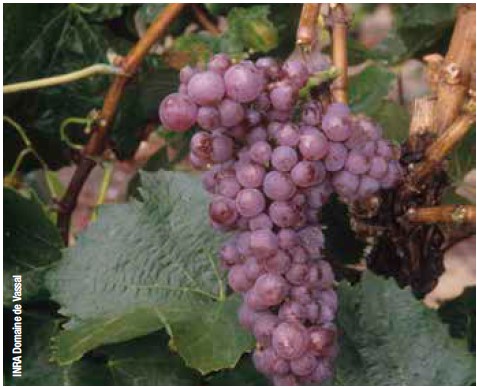
Le Chardonnay rose est une mutation du Chardonnay blanc que l’on trouve historiquement à l'état de ceps isolés dans les vignobles champenois et bourguignons. La mutation porte principalement sur la couleur de la baie qui est d’un rose foncé à maturité. Cette différence a abouti à la proposition d’individualiser le Chardonnay rose comme une variété distincte de sa forme blanche et de l’inscrire en tant que telle au Catalogue français.
L’origine de ce cépage est difficile à dater. Néanmoins, il existe quelques repères comme la date de son introduction dans la collection de Vassal-Montpellier en 1950 ; deux accessions (ou "introduction" est un clone non agréé conservé dans une collection) de Chardonnay rose y ont été plantées cette année-là. La première, issue de l'ancienne collection dite "de Ravaz" de l'Ecole de Montpellier (donc la date réelle est antérieure à 1950), provenait initialement de la Côte d'Or. La deuxième provenait de la "collection Couvreur Pernin", à Rilly-la-Montagne dans la Marne.
Depuis peu, le Domaine de Vassal-Montpellier possède également deux accessions assainies issues du clone de Rilly-la-Montagne. Récemment de nouvelles accessions de Chardonnay rose ont été recensées dans le vignoble champenois, preuve d’un intérêt croissant pour ce cépage ancien. Cependant, la disparition progressive des veilles vignes ainsi que la pression croissante des viroses, faisaient craindre la perte de diversité génétique au sein de ce cépage et l’abandon de sa culture.