Quantum rocks

… Was thinking: How is Quantum Computing not where AI was, around and about 25 years ago ..?

The first wave having past, then, of neuron-simulation you know, like 25 years before that. ‘Expert Systems’ having had some fifteen months/years (?) of fame in between, and then, suddenly, ‘neural networks’ were all the rage. In the news, and for academia. With some PoCs but not much.
Currently, neural nets AI-by-way-of-mere-ML has had yet another wave. Not the Big Kahuna of course, but again the groundswell has risen a serious level and continues to implement all sorts of – what we would now immediately consider mundane – implementations.

On the heels, ‘quantum computing’ is hailed as the Next Big Thing, along with other Next Big Things [probably much Bigger than Big things] like biotech, global cooling [yes that’s what we would need, not the problem we have already but the solution is the Thing], You Name It. QC seeing some qubits implemented here and there, and not much means, knowledge or Understanding what to do with it, how to program it, how to read the results
[when, not if, these don’t crumble under Heisenberg’s – or will entanglement at some future stage be shown to defeat his – and then again, we’ll have gained nothing as we’ll have zero proof that the entangled particle we picked out, actually is the one out of an infinite number that we wanted to ‘read off’; how can we be sure some alpha particle is the one to read off when it might have encountered an anti-alpha particle somewhere along the way? The way being any time frame, even approaching infinity, since linear time is only valid in a singularity spot [by which I mean beyond-infinitesimally small, not 1- but approaching o-dimensionality or worse]. Ah, time; yes, how do we know we measure the ‘immediate’ change to some entangled particle when time is so extremely variant? Does time exist? Note that it needs to, otherwise immediacy that is required in the theories re quantum entanglement so if it doesn’t exist, qe doesn’t either. But it should be clear that there is a strong bond between entanglement and quantum computing. Or at least some bond, theoretically. Kant’s view of inner-time-only may apply.]
.. hey did I digress or what?

Whatever, QC is a hype in a precious handful of labs now. Even when the Marjorana particle is being pulled into it (Delft [other links apply], but of course; almost fittingly), not much has been deployed into, e.g., call centers.
Which places the whole shazam [are you listening?] exactly where AI was 25 years ago.
QED. Well, which was my thesis.

Now, out with other things that rock, but these stood the test of time:

[You recognize D21 immediately, with sweet D22 next to it just outside of view; Drenthe – even if you’re a Rovelli follower: memento mori]

Jargon watch: Stochastic Terrorism

A note, ICYMI, on the insidious effects of free speech … that gives room to Stochastic Terrorism.
Say something vague but suggestive to disassociated loonies to take illegal action, and then deny you suggested the specific action(s)… [i.e. politicianspeak]
Say something vague but claim it is a hard promise, and then disclaim that claim by wiggling your way out in the fat margin of vagueness [i.e. politicianspeak] then be called a big fat liar.

Both as same sides of the coin, denying the other side of accountability for any speech act. If you didn’t intend the consequences, don’t use vague speech. Be clear in both meanings. Or justice will prevail; maybe not immediately but in history – you will be vilified or at best utterly forgotten; useless, wasted life. For the latter, you may be mocked by your own family.

So, what will be your course of action ..?

And:

[Your defences will be outdated before you know it; Château du Haut-Kœnigsbourg (my pic, unedited)]

#Ditchcyber rrr…insurance (told you)

How can it be a surprise this happened ..?
This, being the position that because ‘cyber’insurance is a scam, someones claimed and found out. Yes, an insured company tried to get some money as far proxy of damage repair, after being hit on a (inherently; more on that later [1]) slight little flaw in information security (that’s what it is, however moronic you keep on cybering). And the insurance co panicked (why; they could have claimed the hurted just hadn’t done the right thing completely enough, apparently [2]). And threw in the only blanket, fail-safe claim denier: Cyberwar! Arrrgghhhhh!.

In the vacuum of definitions (let alone the official recognition of those by relevant international bodies e.g., the UN – not We The People that doesn’t count as a party that has any serious say in this, anymore), they’re not even false advertising. But … as they should know, the legal principle still is he who posits, proves and that might be a challenge… Until further notice, no state party shall be considered guilty, so no cyberwar is or was to be found. Maybe at that one planet near Alpha Centauri but we have only circumstantial evidence of that.

And you think that insurers know more, better than company employees that are in the firing lines ..? For the being fired upon, and then being fired anyway than for firing back or the reference to ‘war’ (quod non). So, they take your money and don’t know what for. Hence the dismissal on grounds of last resort. You should’ve known, again. And [2], again.

Plus:

[Never worked. This one, fake on purpose …(note the Delft blue tiles); Barça]

[1] Remember, there’s no such thing as perfect security, and very-good security is way too expensive, not worth the risk … Ah, risk, the thing that is inherent in life. And which one can ‘manage’ but hey, one better also study this incl comments … (risks can be displaced but not reduced). When costs come in play, there’s only so much you can afford – and the rest, one insures …??
[2] If you have a fire insurance that requires to take all possible (beyond reasonable…), thinkable precautions and preventative measures, and still your house burnt down, it shows you haven’t done what was required i.e. prevent a fire. Anyone can claim with hindsight you’re risk analysis was flawed, in this way. And the spelling was without purpose but intentional.Plus, “So sind Beispiele der Gängelwagen der Urteilskraft, welchen derjenige, dem es am natürlichen Talent derselben mangelt, niemals entbehren kann. (Kant, CPR 187 A 134, B 173-4)“

Flip sides; transparency and auditability

How the lack of transparency of the information flow architecture, leads to inability to qualify the quality of the information flows – the latter which is the core business of system-oriented (financial) auditing …
The lack of transparency in architecture, by the explosion of complexity of the information flows through exploded complexity of systems/interfaces. The latter nearing Chaos status, the threshold where modelling (complexity reduction to get an understanding including the understanding one has simplified and acknowledging the analysis can not be used for normative stuff just for some understanding) will be either too little reductive to get any understanding but is driven by the requirement to still capture all relevant stuff, or too much reduction leading to (some) understanding but the understanding may be wrong due to oversimplification.
Continue reading “Flip sides; transparency and auditability”

Symptoms of Failure

Or, how your average compliance isn’t any good.

Y’all understand that compliance has a purpose. IAOI (this, not this) you comply with Principles. Anything you need as guidance nay hard requirements in detail ‘below’ that, means you have no clue about the principles, and hence cannot comply with them [consciously; but otherwise it’s an unnoticed accidental accordance, happenstance gotten, easily lost]. IAOI you can discourse at the principles’ level of moral reasoning, in your explanations too, do you have a chance of doing it right.

Otherwise, the very penny-wise and pound-foolish compliance with trivial rule’lets will deliver any effort to /dev/null sigh if you need this explanation you’re doomed, squared.
And, if you’re in Compliance (i.e., in Audit – NO if you live in this world, that is not different!) and push for the penny-wise, you are not only part of the problem, but also fighting symptoms not (root) causes — being the malformed morality. The latter like here – hintspoiler it’s about money.

Just read nay study Musil, and Aristotle, plus Power and so many others, and you might just Get It. Oh, [Edited to add post-schedule–pre-post], this story. Worth the somewhat-longread ..!
For the time being, …:

[At the Zuid-As, you’ll fit right in – the picture isn’t edited even, it’s no collage but the original ..!]

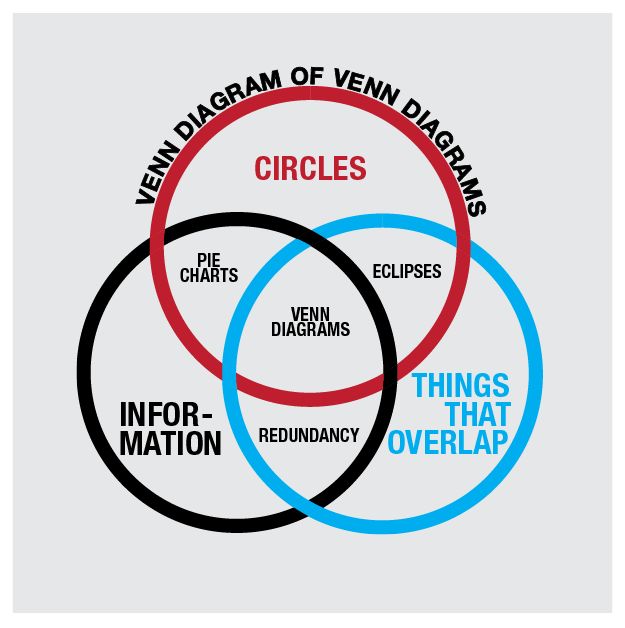
Venn for People – Process – Technology

Hey yeah you know, it’s still a quite (too) popular thing to talk about People – Process – Technology when it comes to control(s) types in the IS risk management / audit corner of the universe.
If you think about it … keep in mind that these factors are almost always presented as nearly disjunct things. With maybe an overlap, but not too much. In terms of Venn diagrams, almost three separate circles. Sometimes three completely, and deliberately, separate circles; joined by many-point wide edges with borders, like pipes.

Because pipe dreams. Of the legal kind now, in Canada. Keeping the three corner spheres with P-P-T text on them, separate. Think PPT indeed – boring outdated graphics and useful content, not so much.

But then, when sober, one realises that in fact, such pictures don’t say much since the overlap is huge, near-complete. If one thinks of controls, utterly-most often, all three factor apply in one way or another. …

Hey, I don’t assume everyone has forgotten about Siva [see Annex], right ..? Since you can easily see how this method leads to ‘integrated scope and purpose’ controls/~requirements, that conceptually satisfy my idea of ‘integration’ of the above three elements. Overlap as default, exceptions may apply.

So, only when controls towards certain control objectives cover all three aspects of P-P-T, can, even theoretically, eventual effectiveness be achieved.
Edited to add: Seek to mitigate weaknesses in one aspect of any control, with controls that are stronger in others. Otherwise, Swiss cheese model [however critiquable that has become… more on that later.]

Leaving the circles idea to:

Architects’ mess cleaning

By which I mean
a. The architects that deal with any organisations’ data, systems, IT architectures, that align with the business. Ideally
b. The mess being the übercomplexity of the current, actual architecture that many organisations have ended up with
c. The cleaning, or Augias‘ [not his ass] wipe.

The latter seems to be problematic everywhere; ones just don’t know where to start or how to beat the head start of the chaos, that continues to deepen, Mandelbrot-set style, at ever increasing speeds [sort of, let’s not overly FUD here].
Which made me think of a Giant’s ideas when it came to coping with complexity of organisations. Four directions of coping mechanisms. May be translatable (! that will have to be done in deep, deep style, not just find&replace some terms) to the ‘architecture’ world. Just have a look at the summary here, or delve up the original. And study. And study some more. And study hard. Then, maybe see what I was aiming for.

Then, you’ll be ready for:

[What a monument; the Aubette, Nancy]

The End-Game Plot of 3LoD

When dreamt up, the Three Lines of Defense model was a Program ….! Yes it was or you missed the inception.
Now, 3LoD is a scam. Like, here, remembering this and a partial solution here. Just browse around on LinkedIn and other environments, and you’ll see your favourite thought leaders agree [if they aren’t, you have some updating to do in your ‘favourite thought leader’ department, too], and eggheads disagree.

But then, one can return to the Program idea, being one that is Finite. If that is too difficult: It has an end date.

Which means you can do away with at least one line of def [more deaf than def].

The second, I propose.

Almost all of it was intended, and should have been designed, to be in the first line anyway [see the above link on vertical, and here]; the second line being there for initial build and then transfer to the first.
And the rest, can easily be moved to the ‘third’ line.
Not only by using ‘agility’ ‘only’ as here, and here [nice ripoff of your competitors’ ideas …], and here, but also by taking the following into account:


Which, when you think of it, leads to the 3rd Estate doing all these things, resulting in

The third line being the Intelligence Unit on Controls. Like the G2 is in the military. But then, for Controls only, very only the lonely. Running in circles of controls monitoring, at any scales, and recommending improvements [also at any scale which does include risk tooling, control, and management in the 1st line]

I think I’ll expound on this one a little [a huge little I guess], in a short while. Oh, and in the mean time, don’t forget to update yourself with the latest, clearest thinking on the 1st line here (again-link).
For now, I’ll leave you with:

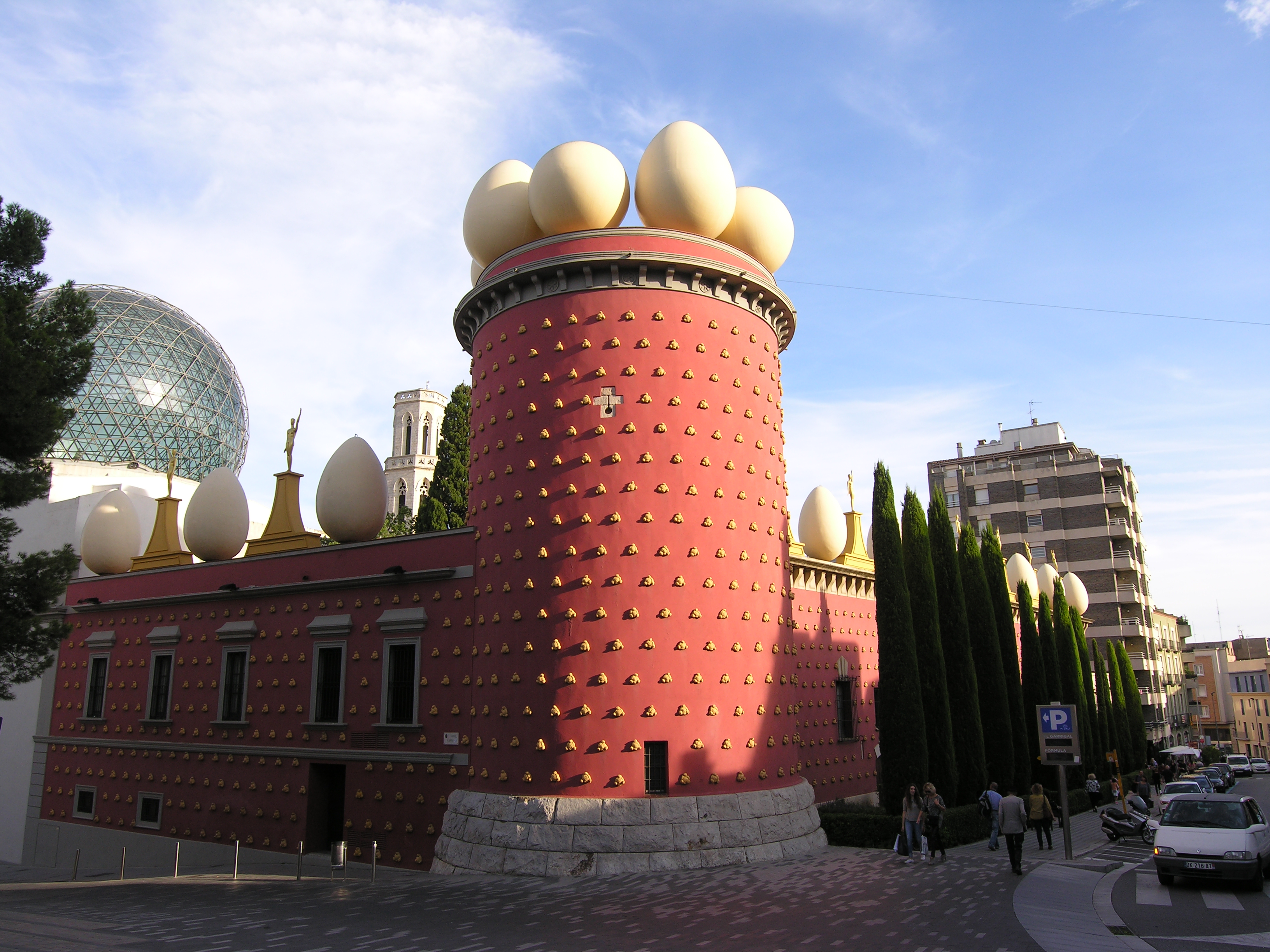
[The style of tower you’ll need to lock them up in; Figueres]

Flawed RM models – simply put

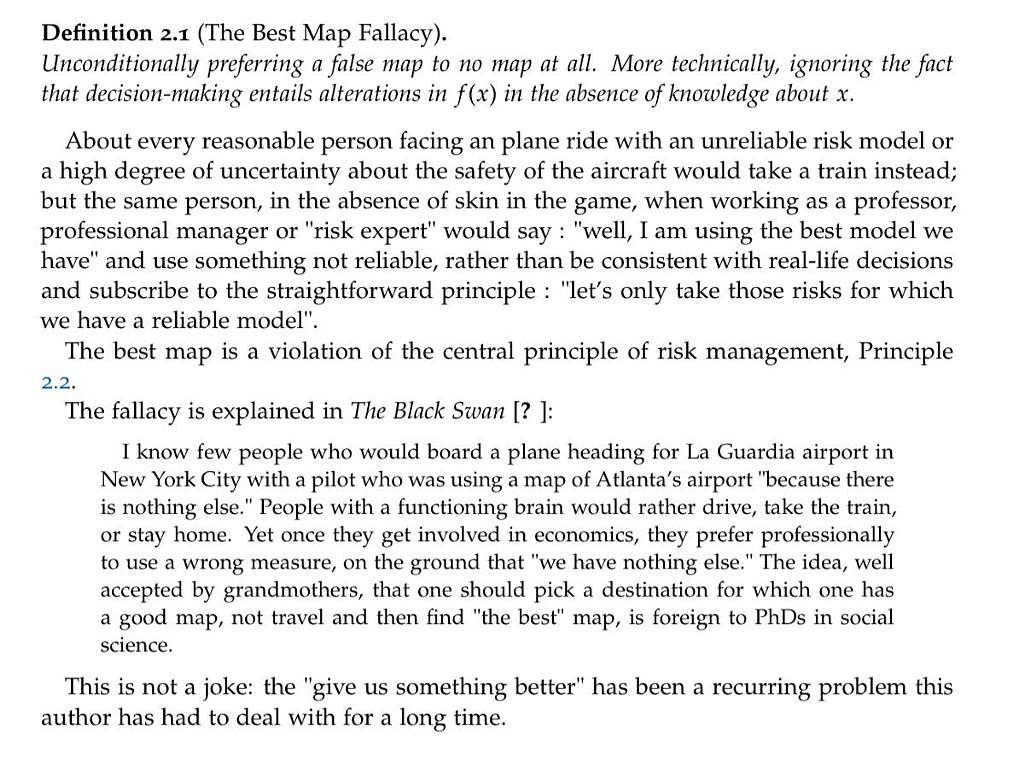
Oh, re yesterday’s post; on how flawed risk models are not a problem or so [since it’s all we have etc.etc.] the following:

[Courtesy of Alexei Sidorenko for remembering this]

Besides, this post also needs much, much, much more attention.

Need more convincing? Happy landings!
… For all those that want to see a tram, not something else …:

Maverisk / Étoiles du Nord