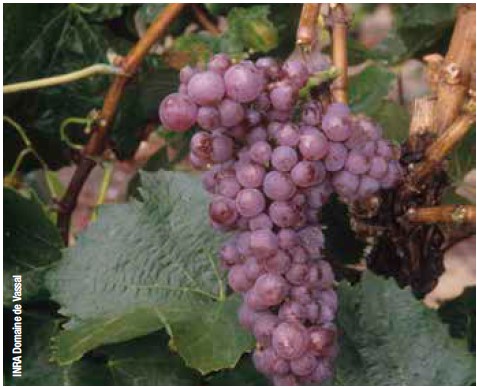
Rudolph the Red-nosed Moose or what

For all, Season’s Greetings by way of the following. Since it would be less than optimal if you’d end up with Rudoplh the Red-Nosed Moose before your sleigh tonight just by sloppy translations.

Also as an intermission: Would you know which is which, of the below …?
And then, there’s continental differences …
First up, the Elk:
elk-06
Servus Canadensis, the wapiti indeed. Next up, the Elk:
130673480_moose_463656c
know as such in Eurasia including those tinny pebbles off the coast called the British Isles. Looks suspiciously like the Alces Alces that is the Canadian (oh well, and US, yes, you may join) Moose, doesn’t it?
Because it is…! But you moose’ent confuse the two with each other nor with the reindeer a.k.a. caribou:
reindeeris5
Rangifer Tarandus, since this one’s for Saami and Santa.

Are you feeling elky now ..? Or move to the Caribouan; you’ll never have problems with the above there … Oh deer we’re in seriousness-trouble here…

Beter proeven

Er zit beweging in de wijnsmaken.
Waar we voorheen nog “alleen” de bekende aromawielen hoefden te begrijpen – en naar eigen bevind van zaken hoefden te interpreteren… – is er sinds kort de benadering waarbij dat idee, zeker qua onderscheid tussen (voornamelijk) neus en smaak wordt verlaten, en vooral wordt geproefd naar Verhouding: zoet, zuur, zout, bitter, umami; Mondgevoel: strak/stroef, vol/filmend; Smaakintensiteit: (hoog-laag); Smaakcomplexiteit: (breed-smal) en Smaaktype/karakter (elegant, verfijnd -stevig, robuust).

Voorbijgaand aan het idee dat een wijn bijvoorbeeld een element van blauwe bes in de smaak heeft. Onder het motto: “Het is wijn, van druiven, dus niet van blauwe bes dus de smaak van blauwe bes kan er niet inzitten”. Dit motto is door chemische analyse naar het rijk der fabelen verwezen – wetenschappelijk is aangetoond dat het stofje dat in blauwe bes zit en de typische blauwe-bessmaak geeft, daadwerkelijk ook aanwezig is in wijn die naar blauwe bes smaakt. Voor andere smaaktyperingen zal hetzelfde gelden.
Exit exit aromawielen.
Entrat … natuurlijk zit er enige waarde in een andere benadering; alleen maar smaken is wat kaal. Maar:

  • Wie heeft ooit verzonnen dat ‘umami’ een *basis*smaak zou zijn ..? Check gewoon even deze, en zie dat het er met de haren ingesleept moet worden en dan alsnog niet past: Er staan vier basissmaken en een indruk – niet voor niets!! Omdat het woord in de oorspronkelijke taal zoiets betekent als ‘van alles veel’ … van alle basissmaken ja.
  • Zie aldaar (link) dus ook andere indrukken: En daar wilde ik het met u over hebben. Heet, menthol, … waarom niet ook alcoholscherpte, tanninescherpte, etc., en ook kruidigheid, notigheid, etc. ..?
  • Of gaat dat weer over de scheef en zien we die gewoon terug in het aromawiel…:
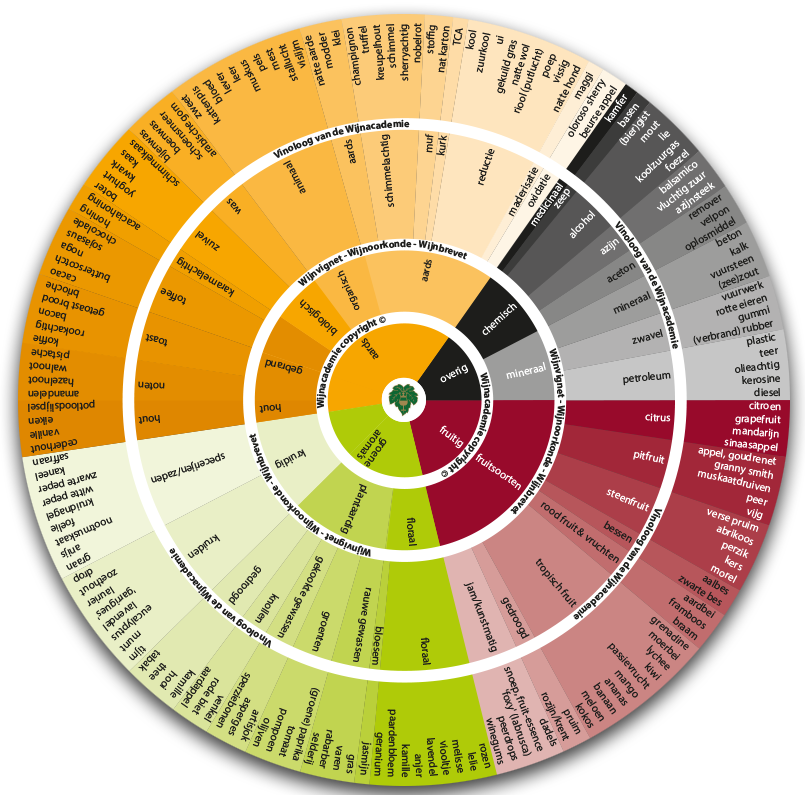
    [Copyright Wijninstituut; hopelijk is dit privégebruik toegestaan…]Oh ja … daar staan ze al, de kruiden en noten.
    Wel, wat ik daar eigenlijk wilde opmerken: We hebben dan de smaken uit het wiel waarbij we intensiteitskarakteristieken kunnen aangeven en daarnaast nog vier à vijf indrukken of sensaties. Oh, voorafgegaan door een beoordeling van kleur/helderheid/zuiverheid (kijken), en dan dus de smaken zowel qua neus als smaak, de laatste apart gescoord naar primair, secundair en tertiair.[ En daar kunnen we natuurlijk ook aan toevoegen dat goede proevers wél de grondsoort etc. (ook terroir in het algemeen) beter-dan-random weten te duiden. Als er, zoals sommige onderzoeken suggereren, geen enkel spoor van de grond in de wijn proefbaar zou zijn, dan nog … hoe komen de proevers dan op beter dan random uit? Ja, bij graniet in de grond groeien de planten nu eenmaal anders dan op rivierzand. En zal de wijnmaker anders optreden. Etc. Etc. ]

    Nou ja, voor de goede orde; voor kleur gebruiken we deze:
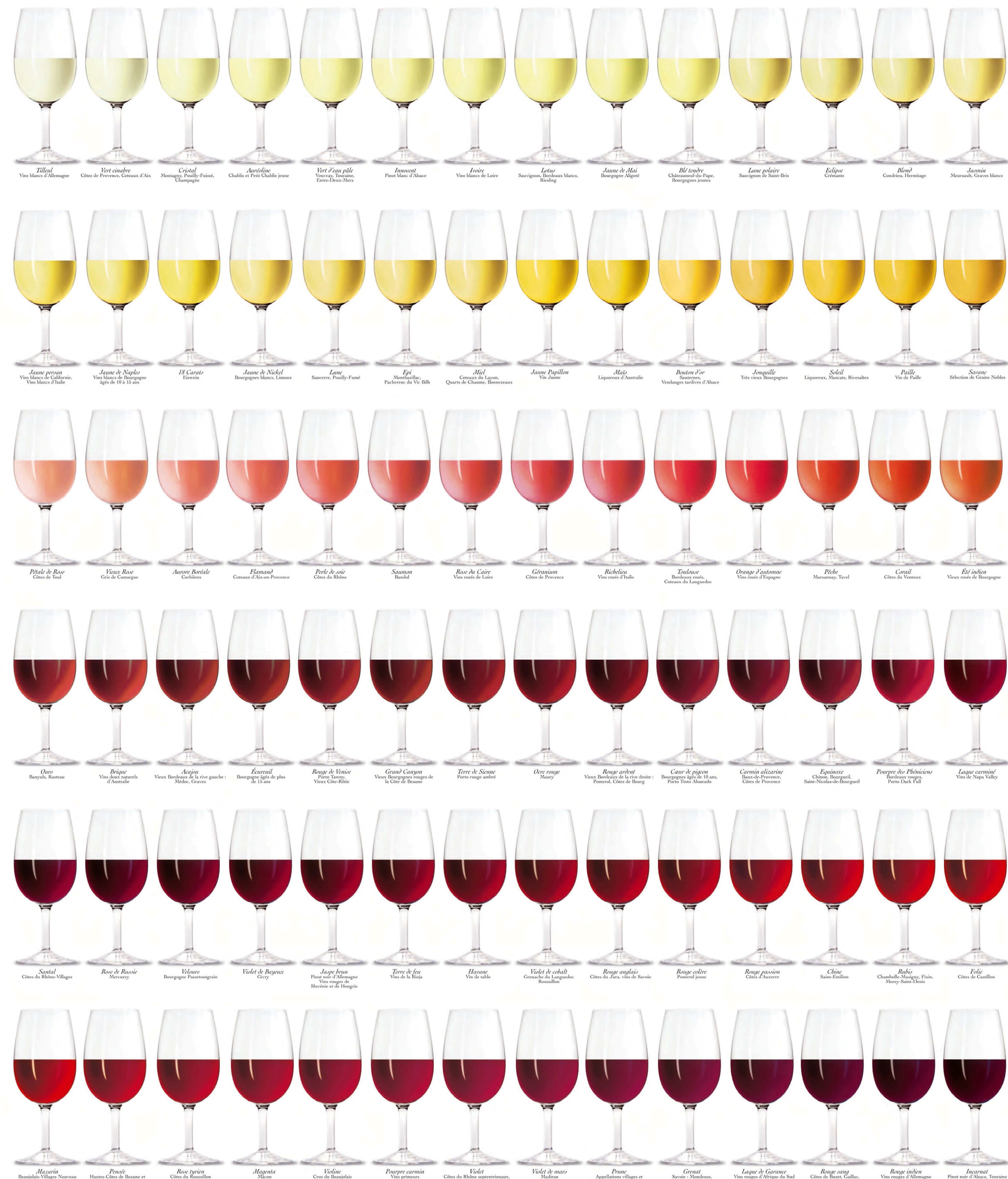
    [Ook © … hm.]

    Of … gaan we echt helemaal anders te werk en nemen we deze? I think not …

    uiterlijk (oog) score:

    oppervlak:briljant olieachtig, helder, mat, veelkleurig, anders:

    helderheid: kristalhelder, briljant, helder, iets troebel, erg troebel, anders:

    koolzuurgas: grote bellen, kleine belletjes, geen belletjes, anders:

    geur (neus) score:

    eerste indruk: aangenaam, middelmatig, plezierig, onaangenaam, anders:

    intensiteit: sterk, voldoende, zwak, zeer zwak, anders:

    kwaliteit: heel mooi, voornaam, eerlijk, gewoon, hard, anders:

    karakter: bloemig, kruidig, fruitig, dierlijk, madeira, anders:

    lengte: lang, matig, kort, zeer kort, anders:

    afwijking: koolzuurgas, zwavel, verschaald, azijn, hout, anders:

    smaak (mond) score:

    eerste indruk: aangenaam, goed, gewoon, slecht, matig, anders:

    zoetheid: zoet, likeurachtig, droog, zeer droog, fluweel, anders:

    zuurgraad: iets zuur, fris, soepel, levendig, flets, anders:

    body: vol, overvloedig, rijk, weinig, koppig, warm, anders:

    intensiteit: sterk, matig, zwak, kort, lang, zeer intens, anders:

    kwaliteit: zeer goed, elegant, prettig, gewoon, matig, anders:

    karakter:

    strak (wrang, koffie, chocolade, citroen etc..)

    filmend (fruit, honing, room, boter etc..)

    uiterlijk kleur (oog) score:

    kleur witte wijn: groen tint, lichtgeel, kanariegeel, goudgeel, strogeel, anders:

    kleur rosé: helderroze, dieproze, paars, vaal roze, bleek, anders:

    kleur rode wijn: helder rood, kersrood, robijnrood, granaatrood, purper, anders:

    totaal indruk score:

    evenwicht: harmonie, ruim voldoende, voldoende, niet goed, anders:

    afdronk: eerlijk, stabiel, niet prettig, gezond, krachtig, anders:

    duur afdronk: zeer lang, lang, matig, kort, anders:

    fouten: wrang, azijn, metaal, muis, ranzig, bitter, anders:

    totaal score:

    Enne, even een intermezzo-uitsmijter uit wiki; zoek de vele vergissingen:

    Het 1- en 3-sterren systeem wordt vooral toegepast in het lage- en midden marktsegment. De 5-sterren-, 20- en 100-puntensystemen vooral bij grotere proeverijen in meestal het hogere marktsegment.

    1-stersysteem

    Eén ster of geen ster wordt gebruikt als systeem in een vooraf bepaalde prijsklasse. De wijn krijgt een ster wanneer zij goed gemaakt is. Dit vaak na de toetsing van één of enkele beoordelaars, handelaren of schrijvers zoals in de tegenwoordig populaire wijnalmanakken en gidsen.

    3-sterrensysteem

    De criteria kunnen per proeverij of vakhandel anders uitgelegd worden. Ruwweg komt het erop neer,
    1 ster – een goede wijn voor de prijs waarvoor het wordt aangeboden
    2 sterren – een goede wijn met een zeer goede prijs/kwaliteit verhouding
    3 sterren – een bijzonder goed gemaakte wijn voor relatief weinig geld

    5-sterrensysteem

    Het beoordelen met een 5-sterrensysteem is gebaseerd op de drie criteria van geur, smaak en harmonie. Soms worden er in plaats van sterren ook wel wijnglaasjes weergegeven.
    1 ster – bevat veel fouten
    2 sterren – voldoende
    3 sterren – goed
    4 sterren – zeer goed
    5 sterren – excellent

    20-puntensystemen

    Frans

    Het Franse 20-puntensysteem wordt nog veel gebruikt in Europa. De evaluatie is gebaseerd op de volgende criteria:
    Kleur: fouten, niet mooi – 0 punten / in orde – 1 punt / briljant – 2 punten
    Helderheid en zuiverheid: stoffig, mat, dof – 0 punten / helder, zuiver – 1 punt / kristal-helder, briljant – 2 punten.
    Geur (parfum, bloemen boeket): geen waarneembare geur, slecht en bedorven – 0 punten / zwak, diffuus – 1 punt / aantrekkelijk, schoon, zuivere tonen- 2 punten / zeer goed, evenwichtig, geurig, fijn – 3 punten / karakteristiek , uiterst fijne en sterk – 4 punten.
    Smaak (body, extract, zoetheid, zuren, tannine): bedorven, slecht – 0 punten / geen wijnsmaak afwijkend – 1 punt / leeg, dun, weinig expressie – 2 punten / sterk – 3 punten / zuivere tonen, expressief – 4-5 punten / full-bodied, aromatisch, rijk, vol karakter – 6 punten / stijl, uitstekend, perfect – 7 punten.
    Algemene indruk (harmonie, finesse, afwerking): slecht, conflictueus – 0 punten / korte afdronk, weinig harmonieus – 1 punt / goede algemene indruk – 2-3 punten / middellange tot lange afdronk evenwichtig, typisch, delicaat – 4 punten / lange afdronk, fijn, zeer harmonieus, grote wijn – 5 punten.
    De basiswaarde van de wijnbeoordeling is 0 punten en daarmee het laagst mogelijke. De afzonderlijke punten van kleur, helderheid, geur, smaak en algemene indruk worden bij elkaar opgeteld en genoteerd als eindcijfer. Op officiële proeverijen worden de details van de afzonderlijke criteria echter zelden openbaar gemaakt.

    COS

    Hetzelfde geldt voor het 20-puntensysteem dat bekendstaat onder de naam COS. COS is afgeleid van de Latijnse woorden, Color (kleur, helderheid), Odor (geur) en de Sapor (smaak). De criteria zijn als volgt gedefinieerd:
    Color – uiterlijk, kleur, helderheid, met een maximum van 2 punten,
    Odor – geur met een maximum van 6 punten
    Sapor – smaak, met een maximum van 8 punten
    Daarnaast krijgt het voor de algemene indruk maximaal 4 punten.

    In het COS-systeem wegen de criteria geur en smaak dus sterker dan het eerder genoemde Franse 20-puntensysteem.
    Voor beide 20-puntensystemen geldt dat een wijn met een score van 10 punten of minder wordt beschouwd als niet in orde. Tussen 10 en 12 punten, niet bevredigend. Van 12 tot 14 punten wordt zij als goed beschouwd en tussen 14 en 16 punten als zeer goed. Vanaf 16 punten spreekt men van echt mooie wijnen en vanaf 18 punten van topkwaliteit.

    100-puntensysteem

    Verkopers van wijn gebruiken de toegekende punten voor een wijn graag als verkoopargument.
    Het inmiddels wereldbekende 100-puntensysteem is tegenwoordig vrij algemeen in gebruik. Het wordt ook wel het Amerikaans puntensysteem genoemd. De populariteit van deze schaal kan komen vanwege de vergelijking met andere 100-puntensystemen of toepassing van percentages zoals bij veel (internationale) scholen, opleidingen en beoordelingen.
    Hoewel, de basiswaarde die een wijn in dit puntensysteem krijgt is minimaal 50. Onder deze 50 punten namelijk is een wijn niet de moeite waard om te worden beoordeeld. Bij die 50 punten komen er maximaal 5 punten bij voor het uiterlijk, 15 voor de geur, 20 voor de smaak en 10 voor de algemene indruk. Wijn met een totaal score van 50-75 punten wordt aangemerkt als zwak, 75-79 als gemiddeld, 80-84 goed, 85-89 als zeer goed en van 90-95 buitengewoon goed. Van 95-100 wordt een wijn als opmerkelijk groots beschouwd.

    Kritiek

    Wijn beoordelen door middel van getallen roept kritiek op. In grote lijnen kan er wel een selectie gemaakt worden, maar een uitgebreide omschrijving ontbreekt. De toegekende punten doen zich vaak voor als absolute uitspraak van kwaliteit. Het is nu eenmaal erg lastig te omschrijven hoe een wijn smaakt, en zal door een ieder anders worden ervaren. Ook al maakt men gebruik van de voor proefnotities gebruikte vakjargon, het vertelt alleen iets over de eigenschappen van een wijn en niet hoe de wijn exact gaat smaken. Hierom kan dit leiden tot verkeerde interpretaties. Bij mensen die niet professioneel hiermee te maken hebben ontstaan vaak problemen met het begrijpen van wijnbeschrijvingen zoals die worden gebruikt in de professionele journalistiek, of bij proeverijen. Met name de symbolische concretisering van de wijnterminologie kan een bron van irritatie zijn.

    Dat gezegd hebbende, verdient u uiteraard een plaatje:
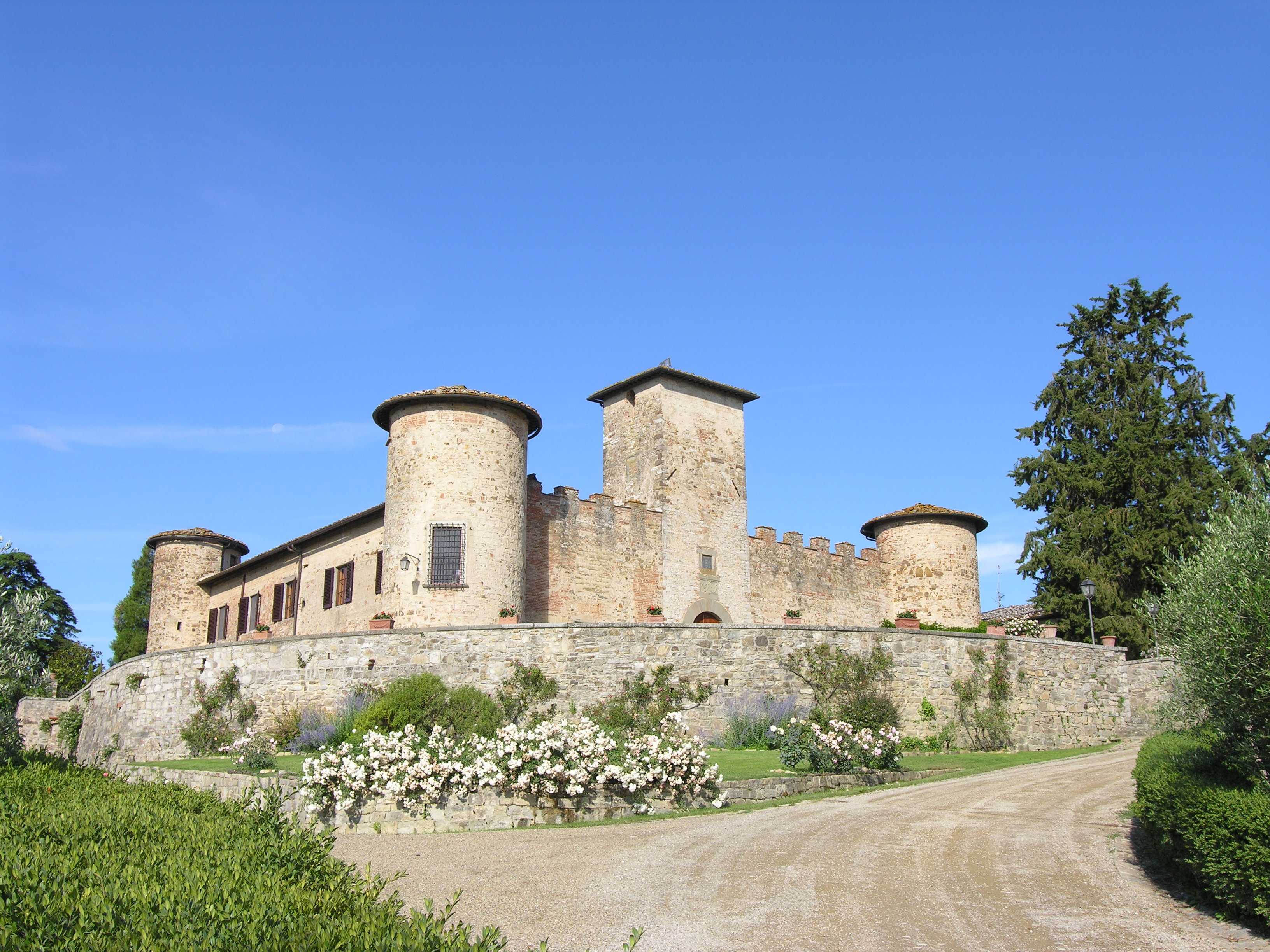
    [Uitstekende wijnen, van deze “B&B”; Castello di Gabbiano]

What’s good for you (infosec)

Although it’s well-known to many that the infosec behaviour as required by organisations of their employees, doesn’t conform with what the employees [that according to the theory of firm, are the organisation not ‘processes/procedures/”GRC”‘ ridiculousness nor capital] would want, as all strive to reach their individual ill-aligned, together inconsistent and incomplete objectives.
Since infosec in this, borders on the (sum of the) individual ‘contributions’ in this (too) and the emergent property achieved infosec for the organisation. And since no-one has ever been able to bridge the gap in a methodological sense between set member characteristics and emergent properties … We can aggregate but will not reach the emergent by definition (or the emergent would be seeded in the elements already; no need for emergence); we can disaggregate but will never implant any meaningful noise in the properties as it is exactly that which was lost during the ‘initial’ aggregation / collection into set characteristics. Meaningful noise being the original elements’ noise on any concept. Politically, one would reference Ortega y Gasset here; great holday season’s reading .

Aren’t we lucky then, that we will not hinder those already doing it… The above is methodoligically unsteady and unrigorous. Practice will allow us to reach infosec nirvana – which is far off total security: cost, effectiveness and flexibility being the limiting factors – if only we’d try, we could align what we want from ‘users’ to fit along their personal objectives and motivations, and moods, so well that ‘users’ will unnoticedly do the right thing. Link may not apply.

Plus, :

[Talk about right things … the battlefield from Little Round Tops, Gettysburg]

Paretonovation

How innovation often is about shedding some and gaining some.
In a Pareto efficient frontier location switch way. It’s a hunch; I’m not going to put it through a rigorous motion of formulas or so – and, as always, the harder the data looks, in economics-the-ugly-duckling-sibling of sociology the more implicit ssumptions are used behind the scenes that outside the model don’t hold an inch and ruin the practical value (by any definition) of your ‘model’.

But it should be interesting to push te idea a little further out: Schumpeter’s destruction here a little, improvements elsewhere, suboptima in some bounded mean time, and the sum total being better for all in the end. Or not… It seems that pursuing creative destruction, be it innovation beyond near-continuous but tiny improvement or be it ‘disruption’ [ugch I’ll go wash my mouth now], has often failed to deliver – probably because it failed to see the mean time and didn’t include ‘in the end’. Both being states of loss, almost certainly and possibly respectively vaguely stated.
Only if innovation were focused on analysing properly what the Ist and the Soll are, can we estimate the infinite number of curves that will take us there, whether among those infinite we can actually design to choose and whether the Soll is better on scales of value and judgement that we care about. ‘We’ being humanity; if you think you can have a divide between us and them, you’re dismissively incompetent and/or haven’t read Harari’s 21 Lessons. Only then will you find that the Soll might be designed, but engineered society is a mirage [just like MIS by the way.]

But without the notion of Pareto, no-one will know where to look, where to go, what the road to there is about.

[Edited to add: And with the above, one may figure out what touchy points one may encounter during change programs – on what dimensions will some parties have to retreat, forcidly, from the optimum once had, before one might move to some other place where that dimension may be maximised beyond the previous? Will parties be able to improve on all their dimensions of interest, or will there be a balance (lose on some, win on some dimensions), or worse (lose on all), and is that all worth it when some other parties may win only, and who will call the shots overall ..?]

Does this post end anywhere fruitful or at least positive? Of course it does:

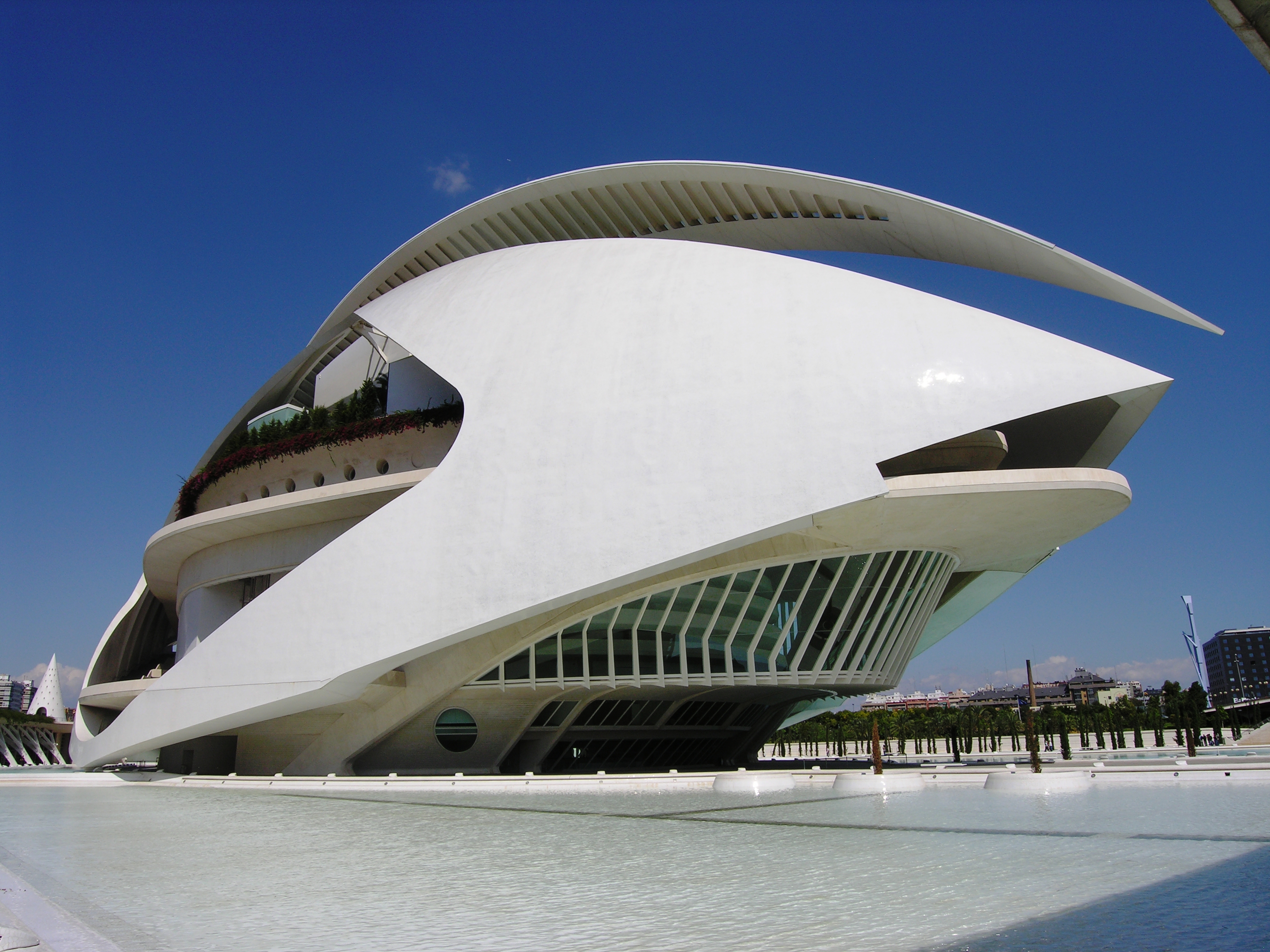
[Opera! Opera! Valencia!]

Health advice (intermezzo)

“It’s well-known that wine is in fact a medicine. It’s packed with vitamins and anti-oxidants and all sorts of trace elements. Red wine even more so. All very good for you. Essential. Wine is better for you than even chocolate. Of course, if you opt for the wine/chocolate combo then it’s practically the same as going to a health spa.”

Edited version as found in a relevant but oddly pear shaped theme textbook.

Of course, we support your health, with this advice, and with the advice to drink in moderation. Sip-and-taste about one eight’ glasses, times eight different wines side by side, and you’ll be all the richer in the above [scientifically proven: one glass of wine a day is much healthier than not drinking at all!], and have a joyful time, and learn and improve your discernment qua the good things in life. Triple whammie.

Oh, and:

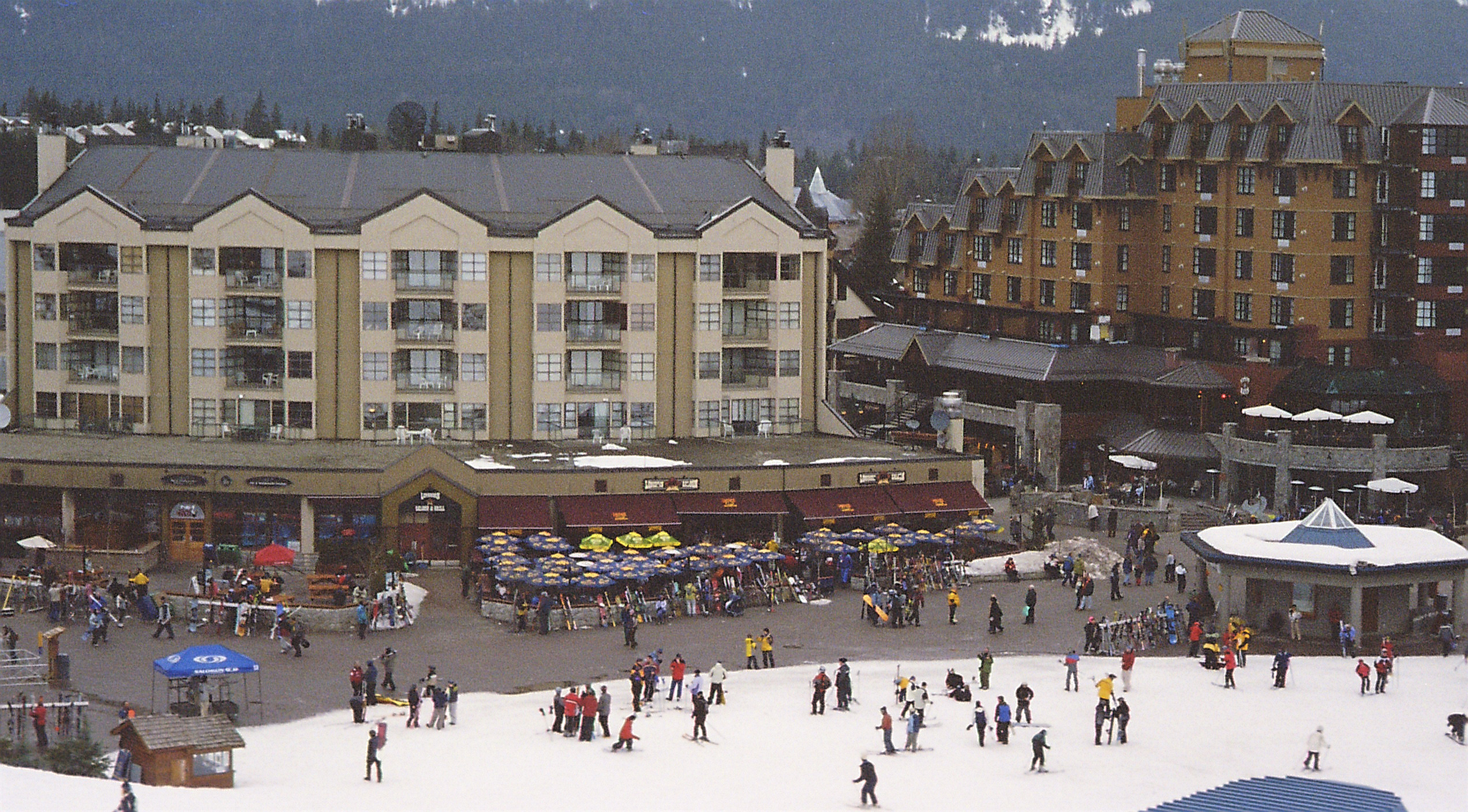
[Possibly (!), good wine (BC) may be on the menu here. Otherwise, enjoy anyway; Longhorn Saloon, Whistler – yeah, 2002 analog pic…]

Eat your veggies …

Why oh why can’t restaurants get their act together, and offer balanced menus ..?

Since if one eats out, the quality is so desperately poor [regardless of class / price range !] that one is starved for worthwhile stuff.

Only a few get it right; like this one.

No, it is not that customers will get what they ask; they will get what the chef (?) put on the menu. Customers will also not ask what they don’t know is possible to get.

Or …, next time ask for a veggie-based menu with meat/fish as a add-in not the mainstay.
[‘Proteins’ is an ugly expression indeed, suitable for those who say ‘organs’ not tripes. ]


[Or continue in your style which will go the way of this ‘style’ / meme…]

Super, Cluster 0.0

How is it that Amsterdam promotes itself as a – the Supercluster, re bloktsjain in particular, when already this goes around ..?

Either ones are dunces kicking a dead horse and no competitor supercluster region had any need to tell them, or what are they hiding and is it a good idea at all to hide anything worthwhile these days, as any globally interesting development needs the globe’s best brains anywhere to develop into anything fruitful ..?
The latter raising the concern that all this ‘super’cluster thinking is derived from some ancient proto-civilisations’ notion of importance of geography. Contra the culture that the sought-after Innovators and Early adoptors live in.
So, either one hasn’t a clue of what one gets oneself into, or one doesn’t care for ‘supderduper’ cheap office space next to some loud and noisy fidgeting neighbour clueless, or one nomads – a. if that is a verb, b. when understood to not deny geography or locale but also transcends those.

[Written from a coffee corner (not -shop or -outlet); not for image building or good coffee and the wifi is sketchy – just happenstantially as should be OK]

Well, I’ll move on, with:
[All straight corners according to WordPress…, see the previous post; Porto]

Sunk asphalt

About how one can ‘invest’ over and over again, into a known sinkhole. [Below in Dutch, since that’s where author is victim [well…] of the problem in particular.]

The mantra, since the invention of cars and traffic jams: Pour more asphalt. [Tarmac for the Brits; in a couple of years, will be forced to accept coloniszation by the US anyway]
The mantra, a variant of the sunk cost fallacy..? Since each and every time [barring exceptional local exceptions], more asphalt doesn’t seem to help. It battles symptoms [of …!?] for a short while, and then the traffic jams reoccur, often worse than before. Only serious economic downturns seem to help a bit hardly ever a byte, temporarily. What reoccurs often sets new records. Road constructors support the mantra again, do their thing, and … Nothing changes, really. On the tax payers’ expense, billions are spent not solving a problem, often making it worse, and not being invested in real solutions. Yes society has chosen to act this way and not take the real, but change-means-fear-of-painful-uncertainty steps to solve the cause not the symptoms; but yes that still is Stupid of the sort that statesmen [note: as the opposite in capabilities to politicians] should rise above. But that requires balls [M/F/LBGTQ], and we’re stuck with politicians…

Oh, and also this.

When …?
[Your Blue Pill of not even bread but circuses, below; when 15sec of fame is a lot already]


OK, in het Nederlands dan, omdat gebleken is dat vele lezers in ons oh zo internationaal georiënteerde landje zich liever in een knus hoekje terugtrekken dan basis-Engels willen lezen laat staan begrijpen.

Over hoe er keer op keer op keer bergen geld in een bodemloze zinkput worden gegooid.
Met, sinds de uitvinding van de auto en van files het matra: Meer asfalt lost de files op!
Het mantra is gewoon een variant van de sunk cost fout. Omdat ie-de-re keer, hoge uitzonderingen hier en daar wellicht niet te na, meer asfalt nog nooit is gebleken ook maar een zier te helpen, integendeel. Alleen serieuze economische achteruitgang helpt een beetje, tijdelijk. Wat erna terugkomt, zet telkens weer nieuwe records. Wegenbouwers en hun hulpjes de enkele hoogleraren met onderzoeksgeldgebrek komen dan weer met het mantra aanzetten, mogen weer bos en ander groen verpletteren, en dan … niets. Op kosten van de belastingbetalers worden vele miljarden over de balk gesmeten aan het niet oplossen van files – geld dat niet in echte oplossingen kan worden gestoken. Ja de maatschappij heeft gekozen zo in de eigen sh.t te blijven wentelen in plaats van de tsja veranderen-geeft-angst-voor-pijnlijke-onzekerheid echte aanpak van de oorzaken niet de symptomen én Ja dat is de soort stupiditeit waartegen echte staatsmannen [zucht, ja hoor, V/M; maar in uiterste tegenstelling met politici, beslist ook V/M!] zouden optreden. Maar ja, politici [M/V/LBGTQ] en ballen hè?

Oh, en deze.

Wanneer toch …?
Ach, er is altijd nog:

[De Blue Pill van niet eens brood maar spelen; NYNY]

The 2000 of 2018

Because all sorts of hoi polloi pundits are out there, ‘polling’ (quod non, just repeating the meh mediocrity) for the Top 2000 of 2018 on the ray-the-ohw and elsewhere, herewith the real deal definitive Top 2000.
Which of course isn’t; it’s the Top 2282 for one thing and Definitive is slightly understating it. If you hadn’t guessed, #15 is about me.
And yes, it is downloadable in plain Excel, for your own tinker and play, in this file; checked and clean (no subversive content).
Next, a few little notes (repeated from last year):

  • “That’s odd! The usual numbers 1 to 50 aren’t where they’re ‘supposed’ to be by common standards!” Correct. Because I‘m ‘Rekt. The list is mine; why put the Mehhh songs high up there? They’re in there somewhere, but its my list, my preferences..! yes I do like some almost-forgotten songs better, sometimes much, much better, than the expired old hands.
  • Especially.. see the notes, when the clip (much) enhances the song(s). Wouldn’t that mean the song in itself isn’t fully complete ..? No, it means in (since) the age of video, songs with clips (‘integrated’) can much surpass mere songs by themselves, for a cubed sensory experience.
  • There’s more than 2000 yes. Because, already after the first 500 or so, determining the relative rankings becomes awkward. Hence, the cut-off would be random …! (why not 2048, that would make more sense in this digital (i.e., binary) age). The result is quite random in the end, too, indeed; some of the last songs ‘should’ be up much higher…
  • If you would still have some (preferably wacky) songs you miss, please do comment them to me. I’ll see whether I’d want to include them still, or not. Hey, it’s my list so I decide, geddid?
  • The actual end result order is far from definitive (sic). It depends heavily on one’s momentary temper and the memories that spring to mind like Proustian madeleines. And on one’s ability to hear quality. Such is life.
  • When dabbling with the Excel file yourself, feel free to play around with the ranking mechanism. What worked for me, was to first split the songs into bins of about 250 size (designate some song to be in the first bin that will end up being ranks 1-250, another song to bin 5, which is around the 1000-1250 mark, etc.), then sizing down bin 1 etc. to 8 smaller bins. Then, numbers 1-50 get a personal treatment one by one to their end rank, the rest gets (got) a random allocation within their bracket. After this, sort and re-apply number 1-whatever. Through this, actual intermediate bin sizes aren’t too important.

Then, as a long, very long list – I’ve cut it off a the 50 mark already otherwise it would get ridiculous…

1 Hustle Vann McCoy Yes, the original
2 Easy Livin’ Uriah Heep To power it up
3 White Room Cream Nicely powerful, doesn’t wear out too easily
4 Heart Of Gold Neil Young Hits the heart
5 Hide and Seek Howard Jones Same, if you listen well
6 74-’75 (+Video) Connells The video sublimates the message
7 Peter Gunn Emerson Lake & Palmer Just for the intro alone
8 She Elvis Costello Personal nostaliga
9 Windowlicker (+Video) Aphex Twins Incomplete, as a work of art, without the video
10 Nice ‘n Slow Jesse Green Calm down again
11 One Of These Days Pink Floyd Hidden pearl
12 Smoke On The Water Deep Purple Of course
13 Simple man Lynyrd Skynyrd For some ‘burn
14 The Man With The Red Face (+Video) Laurent Garnier Incomplete, as a work of art, without the video
15 You’re So Vain Carly Simon I think this song is about me!
16 Dancing Barefoot Patti Smith Hidden treasure
17 Right Here Right Now Fatboy Slim Oft forgotten, defined an era
18 The Great Gig In The Sky Pink Floyd Appealing complexity
19 All I Need Air Mindfulness in musical form
20 Dream On Aerosmith Heartburn
21 You Got To Fight For Your Right to Party Beastie Boys Appealing. Simply that.
22 How Deep Is Your Love Bee Gees
23 We’re So Pretty Sex Pistols
24 Dust In The Wind Kansas
25 Whole Lotta Rosie AC/DC
26 We Will Rock You Queen
27 Chelsea Dagger The Fratellis
28 I Want You To Want Me (live at Budakan) Cheap Trick
29 Tribute Tenacious D
30 Three Times A Lady Commodores
31 School’s Out Alice Cooper
32 Barracuda Heart
33 Hold Your Head Up Argent
34 Waterfall Atlantic Ocean
35 Tequila The Champs
36 Troy Sinead O’Connor
37 Smells Like Teen Spirit Nirvana
38 Saturday Night Herman Brood
39 Walk This Way Aerosmith & Run DMC
40 Spank Jimmy ‘Bo’ Horne
41 Energy 52 Cafe del Mar
42 Paradise By The Dashboard Light Meat Loaf
43 Ashes To Ashes David Bowie
44 Higher Ground Red Hot Chili Peppers
45 I Will Always Love You Dolly Parton
46 Born To Be Alive Patrick Hernandez
47 A Piece Of The Action Babys, The
48 Teardrop Massive Attack ft T’Pau
49 Highway To Hell AC/DC
50 Everyone’s a Winner Hot Chocolate

See the other 2232 listings in this file. Oh – check your browser maybe the file won’t download properly.
And a pic for your viewing pleasure:

[The Smith’ Art-something; DC]

Maverisk / Étoiles du Nord