
Yet again, this time a not quite that oldie one without further ado…:
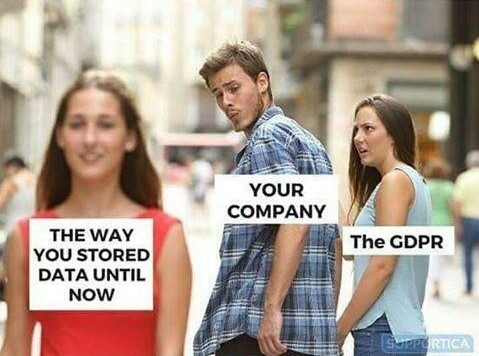
[Ohw source … Something-Compa… Supportica IT company. Sorry!]
Blog
Fog(gy) definitions, mist(y) standards
If you thought that containers were only something to ship wine in, by the pallet, you a. would be right, b. would maybe have overslept on the new concept, c. would not mind I introduce the next thing, being fog computing. I’m not making this up as a part, or extension, of low-hanging cloud computing.
You think I’m kidding, right? Or, that I should have called it mist computing which is a thing already but only a somewhat different thing… You’re still with me?
Then it’s time to read up. And weep. Over this here piece that sets the standard, quite literally.
There. You see ..? Indeed low-hanging, as in the stack … That wasn’t so hard. But implementation will be, if required to be secure. Have fun, will TLS. Or so.
OK, this post was as it stated just an introduction to the IoThing – I was serious though about the Go Study part. Plus:
 [Cloudy top cover, smiley backside of a place of worship; Ronchamps FR]
Nation(state)s No More / Not Yet
Recently, Jamie Bartlett posted an excellent analysis of the probability of the return of the nation state of the future of the planet. If only to have so many ‘of the’s in a row.
Yes another one on the future of nation-states, now not from a bottom-up perspective but from an overall view.
The case is strong in that piece. But then, I had been having recurring … thoughts, about the evaporation of the legitimacy of the nation-state as well. Where my subconscious hinted, it was no clearer, that there was, and certainly is, a place in the discussions for on the one hand, Bruce Schneier’s ideas about sizes of societies and the rules one would need to organise them (which may read like a circular argument, I know), and on the other, various well-received (e.g., this) and hardly rejectable works on how we still roam the savannahs of today – at least in mind when operating in myriads of Sloterdijk’ian spheres (op.cit. in particular pp. 408–). And how e.g., cosmo- and anthropogenesis in religious books can be interpreted both as a coming of age of the well-developed human and ditto mind(s), indeed including the formation of societies and their rationale(s).
By which I mean that somehow, we indeed still have many traces of hunter-gatherer ethics deep down in our systems, now with a varnish of ‘development’ (quod non) into farmer/city-centered civilians, currently being thrusted in (evolutionary) asymptotically zero time past neoliberal capitalist/consumerist ego-only’ism into the frenzy of ‘tomorrow’ i.e., the post-singularity ASI age.
Shouldn’t we try to figure out some model of societal organisation that takes into account our heritage, and now that “we” have become sophisticated enough thinkers to finally see (macro-mass introspection-like) how we meddled along in the past from attempt to attempt, we now are also sophisticated enough to design our own macro-history future ..?
OK, that’s deep. In a way. In another:
 [Whatever. This is what society wants … bread and circuses (squares?); NY]
Modern democracies – are they party-less ..?
It seems that we’re in Transition times… When there hardly is a country’s election anywhere (where they’re relatively Free), where the parties of old still hold. Sway, that is, as in determining unchallenged the outcome of the elections and party lines to follow. Even when the result is a failed-from-the-start dangerous president, or just a continuation of bland (colourless) neutrality in ‘policy’ pursued.
Despite the previous fears of breakthroughs of ultra-right parties and ‘strongmen’ (not so much; it’s rather pathetic (mix of embarressingly silly and punishing for loudness)) – and notice that those parties have gained in strength and depth of followership, maybe not ‘won’ but there to dominate from the shady (!) backgrounds in many situations – everywhere what we see more, is that ‘traditional’ parties have crumbled, qua lead over the others, qua dominance in cabinet formations, et al., and/or are prone to in-fighting and scism tendencies (because of that, or were on the path to anyway; cause and effect running in circles).
What is left, is countries with impotent mixes of parties, party fractions and -factions, when these countries are affluent to an over-the-hill kind of rapid collapse in some near future. Or countries that weren’t affluent / aren’t-affluent-because-of, being lead by strong men with suppressed expression of political fracticide. The vast majority of presidents around the world are the perfect example of why republics collapse, and are at best equal but often worse off than kingdoms with their long-term views (when the king/majesty represents the nation, accidentally also in one person).
We digress.
When party politics (internal/external) are thus rendered impotent by their own doings, and parliamentary representative democracy is through that dragged down (in)to the muddy levels of shamefulness, what chance would blockchain-based societies, notion-of-nation-unhinged geographic regions, etc., have to be reconsidered as alternatives, e.g., the Heineken Map ..?
Alasdair MacDuck
Just a Friday’s folly about Alasdair MacIntyre who, in his seminal and, when you’re into it (finally) quite pleasurably readable, After Virtue, has on pp. 243-244 (I have another edition 😉 ) “The name of the common wild duck is histrionicus histrionicus histrionicus.” – apart from this, it also is not true. The Mallard is; Anas platyrhynchos it is.
And now, I do challenge thee – was this ‘error’ on purpose or not, and if so, either to dare you to check it, or to pass off some signal to some kabal that reads his work and had put him under pressure ..? (As may be the reference close-by of secret passwords/passphrases of spies and double agents, and the three spelling errors in the book.)
Now, it’s weekend… plus:
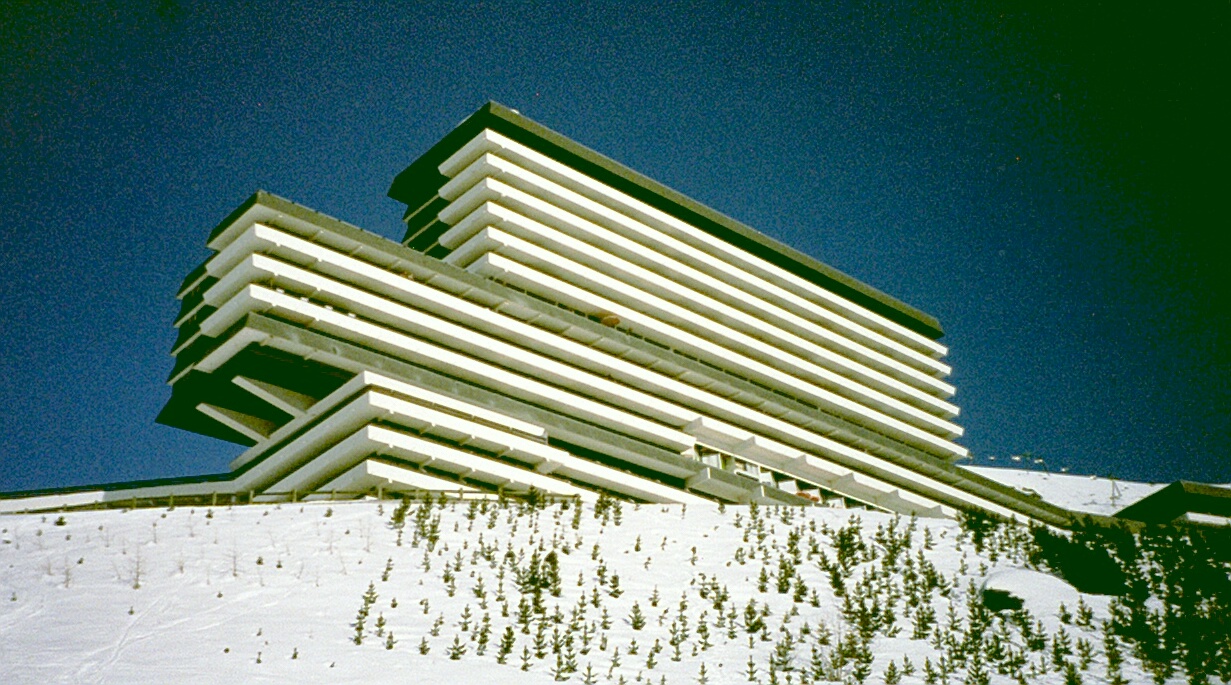 [Now that’s low-light analog-to-digital conversion… decades ago, at Les Ménuires]
3D of the nudging to simplest infosec behaviour
Before you’re put off by the title its complexity … [Oh. You clicked. Wave function collapsed long before; ed.] This post is about improving the People part of infosec. Beyond the mere ‘awareness’ that begets you … a couple of days’ attention, then slippage into muchlessofthesame.
Two roads away from the dead end you were in, open up:
- Nudging. Which is about small, inobtrusive and non too brainwashing incentives and disincentives, rewarding and penalising the good and bad so that ‘users’/people choose to do right without having to rationalise through all sorts of intricate, overly (sic) complex lines of reason why some shimmy is better than another twist. Just gently guide, don’t Law and Forbid. [Edited to add: This post was drafted and schedules for release weeks ago, before that Nobel Laureate was awarded his medal for this very method…]
- Secure simplest option. Like the great many traffic controls; no traffic lights but roundabouts – the former, can be run through at high speeds in the middle of the night (and other times); the latter, require slowdown or you’re thrown off the road. The secure solution being the obviously simplest – the simplest solution being the secure one. People will take the simple road in stead of the difficult one. Better make the simplest one the safest. Not require the user to jump all sorts of complex hoops for safe behaviour! Like password complexity rules: The more you make them ever more difficult, the harder it is for users to resist finding loopholes and escape vents like writing them up (which isn’t a bad solution per se, but …). And in the end, you’ll loose the arms’ race against skillful attackers anyway; at the point where their smartness is hardly less than benign users need to get into your systems, you’ll have to revert to some other way anyway (re: dead end roads).
- Ah, I’m not one for counting all that simple…
Smart trickery. This of course being a perfect example … a 3D zebra (road-crossing). Many great, very-marketable other such solutions may exist, to your (image’s!) advantage.
Now that you’ve read the above, how would you change your infosec ‘controls’ throughout …? Like, filling out the last matrix of this, in a smart way and changed to general infosec …?
For an additional bonus, outline how you apply this to your GDPR-compliance efforts… And:
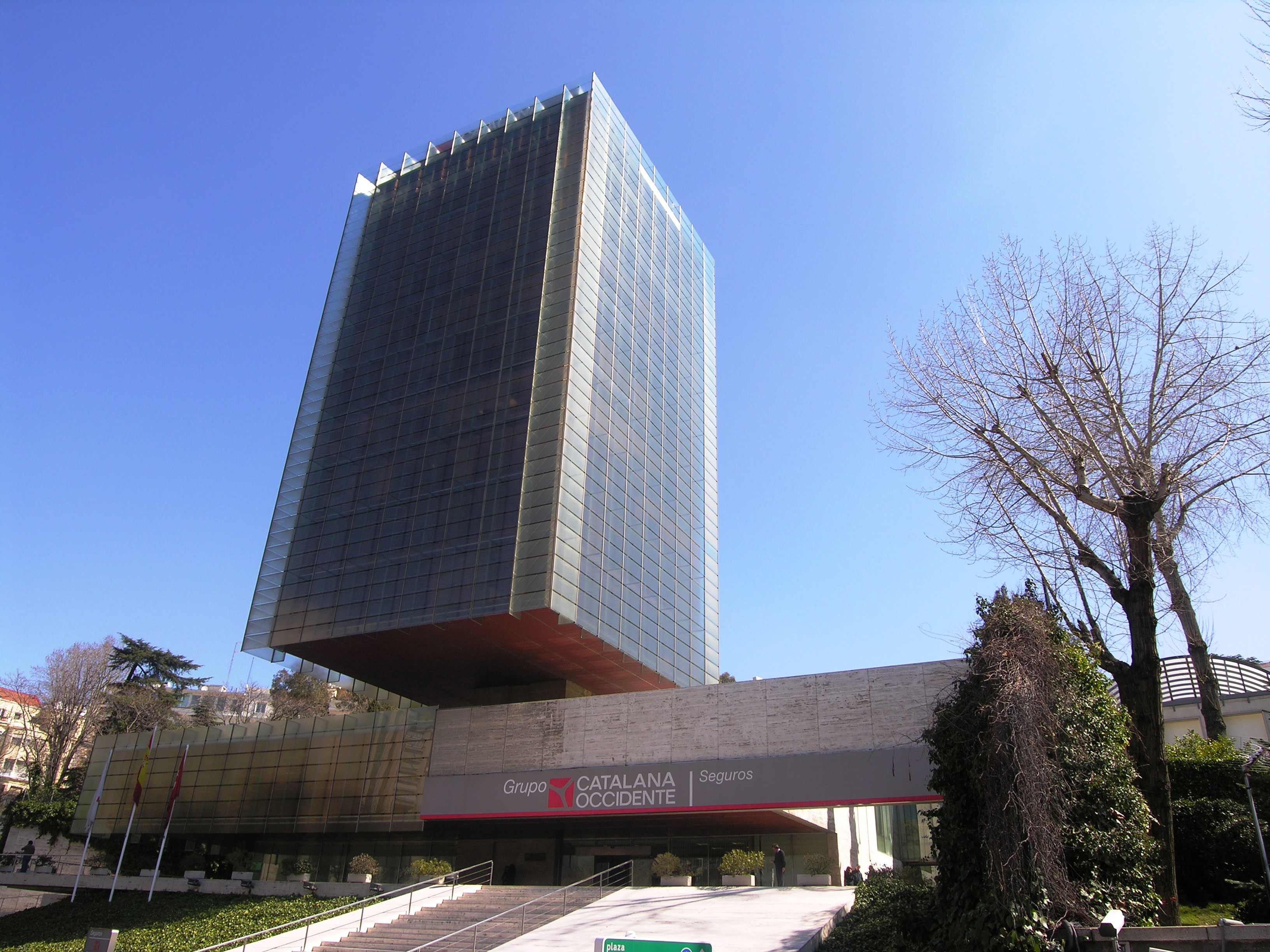 [Advertising the trust you can have in this Insurance co.; Madrid]
Measure and/or die
For 10 points only, not the usual 50/100/150 and without pictures to color, identify the stupidity of this here rambling with an air of sophistication…
The ‘quality’ (quod non) of which is nicely summed up in the ‘metrics chart’ ..: “If you can’t measure it, you can’t improve it” – referring to the degree (sic) of the stupidity; unimprovable…?
Be aware Always (link, here again yes), people, …:
Not everything that counts, can be counted, and not everything that can be counted, counts ..!
Oh well. Nice effort to get from ‘nothing’ to ‘something’: when shot for the moon and missed, one ends up between the stars.
In a vacuum, light years away from any matter. [Excepting virtual Heisenberg’ian particles; ed.]
Plus:

[To hope that one day, this king’s -dom may understand the British Crown / Commonwealth model before an all-out civil war breaks out…]
Top 2000++ of 2017 – before the herd
Because all sorts of hoi polloi pundits are out there, ‘polling’ (quod non, just repeating the meh mediocrity) for the Top 2000 of 2017 on the ray-the-ohw and elsewhere, herewith the real deal Top 2000.
Which of course isn’t; it’s the Top 2276 for one thing and Definitive is slightly understating it. If you hadn’t guessed, #14 is about me.
And yes, it is downloadable in plain Excel, for your own tinker and play, in this file; checked and clean (no subversive content).
Next, a few little notes (repeated from last year):
- “That’s odd! The usual numbers 1 to 50 aren’t where they’re ‘supposed’ to be by common standards!” Correct. Because I‘m ‘Rekt. The list is mine; why put the Mehhh songs high up there? They’re in there somewhere, but its my list, my preferences..! yes I do like some almost-forgotten songs better, sometimes much, much better, than the expired old hands.
- Especially.. see the notes, when the clip (much) enhances the song(s). Wouldn’t that mean the song in itself isn’t fully complete ..? No, it means in (since) the age of video, songs with clips (‘integrated’) can much surpass mere songs by themselves, for a cubed sensory experience.
- There’s more than 2000 yes. Because, already after the first 500 or so, determining the relative rankings becomes awkward. Hence, the cut-off would be random …! (why not 2048, that would make more sense in this digital (i.e., binary) age). The result is quite random in the end, too, indeed; some of the last songs ‘should’ be up much higher…
- If you would still have some (preferably wacky) songs you miss, please do comment them to me. I’ll see whether I’d want to include them still, or not. Hey, it’s my list so I decide, geddid?
- The actual end result order is far from definitive (sic). It depends heavily on one’s momentary temper and the memories that spring to mind like Proustian madeleines. And on one’s ability to hear quality. Such is life.
- When dabbling with the Excel file yourself, feel free to play around with the ranking mechanism. What worked for me, was to first split the songs into bins of about 250 size (designate some song to be in the first bin that will end up being ranks 1-250, another song to bin 5, which is around the 1000-1250 mark, etc.), then sizing down bin 1 etc. to 8 smaller bins. Then, numbers 1-50 get a personal treatment one by one to their end rank, the rest gets (got) a random allocation within their bracket. After this, sort and re-apply number 1-whatever. Through this, actual intermediate bin sizes aren’t too important.
Then, as a long, very long list. With a Moar tag otherwise it would be ridiculous… [i.e., for the complete list in the post, follow the link:]
| 1 | Hustle | Vann McCoy | Yes, the original |
| 2 | Easy Livin’ | Uriah Heep | To power it up |
| 3 | Heart Of Gold | Neil Young | Hits the heart |
| 4 | Hide and Seek | Howard Jones | Same, if you listen well |
| 5 | Peter Gunn | Emerson Lake & Palmer | Just for the intro alone |
| 6 | She | Elvis Costello | Personal nostaliga |
| 7 | White Room | Cream | Nicely powerful, doesn’t wear out too easily |
| 8 | 74-’75 (+Video) | Connells | The video sublimates the message |
| 9 | Windowlicker (+Video) | Aphex Twins | Incomplete, as a work of art, without the video |
| 10 | Nice ‘n Slow | Jesse Green | Calm down again |
| 11 | One Of These Days | Pink Floyd | Hidden pearl |
| 12 | Smoke On The Water | Deep Purple | Of course |
| 13 | The Man With The Red Face (+Video) | Laurent Garnier | Incomplete, as a work of art, without the video |
| 14 | You’re So Vain | Carly Simon | I think this song is about me! |
| 15 | Dancing Barefoot | Patti Smith | Hidden treasure |
| 16 | Right Here Right Now | Fatboy Slim | Oft forgotten, defined an era |
| 17 | The Great Gig In The Sky | Pink Floyd | Appealing complexity |
| 18 | All I Need | Air | Mindfulness in musical form |
| 19 | Dream On | Aerosmith | Heartburn |
| 20 | You Got To Fight For Your Right to Party | Beastie Boys | Appealing. Simply that. |
The logic of automated decisions;
ransparency through audits ..?
Not bashing, nor FUDhyping…
Was triggered by various treads, e.g., The Book on the subject (or, het boek in Dutch), and scores of elucidation (yes. be happy finally there is some truly) from the legal perspective, on GDPR article 15.1h and article 22.
The latter two not being conclusive, however. They are about requirements of transparency on the logic underlying automated decisionmaking. But there is no clarity about how deep that should go. Will “Hey your data is processed by some AI system [literally, factually incorrect statement because it’s only Machine Learning at max, today; does that construe a false statement i.e. fraud ..? ed.] and even we the builders ourselves have no clue what goes on in there – that’s the whole point of using it besides being able to fire a great many inherently expensive humans and we don’t care the least about the biases and other grave errors of the system it works fine for us!” be acceptable? Hint: No. Will “Oh it’s so intricate that we, let alone you, have no clue when looking at the audit trails that the system generates” fly? Same hint.
Because here, we see a new area developing for IS auditors: Auditing ‘AI’ [quod non but read ‘ML’ and you’re good; ed.]. As IS auditors are (supposed to be, I happen to know a fair share of peers … etc.) the experts in gauging systems functioning qua .. reliability overall, too. Which goes way beyond mere C-I-A but still, has Always been part and parcel of IS auditors’ education, right ..? I will come back to you soon, with more definitive info on how IS auditors should go about this all.
Oh by the way yes I did already notice that the more the system in scope behaves, and is constructed to behave, intelligently like the average (sic! statistically you have zero reason to put yourself above that! oh wait you read my blog so you are definitely, way off the right end of the scale) human, the more the audit will have to be like we audit humans today. Uniting psychoanalysis and explicit rules on paper (in procedures, algorithms et al.), very dogue much fun.
Plus:
 [Though a flat, and has iron, legally misidentified as flatiron …; NY – Pic tilted to fit in the pic frame of course]
The state of ad ML
A sad state it is, when WordPress continues to Always (there you go) capitalise Always (yup) automatically. There was some other words as well, that get capitalised like it’s a product ad. Except that I’m quite 100% male so have no business nor advertising value for the A product range…
Stop it! You annoy me. Which is bad, very bad.
Plus:
 [The exact spot of origin of Oh Say Can You See … for no apparent reason. Hint: O!]