Blog

Not just Q, IQ

Well, yesterday’s post was about just a quote, this one’s about what should be a full cross-post but hey, I’m no wizard I’ll just blockquote it from here because it’s so good (again, qua author):

Society in the Loop Artificial Intelligence

Jun 23, 2016 – 20:37 UTC

Iyad Rahwan was the first person I heard use the term society-in-the-loop machine learning. He was describing his work which was just published in Science, on polling the public through an online test to find out how they felt about various decisions people would want a self-driving car to make – a modern version of what philosophers call “The Trolley Problem.” The idea was that by understanding the priorities and values of the public, we could train machines to behave in ways that the society would consider ethical. We might also make a system to allow people to interact with the Artificial Intelligence (AI) and test the ethics by asking questions or watching it behave.

Society-in-the-loop is a scaled up version of human-in-the-loop machine learning – something that Karthik Dinakar at the Media Lab has been working on and is emerging as an important part of AI research.

Typically, machines are “trained” by AI engineers using huge amounts of data. The engineers tweak what data is used, how it’s weighted, the type of learning algorithm used and a variety of parameters to try to create a model that is accurate and efficient and making the right decisions and providing accurate insights. One of the problems is that because AI, or more specifically, machine learning is still very difficult to do, the people who are training the machines are usually not domain experts. The training is done by machine learning experts and the completed model after the machine is trained is often tested by experts. A significant problem is that any biases or errors in the data will create models that reflect those biases and errors. An example of this would be data from regions that allow stop and frisk – obviously targeted communities will appear to have more crime.

Human-in-the-loop machine learning is work that is trying to create systems to either allow domain experts to do the training or at least be involved in the training by creating machines that learn through interactions with experts. At the heart of human-in-the-loop computation is the idea of building models not just from data, but also from the human perspective of the data. Karthik calls this process ‘lensing’, of extracting the human perspective or lens of a domain expert and fit it to algorithms that learn from both the data and the extracted lens, all during training time. We believe this has implications for making tools for probabilistic programming and for the democratization of machine learning.

At a recent meeting with philosophers, clergy and AI and technology experts, we discussed the possibility of machines taking over the job of judges. We have evidence that machines can make very accurate assessments of things that involve data and it’s quite reasonable to assume that decisions that judges make such as bail amounts or parole could be done much more accurately by machines than by humans. In addition, there is research that shows expert humans are not very good set setting bail or granting parole appropriately. Whether you get a hearing by the parole board before or after their lunch has a significant effect on the outcome, for instance.

In the discussion, some of us proposed the idea of replacing judges for certain kinds of decisions, bail and parole as examples, with machines. The philosopher and several clergy explained that while it might feel right from a utilitarian perspective, that for society, it was important that the judges were human – it was even more important than getting the “correct” answer. Putting aside the argument about whether we should be solving for utility or not, having the buy-in of the public would be important for the acceptance of any machine learning system and it would be essential to address this perspective.

There are two ways that we could address this concern. One way would be to put a “human in the loop” and use machines to assist or extend the capacity of the human judges. It is possible that this would work. On the other hand, experiences in several other fields such as medicine or flying airplanes have shown evidence that humans may overrule machines with the wrong decision enough that it would make sense to prevent humans from overruling machines in some cases. It’s also possible that a human would become complacent or conditioned to trust the results and just let the machine run the system.

The second way would be for the machine to be trained by the public – society in the loop – in a way that the people felt that that the machine reliability represented fairly their, mostly likely, diverse set of values. This isn’t unprecedented – in many ways, the ideal government would be one where the people felt sufficiently informed and engaged that they would allow the government to exercise power and believe that it represented them and that they were also ultimately responsible for the actions of the government. Maybe there is way to design a machine that could garner the support and the proxy of the public by being able to be trained by the public and being transparent enough that the public could trust it. Governments deal with competing and conflicting interests as will machines. There are obvious complex obstacles including the fact that unlike traditional software, where the code is like a series of rules, a machine learning model is more like a brain – it’s impossible to look at the bits and understand exactly what it does or would do. There would need to be a way for the public to test and audit the values and behavior of the machines.

If we were able to figure out how to take the input from and then gain the buy-in of the public as the ultimate creator and controller of this machine, it might solve the other side of this judicial problem – the case of a machine made by humans that commits a crime. If, for instance, the public felt that they had sufficient input into and control over the behavior of a self-driving car, could the public also feel that the public, or the government representing the public, was responsible for the behavior and the potential damage caused by a self-driving car, and help us get around the product liability problem that any company developing self-driving cars will face?

How machines will take input from and be audited and controlled by the public, may be one of the most important areas that need to be developed in order to deploy artificial intelligence in decision making that might save lives and advance justice. This will most likely require making the tools of machine learning available to everyone, have a very open and inclusive dialog and redistribute the power that will come from advances in artificial intelligence, not just figure out ways to train it to appear ethical.

Credits

•Iyad Rahwan – The phrase “society in the loop” and many ideas.
•Karthik Dinakar – Teaching me about “human in the loop” machine learning and being my AI tutor and many ideas.
•Andrew McAfee – Citation and thinking on parole boards.
•Natalie Saltiel – Editing.

And, of course for your viewing pleasure:
DSC_0370
[Would AI recognise this, an aside in the Carnegie Library; Reims]

Just Q

… Just some quote, from a relatively random source, in a series of more of the same:

Some people have complained to me about Siri’s failure to answer certain requests, but I often recall that these are the same people who persistently complain about human service providers also.

From Ray Kurzweil’s How to Create a Mind (p.161), full of these sort (or even wittier; to follow) off the cuff remarks: They make the reading much more interesting; a thing to emulate!

DSC_0329
[3 x (4 straight, 1 oaked, 1 reserve) = 18 still wines to assemble into one cuvée, before secondary fermentation; Ployez-Jacquemart (some bottles out of sight, for those who count ;-]

Nopsrisk, Irisk

When it’s time, it’s time. Of course, meaning that the tough get going.
Lately, there has been a resurgence in Risk Management. In particular, in Operational risk management. That has been outclassed. Due to, among others, the calimero hanging-on at the tails of financial risk management but having failed to gain traction because the latter’s models were wholly inapplicable and seriously outright unusable for ops risk, due to having no clothes of one’s own (still, the upstart little peasant kid wanted to be emperor), due to having been outflanked by its little nephew of Information / IT Risk Management. That took on the coat of ‘cyber’ (#ditchcyber!) and gained prominence on all the vast wastelands that were left for the picking — and are now overwhelming the heartland with their successes in actual, frontline, FLOT hand-to-hand combat and battles (won).

Time, maybe, to give IRM the prominence it deserves, and forego the subsumption under ops risk ..?

It’s nothing personal…
DSCN9405
[Soon again: Serralves]

Not your clients!

An outcry: Stop calling ‘clients’ what are just mass tools to make a profit (incl public sector…) for your actual clients…!

When, why, did the non-politically grossly in-correct usage of ‘clients’ come from, where not only the Facebooks of this world will serve you crumbs and deliver your value to others ..? Because all sorts, yes the dullest of dullest too or in particular, of public sector organisations fall prey to the emptiest of sympathies when they denote their fully captives as ‘clients’, or at best, ‘civilians’ as if they themselves are not the most average, mediocre, irrelevant of those denominiations themselves ..? ‘Clients’ of a social services organisation ARE NOT; apologies for the shout, they are captives, with no alternative to turn to (like actual clients could) but the actual client is some politician(s) that have just enough brains to be the last one standing / clinging to their seats while everyone of anything approaching intelligence even at great distance, will have left or have been pushed out by actually caring for the ‘clients’s interests.
‘Clients’ are just the mass fodder, nothing (sic) more despite all the efforts to paint a social, relating picture.
Get real. Stop the outright lying.

Oh well.
DSCN0544
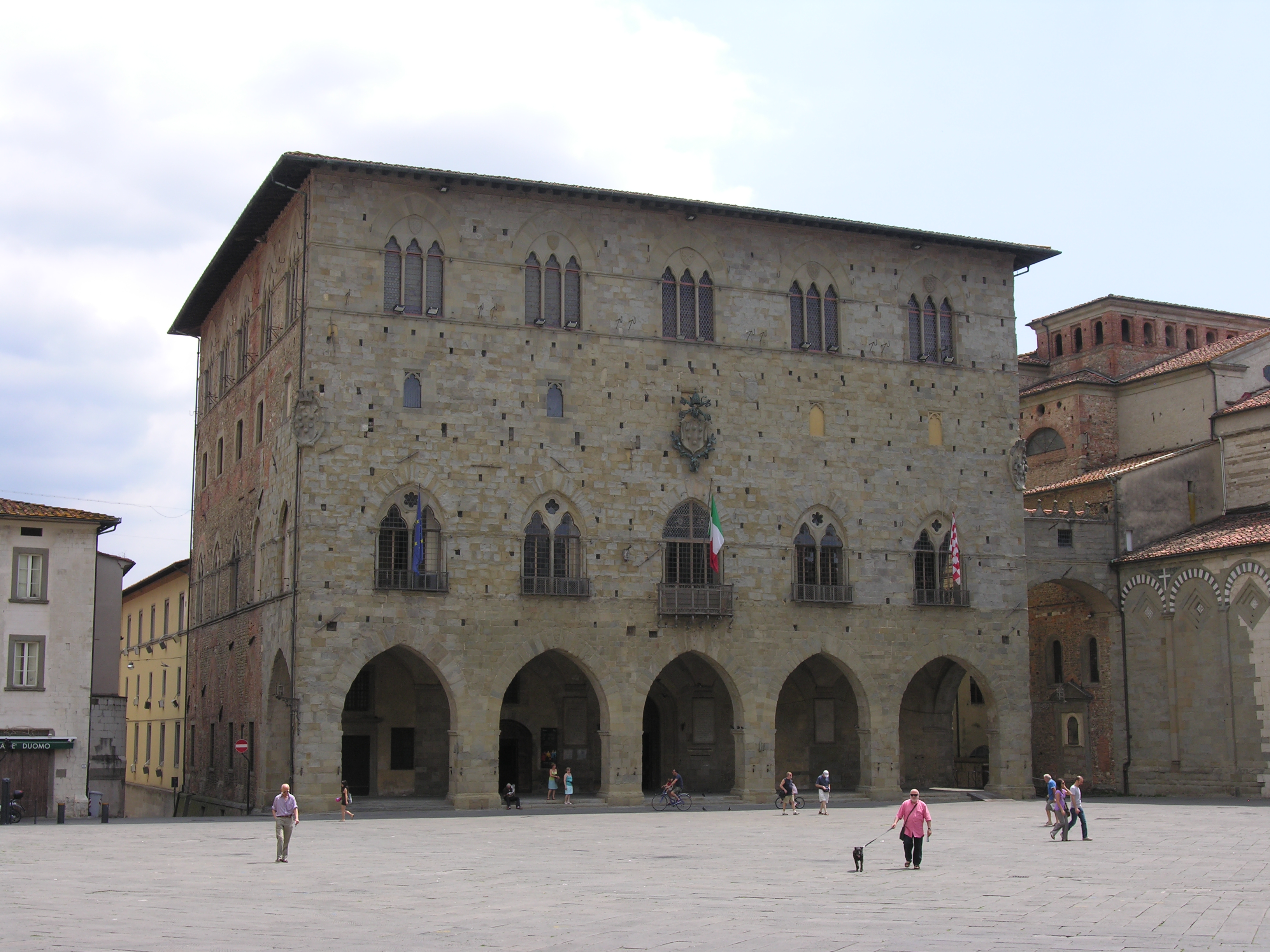
[Actual palace of the People; of course this is Pistoia]

Cucumber going bananas

Anyone care to share their found most sorry news item re information security this Summer? Since it appears that the Cucumber Season (silly season) of InfoSec has started already. I mean: Is there anything infosecnews that is greeted with more than a wry cynical smile ..? Like, you know, “Been there done that ages ago, like, last May”. And nothing that the General Public panics about, that wasn’t in the same response category on the In side.

Or …? Is there anything that you, as the Insider par excellence, might go bananas about? Your vote opinion counts!

20160408_154334
[Prayers go the same way, still may have changed somewhat; insider tip: Old Church Amsterdam]

DAUSA

Maybe we should just push for a swift implementation of the megasystem that will be the Digitally Autonomous USA. No more need for things like a ‘POTUS’, or ‘Congress’ or so. When we already have such fine quality of both and renewal on the way into perfection (right?), and things like personal independence and privacy are a sham anyway, the alternative isn’t even that crazy.

But then, there’s a risk (really?): Not all the world conforms yet to, is yet within, the DAUSA remit. Though geographical mapping starts to make less and less sense, there’s hold-outs (hence: everywhere) that resist even when that is futile. The Galactic Empire hasn’t convinced all to drop the Force irrationality and take the blue pill, though even Elon Musk is suspected of being an alien who warns us we’re living in a mind fantasy [this, true, actually — the story not the content so much].
But do you hope for a Sarah Connor ..? Irrationality again, paining yourself with such pipe dreams.

On the other hand … Fearing the Big Boss seems to be a deep brain psychology trick, sublimating the fear of large predators from the times immemorial (in this case: apparently not) when ‘we’ (huh, maybe you, by the looks of your character and ethics) roamed the plains as hunter-gatherers. So if we drop the fear, we can ‘live’ happily ever after; once the perfect bureaucracy has been established. Which might be quite some time from now you’d say, given the dismal idio…cracy of today’s societal Control, or may be soon, when ASI improves that in a blink, to 100,0% satisfaction. Tons of Kafka’s Prozesses be damned.

Wrapping up, hence, with the always good advice to live fearlessly ..! 😉

20160529_135303
[Some Door of Perception! (and entry); De Haar castle]

Print Goodbye World

Somehow, got triggered that there’s a near future where 100 print “Hello world” would meet with Sorry Dave, I can’t compile that not even with warnings (what; no 200 End ..!?) — because one’s not supposed to be able to influence the Machine. No red pills allowed.

Oh the things that keep me awake at night [they don’t]. Soon, baby, soon. Plus:
DSCN6171
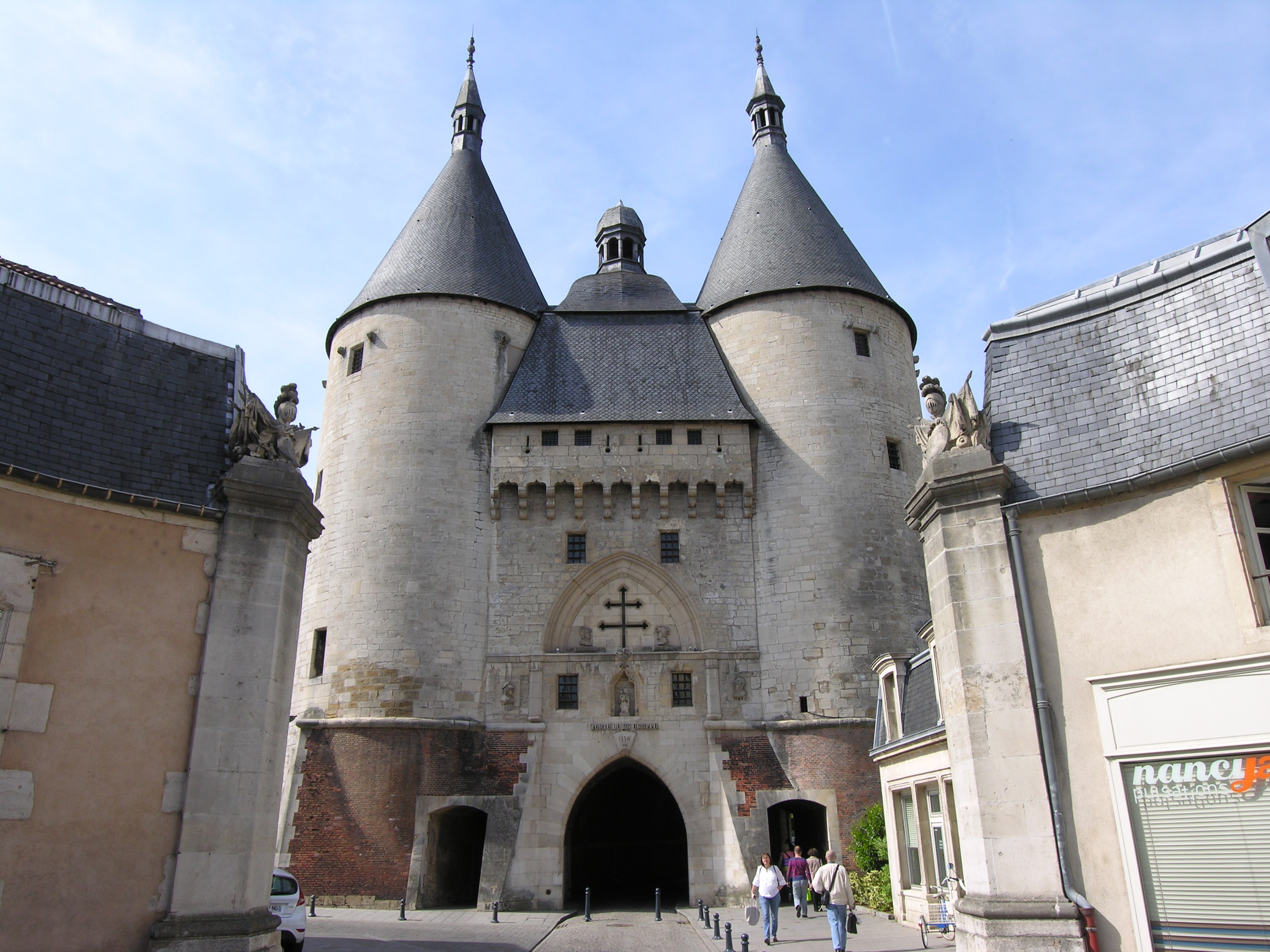
[Just Lotharingen things; Nancy]

Generation Majordomo

In a slight twist of fate, two weeks ago some fashionable magazine decided to drop caps off ‘Internet’ and just write it internet.
Back then, when drafting this post. About the good times, when people hung out at Woodstock or so, or, well, say, since the 80s, when all sorts of inventions brought one wave of new jargon words and meanings after another.

Also when it struck me that, e.g., ‘majordomo’ seems to be a derelict word. At least, re moderated discussion sites. What Happen — All Your Base Are Belong To Us is almost gone, superseded by Dat Boi (as here). ‘PC compatible’, ‘carriage return’, ‘portals’, ‘surfing’, ‘fax’, ‘PDAs’, ‘modem’ (Hayes compatible, 2800 baud!), ‘Alta Vista’ (the search engine), ‘dynamic HTML’, … all goners.

But apart from the curiosity value, and a few Googled sites with partial information, there’s no real one go-to (sic, or even Goto Considered Dangerous!) site or, in?appropriately, physical location where one can find exhibits of Lost Computer Words.

How sad. We’re losing massive historic reference here, people! Get up and Do Something!

’cause I have no clue how to tackle such a thing… But I do have:
DSCN6309
[A gem oh so easily missed; the Aubette at Place Kléber Strasbourg — sorry old unedited pic, still]

Save a few

Just a reminder; Dutch lower gov’t agencies struggling with storage formats … (Here, in Dutch, but Alphabet Translate (heh that still doesn’t ring well!) may help)

There may be hope for (!) privacy. And:
DSCN1053
[Nice, functional (as / where it is), and certainly will look Old before you know it; La Défense]

Pebnickanic

Hey why are so many using PICNIC instead of the age-old PEBKAC ..? No, I’m not complaining ‘because’ old, nor on the ‘ …, got the T-shirt’ route. Just would want to know. Is it that the latter is too difficult to remember the meaning of ..? If so: Sad for its Shallows calibre. If otherwise: Please advise.

Well then…:
DSCN0241
[Trismegistus’ view on things. Obvious where.]

Maverisk / Étoiles du Nord