Blog

Chronology of the birth of the information society ..?

A shout-out for pointers; as Chris Anderson noted in Makers, Western society had a breakthrough in the … 18th ..? century when patents were invented.
As they signified the realization that intellectual ideas, innovations, are actually things in themselves, existing outside of physical reality. As first step on the road to Singularity. [Oh, philosophers already had the nous idea and maths; but those alien ideas didn’t get the societal traction that inventions did … (?)]
Notwithstanding (heh: ) that patents might go the way of the scaffolding under an arch: once the keystone is placed, the scaffolding can go. Once the Information Society stands on its own, patents may go ..!?
And, there’s a separate? line from ‘programming’ labour into machines powered by humans through implementation of tools etc. (spears and onwards) via ‘programming’ through implementation of machines proper, to programmable machines, to general purpose programmable ‘computers’ and now in some catch-up wave, taking all of IoT on board and moving waaay past, into programmable human minds (psychology-as-a-science driven brainwashing; was around since the dawn of time, now can be done still buggy, somewhat (sic) reliably), past humans into Watson And Friends. With such brain (sic) power, who needs friends ..?

But this all was just some ad lib rambling. What I am looking for, is actual studies into these phenomena, preferably not Hegel-oriented… Any ideas, pointers?

And this:
20150911_153231
[Oh the days of Machine… Amsterdam]

Where are VR, its breakthroughs ..?

Dropping another question for your tons of response … haha.
Wondered why VR hasn’t broken through to ubiquity. What’s holding it back? I mean, I understand that it’s quite complex, not just an app to be installed and there’s all sorts of physical constraints and installations to be made as portable as possible — but still, hasn’t the invention been around long enough for some, Tesla- or Watson-like breakthrough to would have been able to surface ..?
First next one through the gate, can make a fortune. Leaping over the current offerings, that have so diligently explored all details? Or is it just that there already is enough reality to still be explored with all the senses, out there? That would explain how annual airline mileage still grows so much despite the explosion of touristically oriented vlogs let alone Youtupe channels that were said to replace so much travel.

[Edited to add before publication: Oh yes there’s some chatter lately about VR but that’s mostly about brain warping and rather fundamental still — corroborating my point.]

Oh well. This:
20150911_145750
[Get off your fat a’s, or travel by fat a boat — that’s a plane in the water.]

A quantum leap

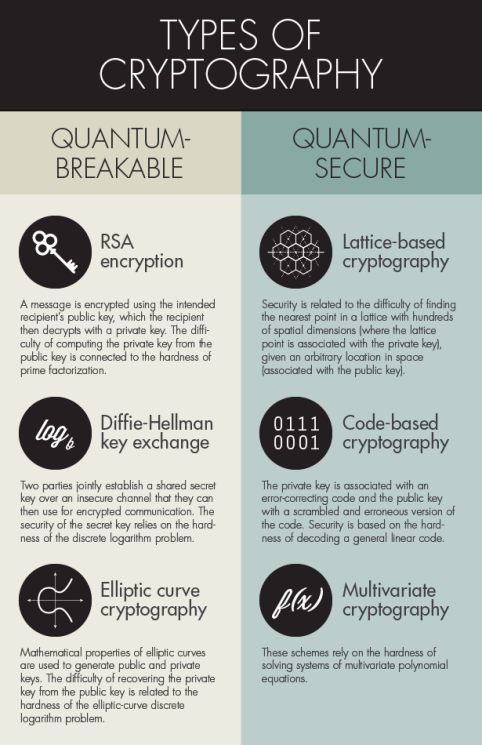
Remember, that (not) a great many days ago I posted some bits on crypto ..? There’s a new twist to it all, after the venerable Bruce noted that some agency started a new, this time ’round bit more fundamental round, on crypto algorithms. And then, some notes on the approach of quantum computing. Well, the latter is still five to ten years off (current estimates; could be three, could be twenty, as such estimates go).
But impacting. So, the following flew by:
CryptographyChart-1-482x745
Which explains a lot, hence I just wanted to pass it on. Bye for now.

BIOS hacked; bury it! ..?

Over the past year (five Internet years), we have seen regular messages about the ‘hacking’ of BIOSes. Due to which all that we can trump up for information security, is nullified through this lowest thinkable level form of unknown, unlocked backdoors.

After a week or so, usually the news value drops and we hear very little. Mainly by this being such a deep, deep into technology issue; a showcase of a class break — it’s hardly worthwhile to think about solutions. The perpetrators, usually considered to be agencies of powers-that-be of Western, Eastern or anything in between origin, are seen to mainly fight each other and we can only be mangled in between can’t we? The one taints the BIOS on the chips that the other installs, the other does the same the other way around. And, how long ago isn’t it that you yourself were babbling in de BIOS with some assembler or even lower-level code ..?

However, and this is similar to laws against crypto (as e.g., here), those with bad intent may use the backdoors just as the good guys (the above, that work their a’s off for your privacy, right?) might. And don’t we all want to remain at least a little in control ..?

Hence the question: What would be roadblocks against a solution of ‘isolation’ of a possibly tainted BIOS ..? I’m thinking here of some form of inverse, upside-down sandbox. That isolates and screens all messaging from and to the BIOS and filters all malicious, unauthorized stuff out.

This calls for clear and complete rules about what is generally good and normal, and what is naughty. We may solve that with checksums, hashes of extensive lists of functionality we would allow. But who calculates these checksums, and how reliable is the baseline when already off-the-dock OEM stuff may contain malware in the BIOSes; who can you trust ..? And all that white listing: Isn’t there a huge context dependency regarding superficially trustable but in effect malicious messages? With a sandbox we put the problem at a somewhat higher, more insightful level. Be it also somewhat ‘higher’ in the architecture which raises the question whether the sandbox is sufficient and isolates completely, all around. And the sandbox has to run on … the chip with (support of the) BIOS…
This creates an arms’ race where the bad guys (unsafe-BIOS-wanters) will try to make the BIOS circumvent or dig through the sandbox, and where the good guys will have to build repairs, patches and new versions to plug ever new the leaks. Looks almost like the information security we all know already.

And here, too, the question is: Who can we trust? The sandbox should be made and maintained by utterly independent experts. Do we know these Lone Wolves well enough, how do we establish the sufficiency of their technical expertise, what are their interests, aren’t they secretly (and I’m thinking double secrets here, too) bribed or coerced to let that one agency in despite it all? And, how do we know the patches we receive, would be reliable? If we can’t trust the most mundane of apps or -store, how can we be sure to not download an infected sandbox?

In short, the simple question of feasibility of a sandbox over the BIOS to keep things safe, ushers in a surge wave of new questions — but those are all questions we already have on other, ‘higher’ levels of security: Are the patches of the applications we have, reliable? What about the antimalware-software we deploy (yeah, bring in the ‘haha’)? The employees and contractors of our Managed Security Provider (we chose, NB, as lowest-cost supplier)?

But also for this reason, my question is: What do I miss; are there principled, logical fallacies here or is it a matter of (tons of) effort that we put in, should be prepared to put in?

Dazzles one. Hence, for relaxation:
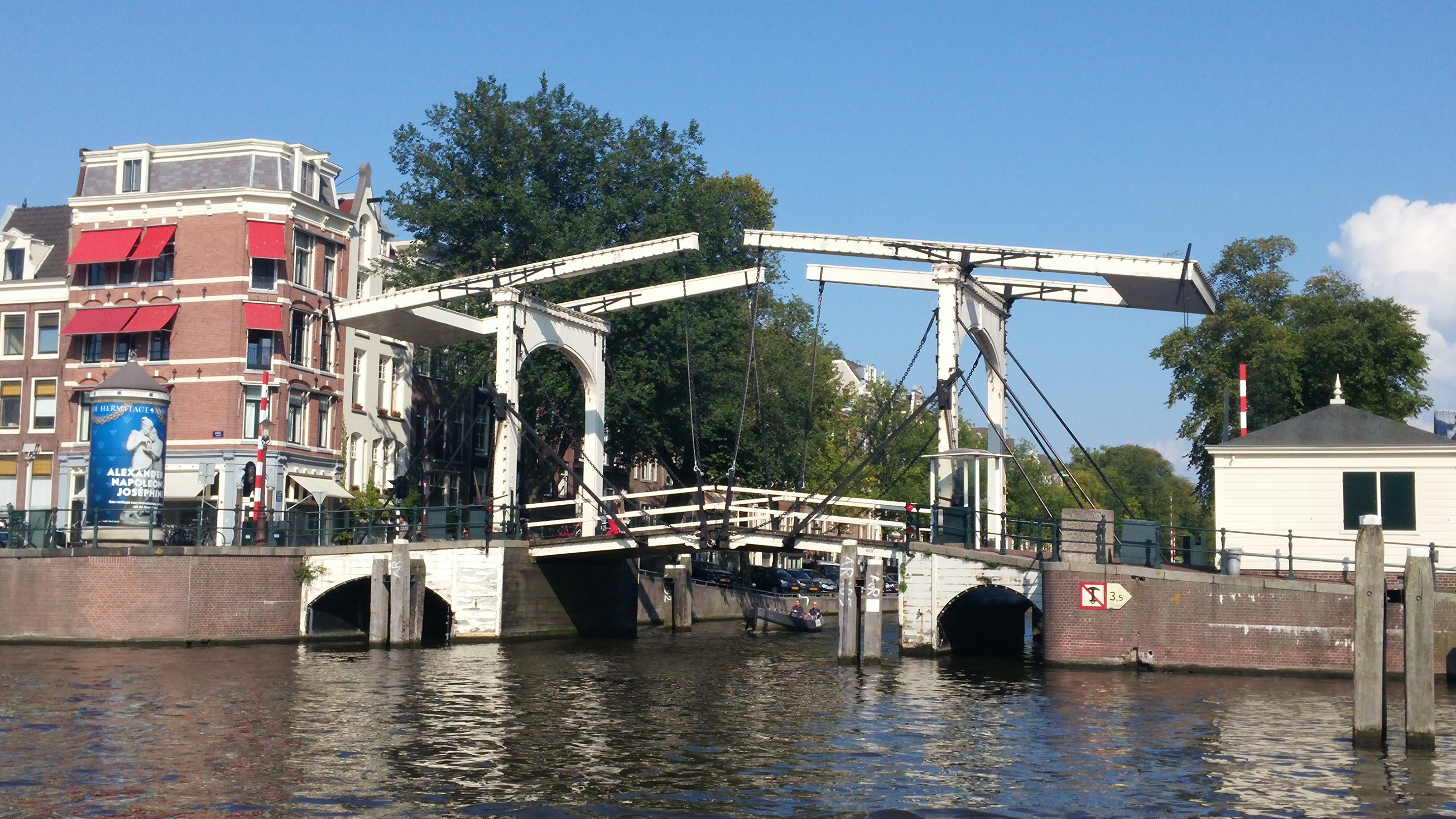
20150911_155809
[For the people living here, rather Mehhh of course]

The end of blockchains ..?

Some thought on where ‘money’ is going.

On the one hand, there will still be the fear that the ultimate-spread of blockchain’s control could quite easily devolve into coalitions and cliques, if not worse, when the heavyweights out there put their (computing) power to it — and what damage would quantum computing do, or could that (be made to …!?) turn the tables in the absolute opposite direction ..?
We’d be back at square one, with the general public having to trust some ‘trusted’ third party/parties and how dismal is what we have produced in terms of ‘governments’ through the ages. Or, in the opposition, trust nirvana nears ..?

On the other hand, we have the (d!)evolution of money through the ages already, when after barter trade money was introduced as neutral intermediary — in the form of value-preserving, rare hence very difficult to (re)produce and hopefully hard to fake goods like gold. Then, we switched to more abstract money media, with an intellectual exchange-ability to back to gold through the gold standard. Then, even further off, that link was released and we ended up with thin air as cover for our ‘money’ as it stands today. The cover, convertibility, is some vague notion of some abstract constructs (and as said, very often failed before or slowly is, as we write) like ‘the government’ that would repay all ‘money’ lost with … drum roll … ‘money’!
And, with blockchain technology and trust, we’re moving even further off. Combine this with Graeber’s Debt, and we have an even thinner notion of where we are and are going with the whole concept. ‘Money’ being no zero-sum game as it is created by (almost) full-sum net debt increase to start with. No wonder other initiatives spring up, time and time again following the latest possibilities created by, e.g., decreases in transaction costs (including agency theory style) by the birth of the Internet. All focused on Trust in one way or another, to do business in order to satisfy one’s Maslovian needs. (Or not; see some previous posts e.g. here.)

Well, I’ll leave you to consider your sins, with:
20150911_173935
[Sheltering under bare money-making, for fun; Amsterdam]

Blown over — smart dust or where is it?

In all the news about IoT, where has the (admittedly far-flung) prediction about ‘smart dust’ gone ..? Where has the smart dust gone? Was it a wormhole glimpse into the future, was it some runaway brainstorm on steroids (or other stimulative substance) session’s result ..?
Where still, it looms in the background. Once information is created, will it remain in the universe, existing without a result (as it may or may not have a cause, the rebel against entropy that it is)? (Here I go in similar vein, not stimulated!)

Now, let’s first have actual working quantum computers. Similarly vague at inception and counter-intuitive — for which reason I believe it will turn out to have logical fallacies in its current models so will in the end not be feasible to realise ..! —, let that come first. In itself, already difficult enough to cope with, as a global society.

Afterwards, smart dust will look like a rough cut piece of cake, probably. But maybe the Problems of it, will stil be Hard (compute-complexity-wise), as here and elsewhere.

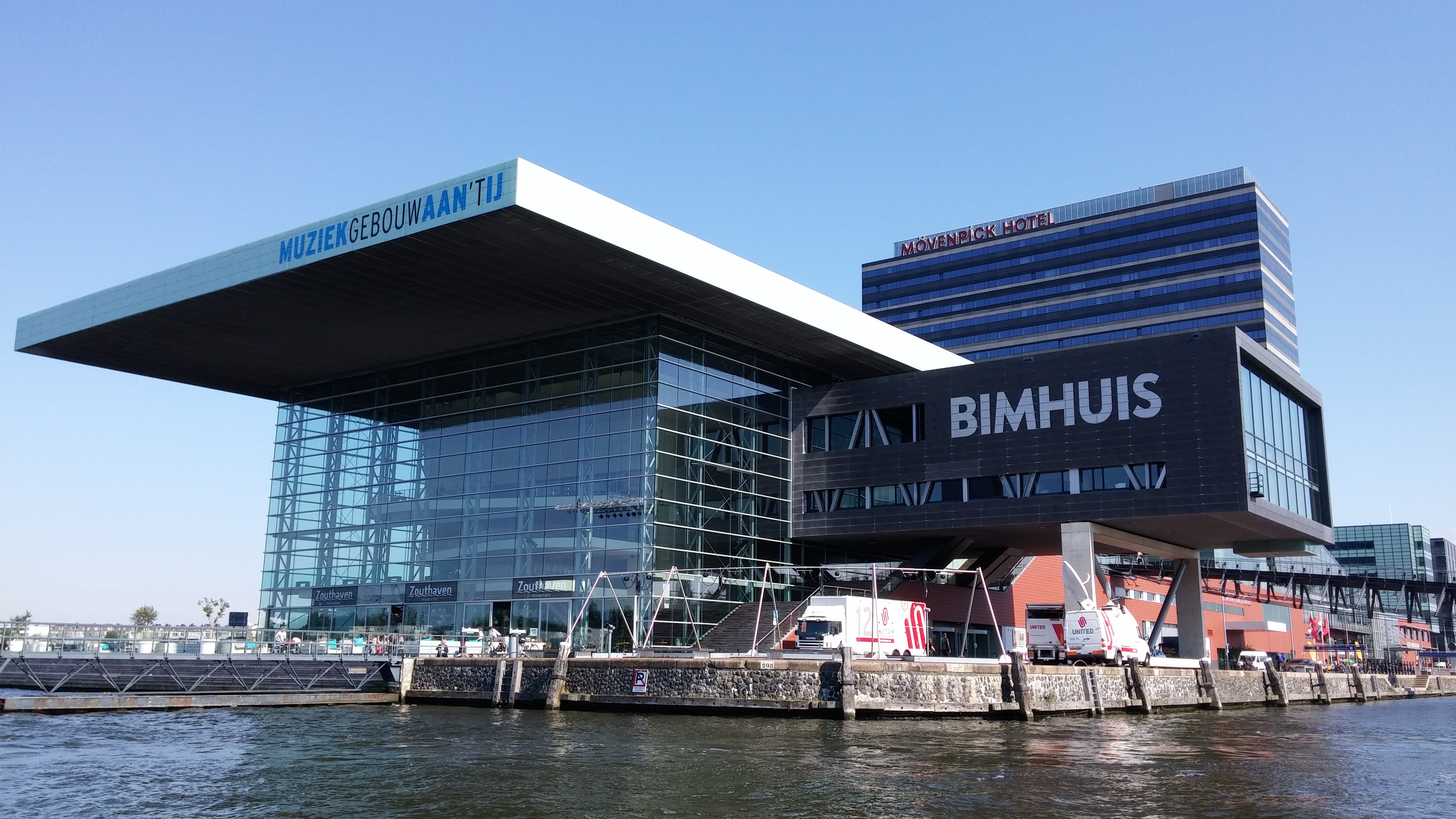
And this, for your blue pill:
20150911_143851
[Excellent or mundane archi; but with sublime acoustics — second (to) one in Amsterdam!]

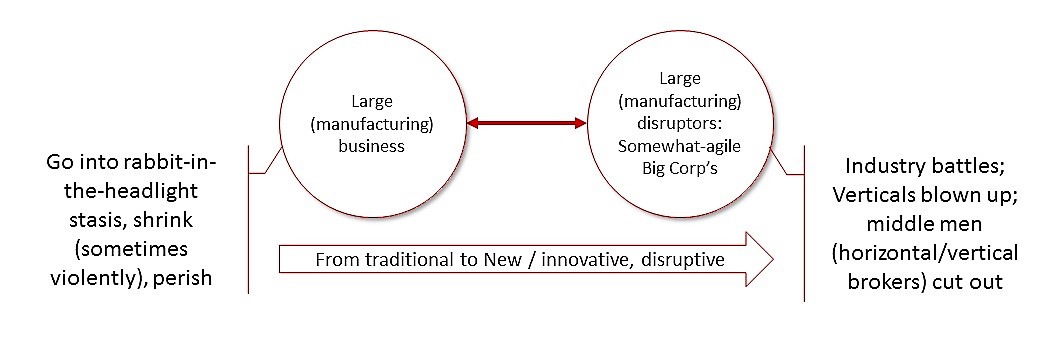
Growth / disruption

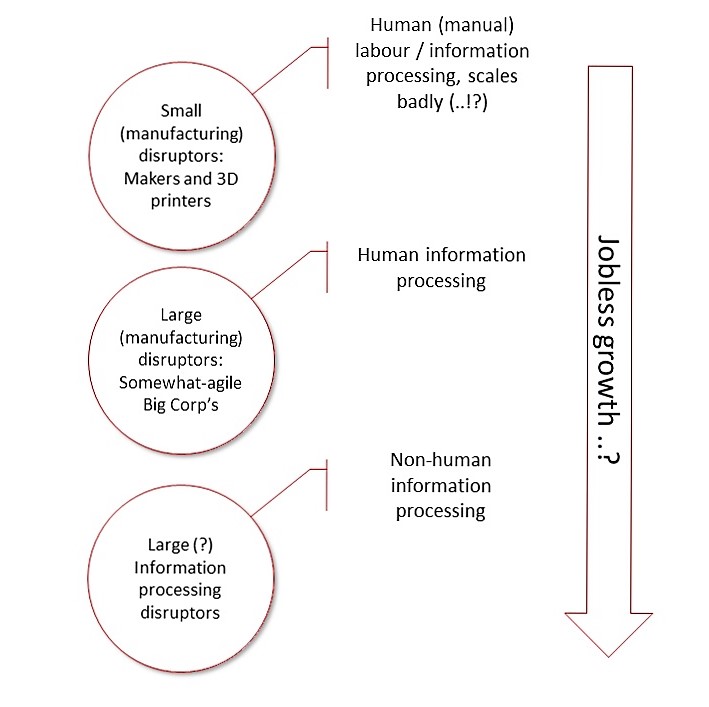
I have a number of pics for you… As it stands, I haven’t been able to find sufficient time to write out all that I wanted to have depicted… Meaning you’ll have to do the interpretation yourself. Like, e.g., after reading Chris Anderson’s Makers. Or, see where blockchain’s DACs will strike.
Or, I will return to describe the bits and pieces in detail.

But for those worth their salt, the interpretation of the grand overall pic will be a trifle, and the same to comment. The keyboard is yours …
Dia1
[Being the full overview mentioned]

Dia2
[Starting (!) with the big corp world that domimates the business press]

Dia3
[And some things about the battle in the middle, with all the pressures from all sides]

Dia4
[Plus of course the small-scale stuff from Makers — not all hosanna]

Dia5
[The kicker, on the joblessness]

Trivial TLA Things-Tip

If you Thought This Time Things would be easier, as the universality of plug-‘n-play has spread beyond even the wildest early dreams into the realms of the unthought-of non-thinkingness, think again. Drop the again. Think. That was IBM’s motto, and they created Watson. No surprises there.
However… It may come as a surprise to some that now, an actual TLA has some actual tips, to keep you safe(r). As in this. Who would have thought… On second thought, this agency of note might have no need for the access disabled themselves anymore, as they’ve provided themselves of sufficient other access (methods) by now and just want to hinder the (foreign) others out of their easy access ..?

Oh well, never can do well, right? And this:
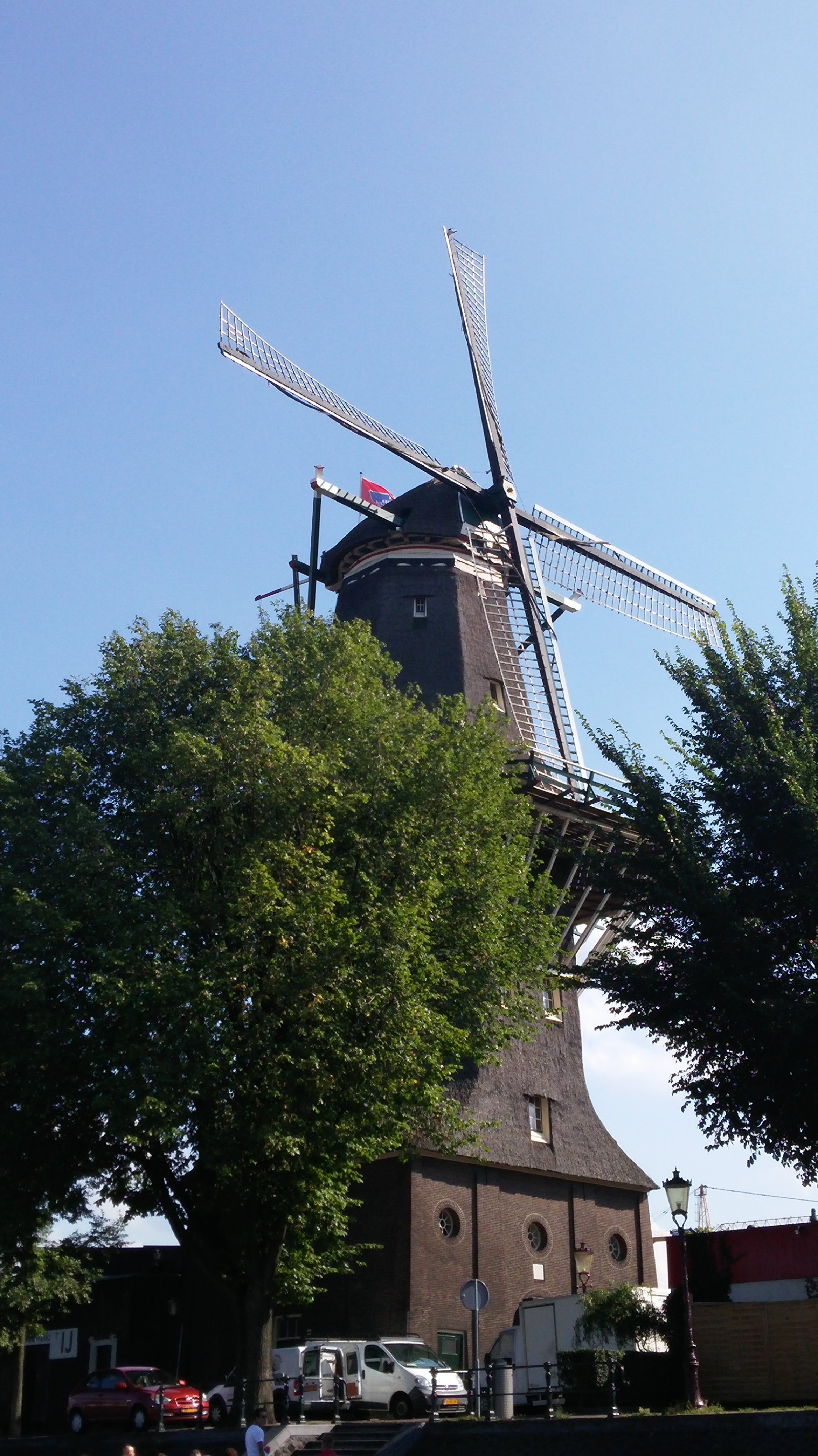
DSC_0070
[Another one from the cathedral of dry feet — only after, making sticking fingers in dykes worthwhile; at Lynden, Haarlemmermeer]

Complexity beaten by [The mechanics of Joe Average]

Yes it’s time to remind you again. And again. That the mechanics of the mindset of Joe Average (notice how that’s a he not she …?) will beat even the best laid-out strategic plans, Von Moltke-style. As can be read in this here piece; instructive both on the surface and in the sub-surface semantics, meaning. I.e., that JA is even ‘smarter’ than you thought when it comes to achieving JA’s actual objectives of GetOffMyBackWithYourStupidTargets. Through which it all reminds us, being you too, to build security around actually desired functionality — as desired by end users to get their in-tray empty. Nothing more, certainly not your lofty functionality goals, that’s just burdensome nuisance. If you hinder the former and leave space for abuse in the latter, you’ll be doomed doubly. All the pain, no gain.
Be reminded, too, that your efforts down the blind alley will result in complexity that JA will beat, but maybe, all too often, you don’t. Meaning even that, is for nothing and will leave you out to dry.

Hm, as a pointer, this point needs both much more elaborate thought, in your heads, and is depleted for write-up here. Go and do well.

DSC_0084
[In the Cathedral of Pump; Lynden, Haarlemmermeer]

Darn Drone-Downers

Another alliterating ad-lib post here. About the right (not) to take care of your own privacy behind your own front door. Seriously; here now is an item of societal structure that needs fixing and for once can be fixed ahead of time but still will very probably not be — because some of the many parties involved, will not see how their own tardiness leads (with certainty) to loss of life, of life’s full enjoyment, of the pursuit and realization of happiness. Is there a term for this sort of extreme autism denying one’s responsibilities, accountability beyond the mere received rational-only knowledge..?

OK, I get it; you want time to think. Delivered. And:

20150911_145750
[Whatever floats your big a.. boat]

Maverisk / Étoiles du Nord