[East South Bank]
I had these ‘predictions’ for retail. Now IoT comes along (though 2014 is way too early; 2016-2018 is more likely); would’ve had to include it. But may take a while. So enjoy, and stitch both together…

[East South Bank]
I had these ‘predictions’ for retail. Now IoT comes along (though 2014 is way too early; 2016-2018 is more likely); would’ve had to include it. But may take a while. So enjoy, and stitch both together…

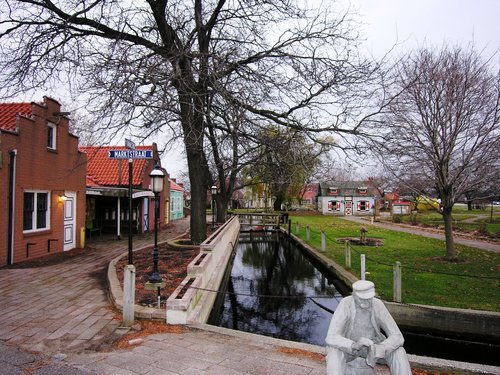
[Guess the country. Wrong.]
Some time ago, I hinted that maybe some combination of fuzzy logic and wavelet-like mathematics might deliver tools for qualitative risk management calculations.
Now is the time to delve a little into the subject. If possible, somewhat methodologically.
But hey, you know me; that will not work too perfectly as perfection is boring. I’ll just take it away with a discussion on scales, and thrown in a handful of Ramsey-Lewis work:
There’s the nominal scale. Where one can only sum up the categories or bins one would want to place one’s observations in. presumably, we’d have observations of just one quality (‘aspect’) of the population of observed items [either ‘real’, if there is such a thing, or abstract..! Oh how many problems we face here already] One cannot establish (in)equality between categories, nor add or substract, nor ‘size-‘compare.
There’s the ordinal scale, too. Here, we have some form of ranking of categories, they can be ordered. Categories are either dichotomous (an observation put into one category excludes the observation be also put into another), or non-dichotomous (category membership is non-exclusive. ‘Completely agree’ supposes ‘mostly agree’). At least we can compare, by order, between ‘larger’ and ‘smaller’ or by precedence, but not much more; no calculation.
On to the interval scale. Which has degrees of difference, like (common) temperature and dates. With their arbitrary zero we can’t talk sensibly about ratios. 10°C is not twice as warm as 5°C … But we can add and substract, just not multiply and divide.
This, by the way, is the ‘first’ scale considered to be quantitative, the above are qualitative..!
Next is the ratio scale, that has all of the above and a definitive zero, hence full calculation can be done.
Trick question for you: Where would the binary scale go …?
Just to mention Cohen’s kappa for qualitative score agreement among raters; it may or should come back later. And to mention all sorts of ‘Big’ Data analysis conclusions, with all the monstrosities of mathematical errors in that squared with lack of understanding of the above (in particular, the degradation of information in the direction from ratio to nominal, impossibly the other way around without adding relatively arbitrary information..!)
Now then, fuzzy logic. It takes an interval scale or ‘better’, and stacks a probability function to arrive at quantitative non-ditochomy. Next, work through cause-effect trees [hey, that’s a new element – I’ll come to it shortly] where some cause both happens with some probability and doesn’t happen with another probability at the same time, which propagates through OR and AND-gates to create effects with weird probabilities / weird aspects of probability, and on through the chain / feedback loops and all. If we can assign probabilities to less than interval scales, we would … oh, we do that already, in fault trees, etc.
Except that we don’t. We do not, I repeat do not, build real fault trees in general business riks management. We do the fresh into kindergarten version of it only! NO you don’t. And also, you don’t assign proper probabilities. You screw them up; apologies for the words.
So, we need combinations. We need the flexibility to work with qualitative scales when (not if) we can do no better, and with quantitative scales wherever we can. Being careful about the boundaries ..! Maybe that is (the) key.
[Interlude: wavelets, we of course use on ratio scales, as a proxy for fuzzy logic in continuous mathematics (?)]
Why would this be so difficult ..? Because we have so limited data ..? That’s solvable, by using small internal-crowd sourced measurements; using Cohen’s kappa (et al.) as mentioned.
Because we have no fault trees? Yes, indeed, that is your fault – trees are essential to analyse the situations anyway. Acknowledging the difficulties to get to any form of completeness, including the feedback loops and numerous time-shifts (Fourier would have ahead-of-time feedbacks …! through negative frequencies…). Not acknowledging consistency difficulties; one could even state that any worthwhile fault tree i.e., any one that includes sufficient complexity to resemble reality in a modeling way (i.e., leaving out unnecessary detail (only!)), will have inconsistencies included or it’s not truly representative… ☺
Hm, I start to run in circles. But:
• Haven’t seen fault trees in risk management, lately. We need them;
• Let’s apply ‘fuzzy logic’ calculations to fault trees. We can;
• When we use less-than ratio scales, let’s be clear about the consequences. Let’s never overrepresent the ‘mathematical rigour’ (quod non) of our work, as we will be dragged to account for the errors that causes, with certainty.

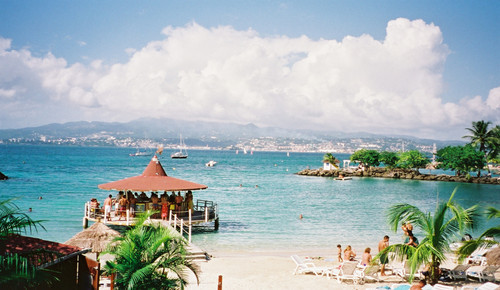
[Another of those places where I was hard at work. Right.]
Now, the Netherlands is back to voting electronically … In a way (in Dutch).
One votes, on an electronic machine, that prints your vote and then you hand in the slip, that will be machine-read for tallying. Oh yes that’s voting electronically. Whereas it looks clumsy, and it is, it also doesn’t satisfy some basic but very fundamental requirements anyone would consider perfectly normal for (nation-wide democratic) elections. A great many ‘rogue’ (by the standards of others …) states have some of those concerns covered better…
My personal gripe, however, doesn’t concern this as democracies dominated by parties that have many-issue programs and no direct recourse against plain flat-out lying to voters, are a complete #fail of democracy. And, I am unsure that perfect democracy is feasible.
Or wanted! As democracy will result in mob rule, and other wrongs far better explained by much greater minds.
No, my problem is that now, still one has to be present at one’s own neighbourhood voting station. Why hasn’t some form of ‘Internet voting’ been implemented ..? There have already been many methodology theories out there on how to do that, with the safeguards required. I recall that two decades ago, a Swiss kanton did something with this …?
You may counter that there’s still the problem of reliable code. But that can be solved by creating something open source, to be mandatory checked by all parties (or their tech-savvy proxies; very probably from outside poolitics as the pretense may be there but nothing, zero!, of actual insight into e.g., code). And of course the app would run on all platforms, in particular mobile. See how that would increase voter turnout!
And of course we would have fallback traditional stations anyway, in particular as e.g., the elderly would not ncessarily understand how to #appvote (tag claim).
And dear reader that wants to complain about secrecy: Dig into basic crypto and the protocols developed in science first, please…
If only I had the time (made available to me, paid decently) to really research this all…!

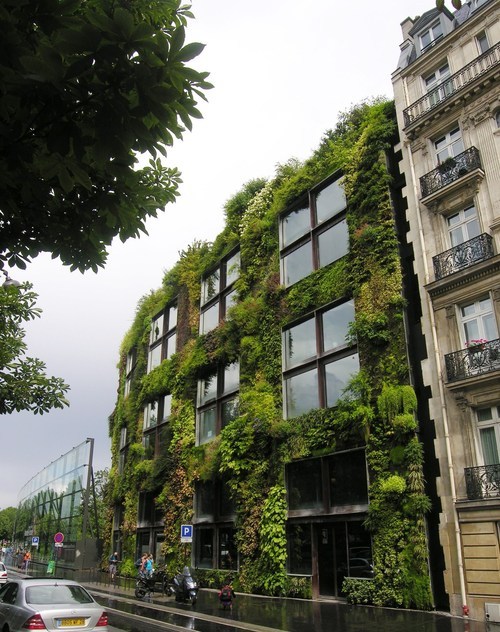
[Paris. Repeatable idea.]
In order to get to real sustainable business (or non-profit, or public), the organisation should not bolt on the sustainability initiatives, but build them in. Into the primary processes themselves. So that ‘sustainability’ becomes collateral next to the money-making, or x-making, that the organisation had set out to do.
One way of doing this, is by (external?) pressure to have the pollutor pay. In that way, similar to VAT I guess, any organisation neutralises the ‘damage’ they do by generating moneys for restaurative initiatives, externally, or internally if one is allowed to spend the surcharge on such restaurative initiatives oneself; this would of course need extensive, costly and fraud-sensitive, ‘independent’ auditing. Self-control will not do! And if the damage may be undone fully; repllanting a few fast-growing trees is not a substitute for eradicating well-developed forests. Covering an open pit mine with green is not a repair of the environmental damage done. Full footprint costs are the only reasonable foundation for calculations. Hence, the moneys may better be spent by others; governments or special interest groups supported by governments.
In this way, too, the production methods (ingredients, raw materials, labour, etc.) that pollute less into the internal, often more into the external environment, will also be cheaper. There will be an incentive, at last, to use more sustainably lean production methods. To let employees work from home more, and/or flex. Etc. By having a pollutor surcharge (that for economy-wide cost neutrality may take the form of a variation of corporate profit tax), the pressure gets real, and the pressure will not be through the public image of the organisation alone.
∗ Note that an economy-wide, i.e., country-wide (or region-wide, e.g., EEA), levy of surcharge may need a compensatory import tax for good, services imported, and one may consider proceeeds to be put into compensation for exports. Otherwise, the playing field wouldn’t be level, globally. Or would corporate tax discounts help; and/or how would the import of raw materials, etc., flow through production ..? Maybe not use an exit-based VAT but an input-based ‘Destroyed Value Included’ charge ..? Will be the bookkeepers’ wet dream either way.
Your thoughts, please!

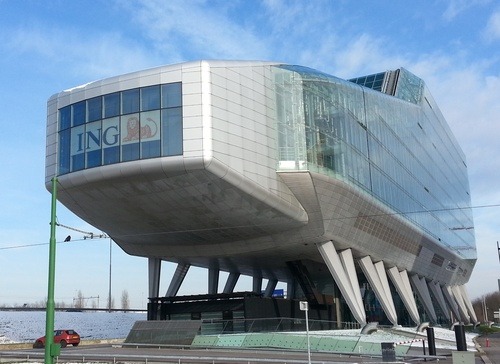
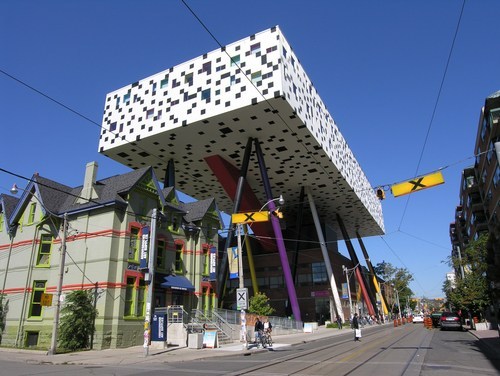
[Some think this is hideous but it’s fresh, even if it ruined the neighbourhood.]
This then, on the future of retail. With an attempt to analyse and predict [You know my opinions on that …] what malls, or shopping centres in general, may look like in, say, five years from now.
Let’s first define the inputs for my ‘analysis’:
• Rapid developments of web shops in all retail areas, not just non-food and food ;-] Yes indeed, on the surface, even food already has its web sale / home delivery channels.
• At least temporarily, an increase in one-off / small batch production items as people seek things differing from mass products.
• The previous, along with flexibility in price. Not all one-offs / small batch products will have, or require, premium prices; mass products however may be required to ever further lower their price by expectations from buyers.
• Premium-price indetermination and small volumes work only when product offerings are available to (the increasing slice that cares, of) potential buyers. But we have that Internet, and may improve on the freshness of its content. Maybe through ambient intelligence / hyperlocal (discount/sales) offerings when some model of micro-location- or -time-based ad hoc approval of pitch presentation (on the hand-, wrist-, or headheld device) and trust of micro-time and -location permanence of privacy-sensitive (i.e., all) data fed back, would actually be trusted by sufficent numbers of sufficiently affluent potential buyers to get past the network effect point.
• This implicates the expectance that shoppers will still want to go out in the first place, to socialise (of fact; not by verbal communications or so but by mere presence) with the unknown Others out there.
• Through cost increases, people transport will diminsh or will shift to cheaper means; e.g. bikes – with much smaller load carrying capacity.
• So there will be various markets out there:
Mass markets for convenience products, either at hypermarkets out of town or with home delivery – with the trend probably going towards home delivery as that saves on the nuisance to go out and be among the hoi polloi and people in general being ever more in the devolution mode of less and less exposure to the outside-of-the-house environment. (A note; I’m unsure whether fitness will move ‘back’ to indoor clubs, or will move ever more into the ‘fresh’ outside air, or both as more people (will go to!) do anything at all about their bodies ..?
Mass retail webshops, for the home delivery markets as well as for the Lm-markets as below. Also serving product comparison.
Local markets for locally produced one-off / small-batch items. Note that these may be produced in somewhat larger batches if shipping can be done within the perish timeframe, in particular for non-perishables. But no batch may be so big as to become mass as the freshness and uniqueness (only in retail is that a scale not an absolute) would diminish too much; local shoppers for hipness may not like too-large-scale availability. And note that even if shoppers would like to be surprised by the (next)^x new thing that only they have access to, they will still want to be the first to a. compare with Everything else out there, through their mobile Total Information awareness device(s), b. share their überhipness immediately, thus diminishing the newness value of their latest purchase by snapchatting it, i.e., asking for copies to become available ASAP.
Local outlets for mass-produced goods, when the product selection experience can be made a worthwhile experience in itself as with luxury goods (mass produced in sweat shops as they are, along with the mass-produced rip-offs), or when the delivery/pick-up can sufficiently add to the product experience, to warrant the shop rent. This will hold as long as opulent display of one’s Mammon worship (only; by implication) has positive residual value (net of the ridicule by ever greater masses).
• And where does this leave the Mall, or the Shopping centre (if there would be a difference) ..? The above demonstrates: Uniqueness, experience will be the thing. Locality of shops, and trust of local production and uniqueness, will be key. Hence, chain stores can survive only if they enhance the experience, or have a sufficently fluent web-purchase / local delivery experience (i.e., perfect logistics) and not too much generic stuff in stores to ruin the experience. Or provide in-store, the advantages of web shops (enormous collection, vast browsability) in combination with the premium shopping experience but also in combination with affordability! If not affordable, markets will be too small to attract sufficient clientele to warrant rent and staff; concentration will result in ever smaller enclaves of luxury shops. Shoppers will drop out, and not come from far away (don’t want the hassle and cost anymore) to shop around (among a public they don’t associate with, for products they can’t afford and not want for its lack of quality (opulence only, no content quality).
Shoppers will come for Ll- and Lm-shops, though. Aim for those..! Not big shops, but small ones; many. The low rent these may provide, and the insecurity of continuity (as real estate owner, you have control over that: rent should follow shop income, not the other way around…), are a matter of fact. Big stores will be empty, for much longer, and will cost you much more non-rent, much longer.
But oh, will web shops not vacate the shopping centre ..? No. They’re a fully-alternative channel, but they’ll lose for shopping pleasure and for freshness (newness) of products – web sites, one would need to track too frequently and too extensively (in numbers) to keep up with and people will get bored pretty quickly with that. In particular if Ll-shops do that for them anyway.
You comments, please! (see link below…)

[On a rooftop ..! ‘t Spant, Bussum]
Yeah, it’s a post on double secrets again. Not just because I haven’t seen any conclusive research on what to do with it; how to handle oversight (what is warranted, , etc.), what limits to justifications there would be, how to close the recursive secrecy gap, etc.
Not even because of stuff like this.
But because another issue was pointed out yesterday/today in a post at Bruce Schneier’s blog: Where double secrets may exist, trust is lost, and (theoretically and practically) impossible to regain.
Which is a problem not only for ‘current’ (big) companies relying on the trust of ‘consumers’ (who are in fact drone suppliers of almost completely free raw materials) and other business partners on the receiving end, as their business model will crumble to nothing when (not if) those cheapoo supplier leave in massive numbers.
It also spells trouble for the not-yet-big, almost-not-yet-companies. As defined in this slide deck, those new companies rely on distributed power, which is based on trust. The said (not sad) companies can grow only to the point where the base of trusting counterparts in exchanges (~facilitated) still grows. If at one end, trustors still flow into the system, but trustors on the other end flow out at a faster pace, the base will be ever narrower; the house of cards becomes more fragile and will collapse as some business wind (if only draft) comes along.
So, in order to really ‘disrupt’ as if that would be a lofty goal of any business [I am very much opposed to such thinking! ‘Disruption’ invariably leads to massive job losses and ever so many more family members’ life dreams ruined. No, the new industry will be of (relatively) jobless growth and yes, at some scale one has to take the macro effects into account], one would need to have a pre-emptive way to deal with double secrets, so the trustor trust base may grow in breath and depth.
My feeling is now that this sort of issue may also be the foundation of the inevitable-collapse-of-any-democracy issue. As predicted toungue in cheek, and shown practically throughout history. Are we at the verge of such a (Schumpeterian?) collapse, dinosaur extinction phase, in the way societies manage themselves? Utopian or distopian visions of what’s next for the coming era (remember the ‘Mayan calendar’ prediction of such a ‘new era’ ..?) may both be overblown, or … does reality always play out a bleak version of what could have been?
All in all, it seems rather important than someone [preferably someone more intelligent than me – regarding these issues, that is] would have a look at this all…
Is there really nothing out there in the intersection of sociology-, trust-, legal-, and economics- research that has pointers on how to resolve this issue ..? If the NSA or other TLA(s) are listening in and would have some Confi stuff, that’s good, too …!

[Voorburg, Herenstraat; Mú by Ming Hu Chen]
With the Internet of Things coming at us with lightning speed, why haven’t we seen a surge in easily appliable domotics ..? Sure, there have been small little, often not too well-designed and plasticky appliances out there for a while, but they often were in the bargain bins before a full‑scale deployment could take place. And we see trials here and there in offices (cheesily, in Dutch, and video) with bits and parts of true ambient intelligence style domotics. But still, not the real stuff.
If you now say that within our homes, domotics don’t (doesn’t?) take off because of lack of network effects (What are the benefits? [How to size them up and compare/add them?] Where‘s the tipping point?) within the confines of our houses individually, and the prices still being too high (among others, due to the lack of turnover and initial investment recoup), and installation being too cumbersome (all devices need placement and connection, probably to power supplies other than oft- and quickly failing batteries, and either connect cabled (old-fashioned) needing breaking into walls, or wireless, requiring ugly visibility) – I would reply that these are issues to overcome with smarter solutions.
But then, what is the date of construction of Bill Gates’ Xanadu2.0 home [If you’re listening: I would like a tour yes indeed thank you!] that has all the follow-me temperature, lighting and ambient music ..? Over a decade ago; does M$ deliver a full copy solution to every home yet? Domotics Explorer 2.0 doesn’t give too many Bing search hits…
A thing that may need to be settled first, is the general architecture of it all. Sensors and actuators need to be put in place, but how and where; what secondary elements do we need (control centers; where and how many (networked, carry-on or stationary?), signals-generating actuators; separate devices (hi keycard/pin) or built into other things, or programmed into other things (hi smartphone, à la NFC payments, now not so N)). What human control, using monitoring dashboards and some form of input (fingerclicks and voice work well in sitcoms; phone screen swipes, maybe?), can we have, can we allow? Are any ethics involved (haves/have nots; control over one’s environment vs. experiencing new things, conflicts, the commons) ..?
And there’s the question of business models for device suppliers and servicers. Subscriptions with updates of software, and hardware, or plain purchase? What about interconnectivity and multiple standards?
Just check the wikipedia page; so much more to discuss. E.g., re the integration or not, I definitely prefer not, of domotics with “‘smart’ grid” ideas of outside monitoring of our home internals – but connection to the outside may help your fridge to order short stock/supplies. Or what to do when conflicting demands are made within the same room (try sharing music tastes with your kids; they just don’t seem to get Purple, Floyd, or the Maiden or even Zappa).
But the question remains: How to overcome the not-yet-existing network effects requirement ..?

[Van Gogh’s ear]
The news is still filled these days with all sorts of incidents with (new) media, information leaks, etc. etc.
How long will it take us to realise that this is just the noise to the signal of health? It’s not that traditional media, and new media, are filled, it is that their space is too limited. If they would have sufficient space to cover all that goes well, no-one would notice the mishaps. Risk-based controls, anyone ..? Because, if you would do that seriously, you probably wouldn’t control anything!
Your comments, please.

Voor sigaren bepalen we het profiel aan de hand van de criteria Smaak, Balans, Body, Sterkte, Aroma en Finish.
Voor Smaak pakken we het aromawiel erbij. Let wel I; wat u proeft of verwacht, kan gedurende de diverse fasen van het roken nog variëren... En let wel II; er zijn ook aspecten die nog niet zozeer als aroma staan aangegeven in het wiel, we denken aan termen als (ja de sigarenwereld is langzamerhand, helaashelaas US-, Engels geworden) zesty, tangy, floral, en earthy, of soms zelfs metallic. Lijkende termen die een combi zouden kunnen zijn van diverse aromas en papillaire en olfactorische/nasale sensaties en -tactiele invloeden. Hierbij komen termen als 'complex' uiteraard ook bijgepakt, om in dit geval te beschrijven dat er vele aromas herkenbaar zijn. Rustig roken, dat is niet alleen beschaafder en allerlei sigarenrokeneffecten-versterkend maar biedt ook meer kans om aromas te onderscheiden.
Balans is voor de hand liggend; of de zoete, zure, zoute en bittere tonen (OK, en 'umami'...) in balans zijn. Ja, ook bij een sigaar – al zal het meestal gaan over de balans tussen 'creamy' en 'spicy' en gaat het meestal mis door te veel bitter of te veel spiciness.
Body gaat over de volheid, in dit geval vooral te bepalen aan de volheid, dikte, dichtheid van de rook. Die ook een gevoel geeft; 'light' is als een licht bier, 'full-bodied' is als een rechttoe-rechtaan whisky of cognac.
Overigens hoort bij Body ook textuur, 'leathery', 'meaty', 'silky', 'creamy', 'soft', 'succulent', 'woody', 'chalky', 'dry', 'oily' en 'spicy'. Die dus net niet hetzelfde zijn als de aroma-indicatoren uit het wiel; soms overlappend. Niet handig maar zo is het nu eenmaal.
Sterkte is een wat eenvoudiger maat voor het nicotinegehalte van de sigaar. De topbladeren van een tabaksplant heeft meer nicotine dan de lagere bladeren – me(n) dunkt dat de topbladeren zijn waar de plant verder wil groeien en dus betere bescherming nodig heeft van de nico; lager is het wat ouder en 'expendible' dus ga je daar als plant niet je nico op concentreren ..? Waar de sigaar van gemaakt is, heeft dus invloed. Kan je meestal niet kiezen, maar wel proeven. Rustig roken is ook hier handig; om een nico-klap/duizel te voorkomen bij het opstaan.
Aroma dan, vervolgens. Ook hier kan het aromawiel worden ingezet. Vreemd genoeg is het moeilijk de aromas te bepalen als we zelf roken; iemand anders' rook kunnen we beter analyseren. Of we blazen de rook door de neus uit ('retrohaleren'), dan hebben we wel de volle verfijning (ga ik vanuit, lezer!) van onze neus ter beschikking. Bedenk bij het 'benoemen' overigens dat we veel meer uit ons geheugen putten, qua eten en drinken!, dan we wellicht zelf(s) denken. Dus rare smaken herkennen is niet raar.
De Finish ten slotte is kort of lang, naargelang de aromas lang op de tong (sic) blijven hangen. Milde sigaren zijn nogal eens kort – hetgeen niks zegt over de complexiteit, overigens. Hierin zit ook de reden om een zwaar (sterkte)kanon na een milde te nemen, niet andersom.
Als het gaat over de champagnes en hun profielen, pakken we er de (echte en semi-)klassieke wijn-analyses bij die we allemaal wel kennen; onderscheidend in [Hier verder. In ieder geval https://www.wijnwinewein.nl/hoe-proef-je-wijn/ en aromawiel + zuurgraad/tannines/body(viscositeit/alcohol/tannines/smaakintensiteit/mondgevoel)/afdronk + Aanzet/Zuren/Zachtheid/Tannine/Body en alcohol/Afdronk/Smaken dus de aromas bijna-los van structurele criteria. Dan de smaken matchen met die van sigaren, of niet; Klosse's overlap/contrasten erbij halen en dan verder. En toespitsen op champagnes... pak het smaak-plaatje van het CIVC erbij!]
Dear reader; bij deze dus de waarschuwing dat u vanaf hier (?, inderdaad, echt niet alleen hier) serieus te lange zinnen tegenkomt.
Ach, daar ben ik me prima van bewust, mijn hele blog is immers ook een poging tot schrijfoefening in alle facetten. Sommige posts daar blinken uit door korte zinnen en ellipsis; ook deze pagina is opgesteld als tegenwicht. En ik vertrouw erop dat u dat gewoon doorlezend aankunt.
Als voorbeeld: Oplettende lezers zullen opmerken dat onderstaande waar het uitweidingen achter links naar andere pagina's betreft wellicht beter met behulp van OnMouseOver's, alt-tekstblokken of andere tags per pop-uppable item zou kunnen zijn geïmplementeerd maar ik heb het zo gekozen en ik kan best komma's toevoegen in deze zin maar ook dat heb ik achterwege gelaten zonder de leesbaarheid of de begrijpbaarheid in het gedrang te brengen.


Inderdaad, het ontwikkelde, ik schreef, een en ander vanuit een voortdurende, voortgaande research. Na zoeken in het wilde weg algemeen, navraag bij het Comité (iv) Champagne, een aanvullend zelfzoeken met Google Satellite én Street View zowel rond de officiële als in het algemeen, kwam ik tot de Lijst Van (uiteindelijk) 84. De en passant gevonden kaarten leidden tot enige aanvulling. Toen kwam ik Weinlagen.de tegen en tsja dan ben ik niet meer te houden qua sys-te-matisch alle streken én plaatsjes af! Hoewel, ... in onderstaande tabel heb ik maar niet meer voor ieder stuks de Street View erop losgelaten of onderstaand ingevuld. Terwijl ik er vanuit ga dat dit alles nog aanvulling kan krijgen ... Les Clos Inconnus zijn uiteraard zichzelf.
De gangen kwamen al zeer onregelmatig door, en met andere tafels die uitliepen en/of (weer) bijtrokken, tot zeer ver inhalen zelfs, tot gang 6 van de 7 tachtig (schrijve: 80) minuten op zich liet wachten, ondanks diverse malen navraag. Waarna het nauwelijks-opgewarmde pompoen met koude polenta bleek te zijn; "dat hoort zo" ammehoela. Nee, het niet-koude nagerecht erna hebben we niet gehaald; we zijn opgestaan en weggegaan. Die zien ons nooit meer, zeker omdat de bediening ook Zwak was (gangen aan verkeerde tafeltjes serveren want die waren al twee gangen verder), etc. En balsimaco-saus dus, 'et al.'...
Huh, da's écht voor de Insiders..? Inmiddels wel toegestaan als aanplant, maar nog zo'n drie tot tien jaar onderweg voor er de eerste re-de-lijke wijnen van kunnen worden gemaakt en dan is het nog maar afwachten. Je weet het niet van tevoren hè, met zo'n non-Vinifera druivensoort..! En dan had je Floreal, Artaban en Vidoc nog niet gezien. Die mogen (in de toekomst) ook... En dan is het Comité Champagne ook nog bezig met kruisingen van de Top 3, Arbane, Meslier, en Gouais. #feest
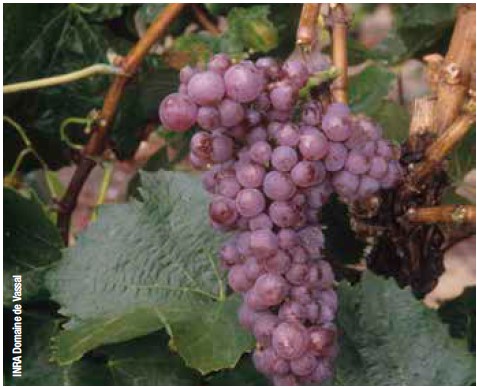
En dan komt hierna een nóg spectaculairdere outsider: Chardonnay rose Rs, minder dan een kwart voetbalveldje aanplant...
Mineraliteit verdient een aparte behandeling; vanuit het idee van 'huh er zit echt geen mineraal/steen in je wijn en lik jij aan stenen-dan'-versus-'toch proef ik die sensatie en Ja' tot en met de abstracte benadering van een kennelijke associatie van een gewaarwording als hier, tot een synthese op de as 'bodem-microbiologie'-in-combinatie-met-'feitelijke chemie'. Want, jawel, fenylmethaanthiol zorgt voor vuursteen / aangestoken lucifer, in combinatie met benzaldehyde (uit 'hout') en waterstofdisulfide (uit reductie; en beide uit bepaalde gisten!) leidend tot Vuursteen-herkenning, versterkt bij anorganische ammonia bijvoorbeeld. Vuursteen is geen 'mineraliteit' maar daar wel belangrijk onderdeel van. Dus Ja, er zitten wel degelijk chemische stoffen in (niet alle gelukkig) wijn die een sensatie veroorzaken die op mineraliteit lijkt. Zout, uiteraard, ook, (niet meer maar wel) vaker dan we denken! Alles tezamen een uit-ste-ken-de reden om te spreken over herkenning van Mineraliteit in wijn. 0-10 en een penalty tegen voor de geo-logen.
Laherte Petit Meslier in the tasting round
Yes @laherteaurelien makes a monocépage of this one. Great Meslier it is:
The golden colour would suggest something dosée, but look closer and you notice a hue which points to slight bitter influences. And indeed, on the nose we get a whiff of smoke, certainly straight after the pour; quite an opportunity to use the word ‘empyreumatic’... Did I mention Meslier already? One to one it is. But nothing referring to your cooking qualities; it’s more like a distant secondhand puff of Belinda – I’d not suggest you buy that for comparison; trust me as smoker it’s trash but as Meslier aroma it’s excellent full stop. Crispy dry cigar smoke fits better.
Certainly, since this all is followed up, much more persistently, with quite some mature lemon and a whole slew of herbs and spices notes. It smells like a merry-go-round of eucalyptus, dill, thyme, spearmint, soft mint, basil, anison, verveine... wormwood even; those that know génépi, find it here, too.
The first sip jumps in with a most delicate mousse, a sensible but not too fatty mouthfeel, nicely balanced with lemon dominant in combo, and ginger/pineapple/mirabelle and dry lemon rind flipping back and forth. In the remarkably long finish, the rind does a gentle cleanse.
But I couldn’t find any cardamom that some mention, nor cocoa or coffee. All in all, in cocktail terms it would fit in the range of the French 75 and a Fleurette.
I’ve tried a little bite of camembert, but you shouldn’t. The bitter of the wine is lost but notches up in the cheese, which tastes odd. The fit with lightly aged Comté or same-Gouda is perfect, however. Sushi should work, too, if with a suitably subtle pinch of wasabi, no more – harsh coriander, algae, chervil, wasabi as such weren’t in the nose.
In summary: All of you should have a taste of this one, or one couldn’t be trusted on champagne connoisseurship.
[Degorge 12-2021, hence the progressed maturity]
Links:
https://maverisk.nl/de-forgotten-four/ for Petit Meslier
https://maverisk.nl/champ-sigaar/ on the cigar smoke angle
https://maverisk.nl/geneprima-spul-hoor/ on génépi
https://maverisk.nl/mirabelle-wil-iedereen-welle/ on mirabelle
@champagnepascalmazet make quite an interesting range of wines, fully certified bio since 1980. We tasted the Cuvée Originel bottling of 2014, for its 35% Pinot Blanc of course; interested to learn how such a Forgotten Four lead, with the three Usual Suspects trailing, would work out.
‘Splendidly’ is the answer.
The gold is striking, the nose is suitably complex. One gets mint, cucumber, cornichon tartness (I mean, the true kind of https://www.kesbeke.nl/) and some olive.
On the palate, it switches to agrumes-allsorts. Yuzu, lightly pre-ripened apricot (yes there’s acidity in there), sparkling grape (ah.) and a hint of almond already. This slowly develops into lemon-grapefruit on the one hand, and yellow curry / pineapple on the other, with a tangerine almost orange'y element integrating both sides. I’d say, there’s a marbling of mirabelle (in Dutch: https://maverisk.nl/mirabelle-wil-iedereen-welle/) running through it as well.
‘But’ overall it certainly is far from flubby (the 3g dosage having turned into the above, no sirup) or acidic. The quality of it all, and the light oak touch, twist all the richness back towards the freshness of citrus zest. And did I mention the mousse is still there, slowly releasing?
Towards the lingering finish, this all persists in a extremely well-balanced acidity and a hint of minerality and sophisticated bitterness.
Am I happy to have another one of these standing ready
Marie Courtin Présence
I bought the @ch_mariecourtin for the 1/3 Pinot Blanc (of course: https://tinyurl.com/ForgotFour !). High expectations, exceeded.
First off, the yellow-golden almost amber colour would promise some sweet almost creamy elements. But with a delightfully tingle from a fresh mousse, and a light bitter-tartness in the nose, the picture turns around completely. There’s Mirabelle ..! [As per: https://tinyurl.com/Mirabellepg]
The palate is perfect; not too much mousse so the real ‘wine’ taste is clear, and the Mirabelle keeps on coming. The mouth feel overall is well-balanced, and includes a soft minty/dill side with the lemon (plus some bittersweet orange even), moving into the grapefruit area and then the mirabelle’s back again. The very long finish has the mint/dill combo again, and an inkling of sugar. But with zero dosage, that’ll be the Chard and almost certainly the Pinot Blanc waving goodbye. Throughout, there’s a slight undertow of pickled cornichon (Amsterdam style; what else?)
All in all, it’s a wonderful demo of what Pinot Blanc can bring; lifting the Chard from its average whilst pulling itself up into high performance. Merging the best of both into Something Else of a great wine. This being a zero dosage, zero sulphur added, zero intervention wine, it also proves that ‘natural’ wines need not be f(l)unky. But on the contrary, one would hardly be able to tell.
The Présence is course material in so many ways. Am I happy? Well, not with six other dwarfs but yes, very much so.
The @champagne_gruet Cuvée Arbane …
𝘚𝘰𝘮𝘦𝘵𝘩𝘪𝘯𝘨 𝘌𝘭𝘴𝘦 entirely!
100% Arbane yes. Which brings a freshness too long lost. Reminds me of the bone dry styles of yesteryear, in a good, rather great way. Chalky without dust, minerality without flint. A wonderful conversation starter, on the good things of life.
With a fresh and quite light, lemon-white colour through which a very fine and persistent mousse promises delight. Then, on the nose, one gets a first whiff of floral notes; jasmine, elderberry, rose – followed by zingy but ripe lemon. When allowed to mellow in the glass (or a day in the bottle), the lemon slowly brings along some grapefruit, pineapple and (dry white) melon. All within measure, refined, nowhere too in-your-face’y.
The mouthfeel is brilliant with the mousse playing its role to keep the very well balanced aspects all quite light. The dosage is hardly noticeable – from the taste of it, one would estimate 2g. max, and notes of soft white peach, light albedo, with a very long finish on the thyme/mint/dill spectrum with the albedo bitters lingering on.
Would work miraculously with e.g., flounder with serious sauce and herbs, swordfish with almond crusting, maybe tuna or mackerel, or white meat.
Saw a score somewhere of 91/100, but that's too low.
Buxeuil doesn’t have any Arbane of its own (in production), but with this Gruet wine, it has a flagship.
Arbane being at only 0,018% (yes, percent) of Champagne’s acreage, this cuvée highlights the 'need' (want!) for quite an extension of that.
Tasting the Pinot Blanc champagne of Gruet of Buxeuil (@champagne_gruet). That’s right, a pure-bred PB champagne. (Be sure to pick the right one, at https://www.champagne-gruet.com/)
And it is a treat, indeed.
In the glass, we have a very fine mousse, well-integrated - it continues very, very long and doesn’t just give a one-off foam layer – through a pale gold, slightly varietal-typical PB wine.
On the nose, the typical character come through immediately, including a slightly fluffy air of white flowers around light tangerine / (white) peach / mirabelle, and a core of lime – keeping nicely short of being bitter.
The mouthfeel is light, but not fleeting. One gets beautiful straight near-ripe lemon, a waft of mint with white blossom, and some white pepper towards the back. Add to that lemon white skin with edges of red grapefruit.
Mind you; I had kept some for a second tasting, and four days (suitably cool storage) after opening, all this was still as fresh. No ‘dosage plays up after too much air’ or so; great.
A top recommendation, this one. If only to keep the Forgotten Four Cépages alive, as they deserve, but also for sheer tasting pleasure. Or ‘the trick one’ at a tasting experiment. Or for an apéritif or with whitish seafood (if not to lime’y or salty).
The Réminiscence 100% pinot blanc brut nature by @champagneericlegrand via @jeromeschampagne. Supposedly off 65+yr old vines, but one would be hard-pressed to tell that by the wine. What delicious freshness!
For a start: What would one expect from a pure PB champagne? Subtlety indeed.
It starts with a new capsule (for me, to further fill my https://www.deknudtframes.fr/en/catalog/product/s65sz2-/frame-in-black-for-champagne-caps which only applies to *different* capsules I tasted *at home*) – under a muselet to duly impress. After a good whiff, one can immediately pick up the something-different of this one. The first 80% is most clearly artichoke with some mint; not very strange since we just made such a dip for (neutral) crackers five minutes before.
After which, with careful nosing/tasting, we get a white-floral element with traces of almonds and yes even a hint of vanilla and the slightest of dried yellow fruit. This continues in the long developing taste, clearly adding ‘a point’+ ripe lemon (citron), with the etheric element slowly (very slowly) fizzling out. Can I say ‘retronasally’ there? As it tactilely *feels* that way for sure. Add some vanilla points in the long after.
All in all, a thing to be savoured. And, let’s promote these ‘forgotten four’ champagnes! Away with the factory work! (One suspects the 24x range by some famous grand marque points in the right away direction, too, qua hyper-mass production orientation.) The more sure we have of being able to choose to never have to taste a same champagne ever again in one’s lifetime. *If* one would want to – wines like the Réminiscence make one still would want to return often. Extend the plantation!
Another round for Gruet of Buxeuil (@champagne_gruet) – The Cuvée des 3 Blancs (as here)
With its matte gold, almost amber appearance and very fine mousse (hardly foamy but lingering in the mouth for a long, long time), we'd expect the Pinot Blanc to dominate over the Arbane and even Chard. It does. A little. But, as assemblages go, only a little; I'd rather say one can identify the PB by its gently soft but full agrumes/mirabelle character but there's a lot of exquisite light flowers – hawthorn – and herb'iness – in the sage, rosemary corner – already in the aromas. Would that be the continuum of the Arbane and Chard?
If one would want to take it analytically.
Savouring, one would enjoy the all-round calm structure, with a medium to full mouthfeel (nothing sticky). And just the image (?) of a surprisingly light white wine with lots of mature grapefruit, lemon and a slice of lime. From which the little bitter note lingers on in the back, most pleasantly refreshing, nothing astringent or harsh. Overall, certainly not chalky bone dry but a hint of mango.
Would I pair this all with food ..? That would be a. hard; a very careful cheese selection might do, b. interesting, to see where the flavours go (see below), c. not necessary, it's a wonderful treat on its own.
This, in a series of Forgotten Four tastings, as per this 'research'.
And the (aubépine and) mirabelle note, Gruet themselves also list. Nice, yet another example of that great aroma.
Plus, one of course has e.g., this and this book, or quite a few others, already..?
Of boek. Hoewel er een beperkt aantal boeken is dat ik hoog heb, zit er niet een[1] bij die nou net op het onderdeel dat mij respectievelijk interesseert, het α tot en met ω heeft. Waar-om en waardoor ik juist de verdere research wil/ 'moet' doen...
[1] Nou ja, deze komt in de buurt...
Jazeker! Zoveel is zeker: Voor bijvoorbeeld de Fransen is dat een volstrekt normale karakterisering. Het gaat dus niet om NaCl uit een Jozo-vaatje... Eerder "off-vuursteen"; denk ook aan de regio van hints in de verte bij wit-peperigheid en magnesium in de buurt. Niet vreemd, als oesters zeer rijk zijn aan zink (sic), ijzer, calcium (dûh) en selenium. Sommigen in NL zeggen dan dat je geen 'zout' of zelfs maar 'zilt' mag zeggen. 1. Van wie niet ..!? 2. Waarom niet ..!? 3. Dat is toch voor zéér velen de beste karakterisering – niemand beweert dus dat er keukenzout in uw wijn zit en iedereen weten dat de karakterisering losstaat van enige bewering van objectieve chemische samenstelling anders zouden we wijnaroma's héél anders beschrijven!
Of zelfs Philpatrick het moet niet gekker worden ... Dus denk niet dat de spellcheck op hol sloeg.
De Cuvée Métisse, noirs et blancs oftewel 80% PN en, jawel, 20% Pinot Blanc, wederom een assemblage met een van de Forgotten Four. Brut nature dat houdt het puur, klaargemaakt bij de BV Val du Clos dan nemen we ook een verre hint daarvan mee. Van Champagne Olivier Horiot, MeB juli 2020, dégorge 16 jan 2023, grotendeels oogst 2019 plus nog een scheut uit de Réserve Perpétuelle die op eik wordt gehouden – ja ik kwam 'm in een coin oublié tegen maar prijs me gelukkig. Quelle belle ouvrage! Als u denkt: Da's een nogal technisch verhaal – dan is dat juist maar het proeven is gewoon een onbekommerd plezier. Het begint uiteraard met de sprankelende licht-amber kleur en een neus met het lichte bittertje, denk aan het dille-thijm spectrum, van de Blanc. Terwijl dan de eerste smaak van de Noir komt. Hoewel licht door de jaren, en dat pufje bitter komt er snel weer bij. Rijpe-appelzuur, heel lang gematigd door-coastend verdund citroensap met in de verte mango en met witte zest erboven zwevend. Maar wel in complete balans, niet vlak of zo maar juist met transparante diepte. Toen ik er een hapje net-nog-niet-compleet-rijpe ananas(kern) bij nam, was dat een moeiteloze, zowat volledige overlap. Later komt er een onderstroom(pje) van iets dat neigt naar kruiden door de mond. En nog steeds met zeer fijne bulles, by the way; verfrissend zonder prikje. In termen van verwachte aroma's zou ik eerder tussen Chard en Meunier op pad gaan van jong naar iets voorbij het midden, en zeker niet te ver naar de rijpe complexe PN-hoek zakken. Al met al een 'opulente' wijn die verrassend jong van geest is (gebleven). De PN is meer steun dan leider in het geheel; prima! En de PB viert z'n vrijheid om te shinen; uitstekende reclame!
5 Sens: De Oogst-2017, MiB 24 juli 2018, Dégorge 12 mei 2023 ja zo exact, met nul dosage voor slechts 1320 fles plus 90 magnums. Van 5 verschillende terroirs, oude stokken van 5 verschillende cépages – PN, Chard en Meuier, en dus ook Arbane en Pinot Blanc; langzaam vergist en opvoeding sur lies. Dat geeft volgens de makers de vijf (jawel) elementen Water, Aarde, Luchten Vuur – en l'Esprit! Wederom een assemblage dus van Olivier Horiot (op @horiotolivier) met Forgotten Four, klaargemaakt bij de BV Val du Clos dan nemen we ook een verre hint daarvan mee. Zo, dan heeft u de data gehad. In termen van aroma's als op de vaste plaat gaat het alle kanten heen, waarbij we ook (laten we zeggen 'traditionele') Chard- en PN-aroma's tegenkomen. Maar niet te uitdrukkelijk. Om het op een rijtje te zetten: De kleur is vol maar licht goud; De mousse is heerlijk, (nog) ruimschoots aanwezig maar zeer fijn; In de neus krijgen we eerst rozenblaadjes en een tikkie mango, maar zo nu en dan ook een zweem ziltigheid ..? Een ander zou het ook witte-peperigheid kunnen noemen. Sommigen vinden dat Arbane meidoorn en anjer geeft; nou ja dat kan ik begrijpen maar pikte ik niet op. Noch wat appel en kweepeer, dat gewicht trof ik minder: Het volle mondgevoel zit stevig in de citrus-hoek. Denk aan lauwwarme, (over)rijpe citroen met een beetje suikerrijpe peer en (geblancheerde) ananas, op het mirabelle af maar wel met een los zwevend zuurtje dat eronderdoorlangs komt zweven, inclusief een puntje venkel/dille. Ik denk dat hier vooral de wat rijpere Pinot Blanc om de hoek komt kijken. Maar al met al wordt het nergens te zwaar; de wijn blijft gewoon helemaal in balans; De citroen is de core der (talrijke) caudalies; zelfbewust maar niet zwaar. Nou ja, als eindconclusie; deze zit op het niveau van een lichte montbazillac of sauternes met mousse..! Werkelijk heerlijk. Voor zover er wat bij moet worden gehapt, zou ik zeggen: Niet te licht, niet te dicht op de sla/Brillat-Savarin-hoek, of te kale zilte oesters. Eerder oesters met enige bewerking, zou ik zeggen. Als per deze – en een geel- of roodschimmelkaasje kan ook nog prima. (vandaar; lichte sauternes ...) – oh en een salade met cajunkip kan ook ...

Étoiles du Nord, voor uw betere wijnen...
Al is het alleen maar door Il Respiro del Vino te kunnen lezen; geen vertaling tot nu toe dan maar zwoegen.
Le Chardonnay rose est une mutation du Chardonnay blanc que l’on trouve historiquement à l'état de ceps isolés dans les vignobles champenois et bourguignons. La mutation porte principalement sur la couleur de la baie qui est d’un rose foncé à maturité. Cette différence a abouti à la proposition d’individualiser le Chardonnay rose comme une variété distincte de sa forme blanche et de l’inscrire en tant que telle au Catalogue français.
L’origine de ce cépage est difficile à dater. Néanmoins, il existe quelques repères comme la date de son introduction dans la collection de Vassal-Montpellier en 1950 ; deux accessions (ou "introduction" est un clone non agréé conservé dans une collection) de Chardonnay rose y ont été plantées cette année-là. La première, issue de l'ancienne collection dite "de Ravaz" de l'Ecole de Montpellier (donc la date réelle est antérieure à 1950), provenait initialement de la Côte d'Or. La deuxième provenait de la "collection Couvreur Pernin", à Rilly-la-Montagne dans la Marne.
Depuis peu, le Domaine de Vassal-Montpellier possède également deux accessions assainies issues du clone de Rilly-la-Montagne. Récemment de nouvelles accessions de Chardonnay rose ont été recensées dans le vignoble champenois, preuve d’un intérêt croissant pour ce cépage ancien. Cependant, la disparition progressive des veilles vignes ainsi que la pression croissante des viroses, faisaient craindre la perte de diversité génétique au sein de ce cépage et l’abandon de sa culture.
Zie deze voor andere benamingen bij een andere leverancier.