Cat pics versus catalogue pics

Quite some time ago, I posted a thingy on steganography and how the Internet is not filled with ..x pics but cat pics, for that reason.
More recently, I posted a bit on how traditional crypto and stego (in the form of mimicry and crypsis, see here) are comparably used in adversarial-example AI examples. Not discounting the wider definition of the term [link will work post-June19 ;-/ see here if you’re overly eager], but here, in a narrower sense.

Again, AI may come to the rescue at picking up traditional stego in any format, if somewhat-broadly or -narrow pointed to that qua learning.
It may also be trained to detect any tampering towards adversarial (narrow sense) so such tampering may become less useful ..? Possibly, plausible deniability [oh how great a buzzword to have all but lost its popularity] may come into play; but hey, when the AI overlord system says so, who are you human to derogate it ..!?

Somehow, I feel we aren’t yet on a sufficiently wholesale track with this – though humans cannot detect pixel-wise tampering, they can detect it on a much higher abstraction layer than AI can / will(??). Since evolution has favoured the blurry-yet-Kant’ian sense-making on sum-total (visual [1]) impressions, not bit-wise adversarial anomaly detection; for reasons of economy and speed, one guesses – we’ll have to ask evolution when we meet it which given the speed of AI developments may be quite soon…
Au contraire, AI ‘gets’ pixels but not yet too much of full picture decomposition into ‘real’ objects. The things that Kant saw, but e.g., Buddhism denies. [2]

Now, I’ll leave you to ponder it all, with:

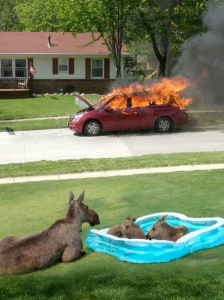
[Explain that!]

[1] Surprisingly, Kant doesn’t go into other senses all that much, and uses the visual to ‘depict’ [recursive pun accidental but also intended] impressions as if 24/sec. slides.
[2] Both have a problem with Time, though. Kant has a ‘a priori synthetic’ categorisation but makes it fundamental for Vernunft to exist at all (as time is required to make sense of, i.e. decompose, impressions) and still doesn’t define time properly, and assuming such a thing as external reality / ‘objects’ as ‘real’ things out there but ‘space’ not existing. Buddhism does without space or external reality altogether, but has inherently cyclical time and an escape from that ..? Possibly I’m conflating various sub-strands here.

Exitespeak: RPA

Please good sirs and ladies, may we get back to serious business and drop the exitespeak of Robotic Process Automation (here), as it’s all very nice you know an abbreviation but when there’s no substance behind it, drop it.

Why dweeb with ‘robots’ in an area where there’s no such thing?
The original demonstrate-once, repeat-indefinitely kind of ‘training’ (one size fits all, mostly) had to do with robots indeed, e.g., in factories where robots have been around for decades now and such guided ‘programming’ (hardly) was easy. Yes, that’s right, actual robots were around. For decades already so referring to that makes you an extreme laggard extraordinaire.
Now, however, the RPA thing is applied to pure algorithmic, doing-away-with-physical stuff. Not robots, eww! they’re things with grease and we only want to deal with nice GUIs. But still we want the ring of being Interesting with our jargon.

Simpletons. Just don’t.
Call it digitisation and you’re done. Or workflow pattern extraction or whatever. But leave the robots to the people that actually have an impact on the world.
At the very least, study this. And realise that the above, is in there – a lot [here].

OK?

And, unrelated to anything, this.

[Designed by not robots you … (censored), just humans with trivial tools – but then, designed: appropriately; Toronto]

Duck the bang, for sustainable bang for the buck

Despite apparent suppression of the signals for purposes of bread and circuses, there is a thing called Downturn looming.
Which, rightfully noted, calls for prep. Of the serious kind. Yes, one needs to get an umbrella when it doesn’t rain yet, or they’ll be out of stock. Or hugely expensive. Or be found loaned from a banker.

Not only train [motto also of 323sqn but huh, and this doesn’t quite match as could somehow be expected …!]], which is about getting used to dealing with the difficult and unexpected so that no matter what’s thrown at you, you know you’ll manage. That’s about resilience, with another leg in having prepared evasive manoeuvres though mostly about having stashes of money to be able to adapt when that’s called for.
But also ensure robustness in the first place, corrective manoeuvres that teflonise your organisation when something hits, though mostly about having stashes of money to be able to weather the storm when that’s called for.

In general, read the above-linked HBR piece and this book – almost forgotten it seems when now, it becomes relevant again.
And then, act. Be prepared. Long-termism is about to win again.

For now, …:

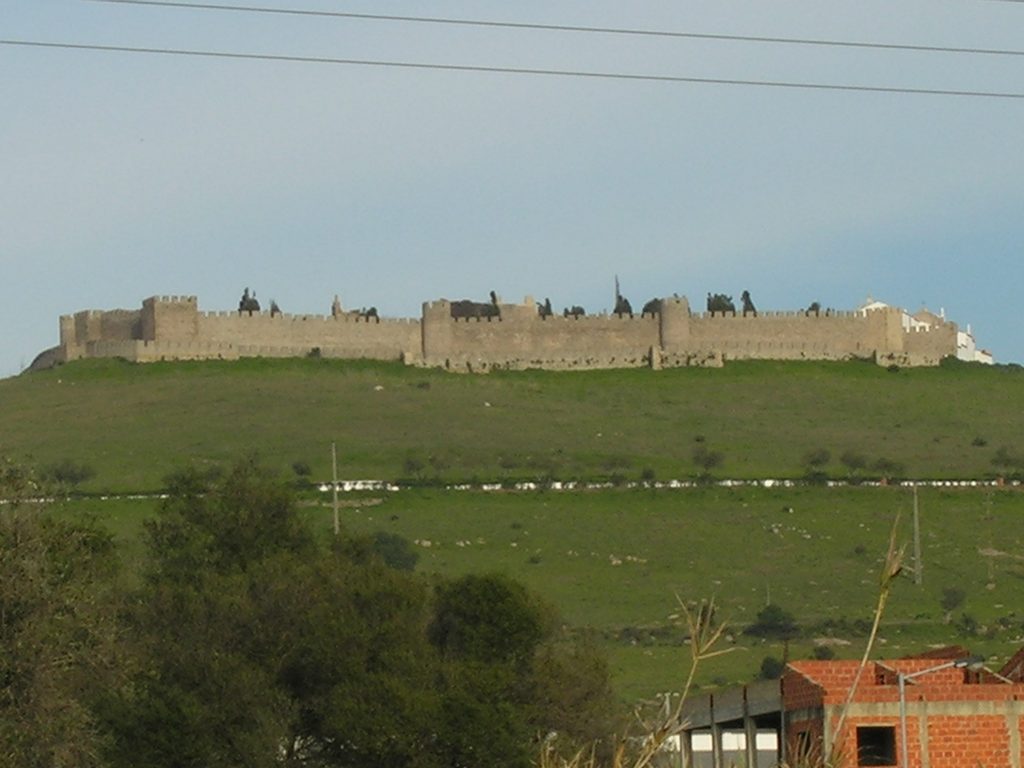
[Before the French have taken it; … sorry, this being Monteriggioni or hey am I sure?]

Friday’s Sobering Thoughts – V

Aha! This Friday’s Thought doesn’t give you as much of a problem, as it gives a Revelation:
That’s why the others moved ahead of you …

As is displayed in, yet again, a Farnham Street’s article. That you should read, and then see how you fit in, you misfit </endearing>, as you moved through life.

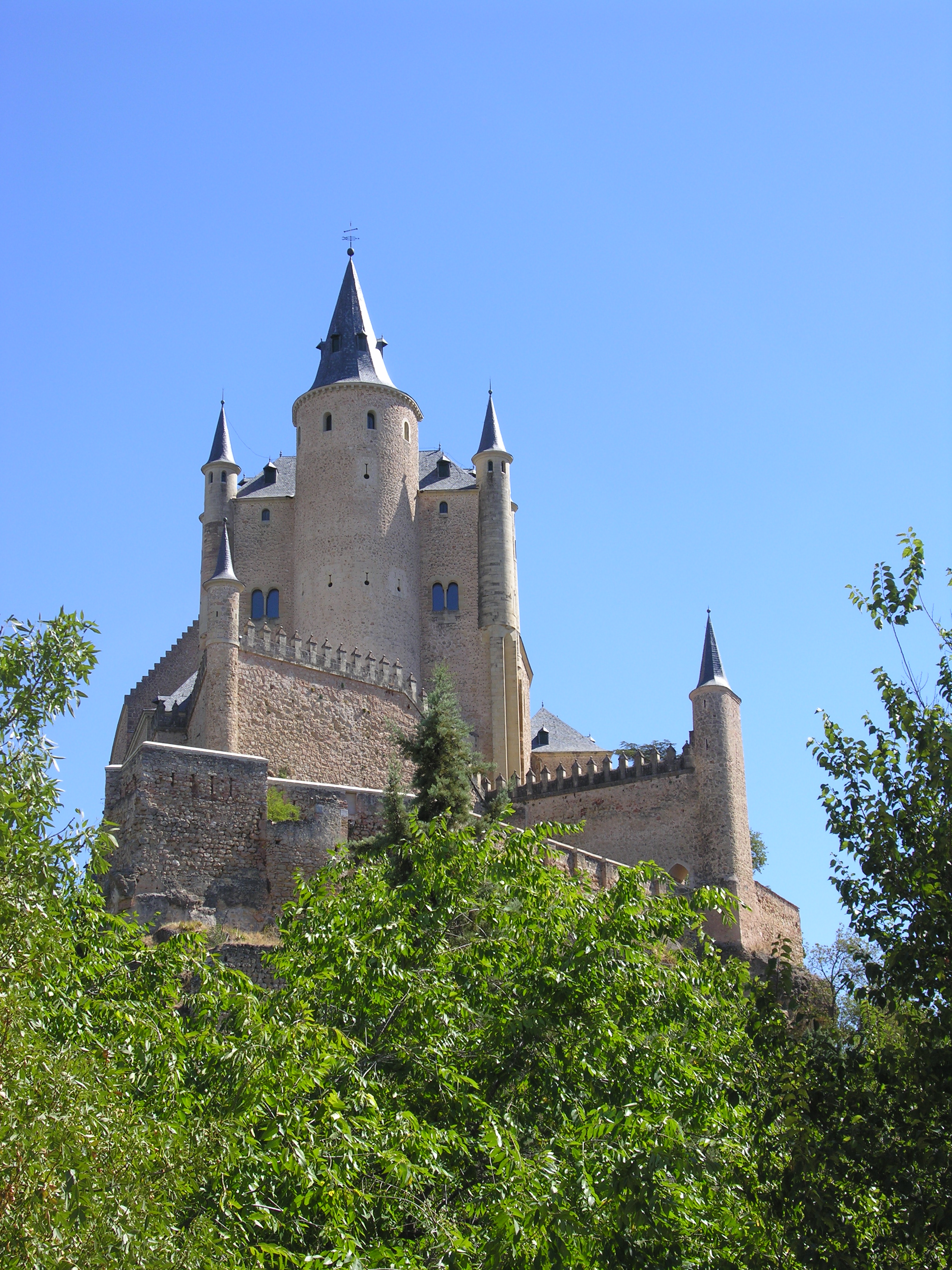
And now, for something completely the same; a picture


[Segovia castle; now I’ve done. Sorry, am done. Not theoretically perfect, but it’s here, this post. With this (own, unedited) picture]

Flooding at it again

Why is this Dutch piece even news, still …? Physical paper ‘data’ leakage, of highly sensitive information intell dare we say. Edited to add, this one (also unreadable to most).

a. No we may not; b/c that is reserved for serious cases not trivia [on a non-trivial scale]
b. Yes we may, but still, why is this newsworthy?
c. Because it isn’t. It’s just flooding. Edited to add, the problem is Huge, as per this Bruce Schneier insight i.e. Truth.

The c. part is the tricky one. On the one hand, dismissing the ‘news’ as being nothing newsworthy, superfluous reporting of trivia. On the other, apparently still necessary.
Necessary that is, to point out that mistakes will always be made. Keep things fresh, even. Otherwise, 1. slacking off will happen, 2. progress will never be made.

I’ll stop now, to not add to the blurb. With:


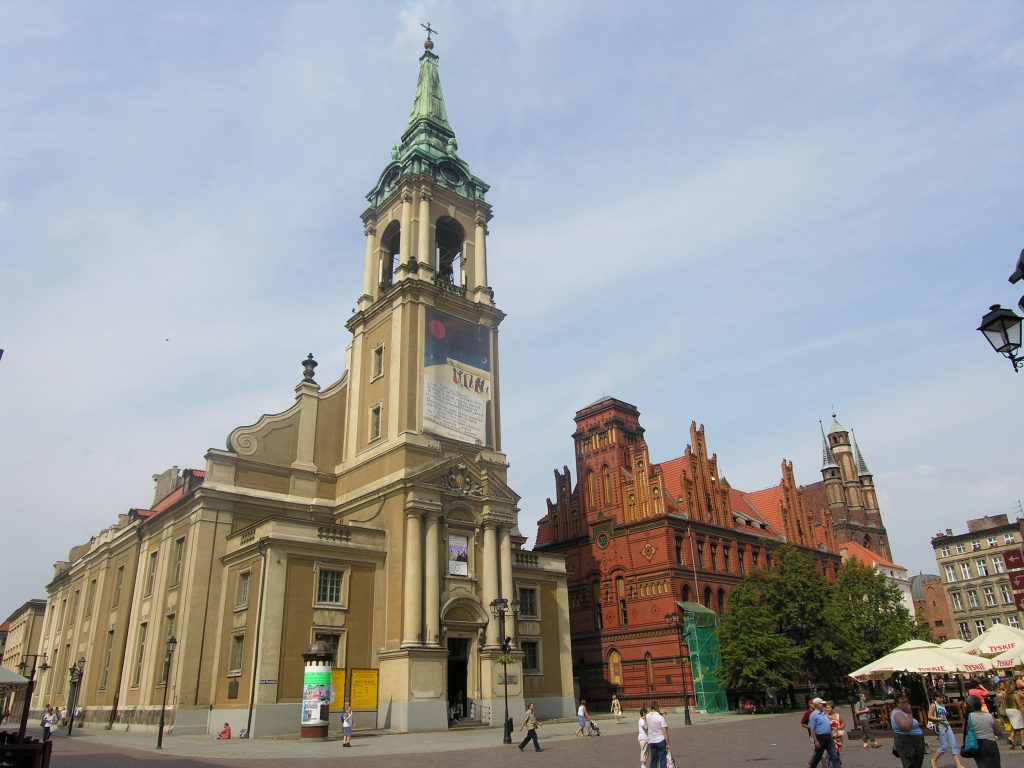
[Sleep tight; Torun]

No Quantum of Reality

Earlier, I mentioned the ‘latest’ developments in physics, being the denial of such a thing as an objective reality ‘out there’. Only your thoughts remain, though they include the whole Universe. This was already summarised in this after the foundation in this, but mostly forgotten as the simple summary was an ouroboros; the original not so much but not fathomable by some simpleton minds, maybe.

Now, new evidence has surfaced – where does it exist? – that actually, that’s right: There is no such thing as objectivity. Thus destroying all that the new physics had achieved so far. Because the end conclusions backtrack to some very deep foundations, that hence also have to be undone, unwound.

Which would be academic, were it not that e.g., quantum crypto based on entanglement based on quantum physics, may also have to be undone as part of the Gödelian ‘nihil sequitur’. If ever there was a summary of the impact of Gödel, there it is in the latter short form.
Same, possibly, with quantum computing. The blizzardly faster it seems to be, the more theoretical problems arise with programming, running, and reading the results of computations with it. Theoretical not in a sense [Sense? What’s that ..?] of ‘only occurring in theory but practically irrelevant’, but of being able to be proven from theory to occur everywhere in practice.

Possibly, the Man will still be proven to be right

Ah. All semantics. Indeed…

In unrelated news:

[What is space-time anyway? Noordwijk]

The wave of risk

A call for comments, on a crazy (?) idea of mine:

If quantum physics is all about probability waves [not ‘particles’] out there, floating in n-dimensional space-time reality (digression(?): the thing we have in our head, not claiming any ‘reality’ like the founder of the idea, Kant, still had – go ahead, dismiss him without any understanding at his level, you physics guru n00b),

why can’t we use the same wave function analogy for a practical purpose like risk management?

Analogy; as you use even ‘waves’ as a metaphor for communications purposes, to get from your brain to someone else’s – how’zat for a miss on maintaining the above inner representation is All (quasi-Buddist style).
Risk management; as there too, in particular re the time dimension, chance and impact functions of certain events are curves, waves, multiplied hence strengthening or cancelling amplitudes wherever. All the event waves running criscross across each other.

And, once a risk actually comes into view (observation), the wave function, ‘risk’, has collapsed into an event.

Just like in reality.
But then, I’m unsure anything can be learnt from this.
But then, you might have a notion of usefulness of such a new approach. Throw in some wavelets here and there, and I’m even happier. You’re invited.

Plus:

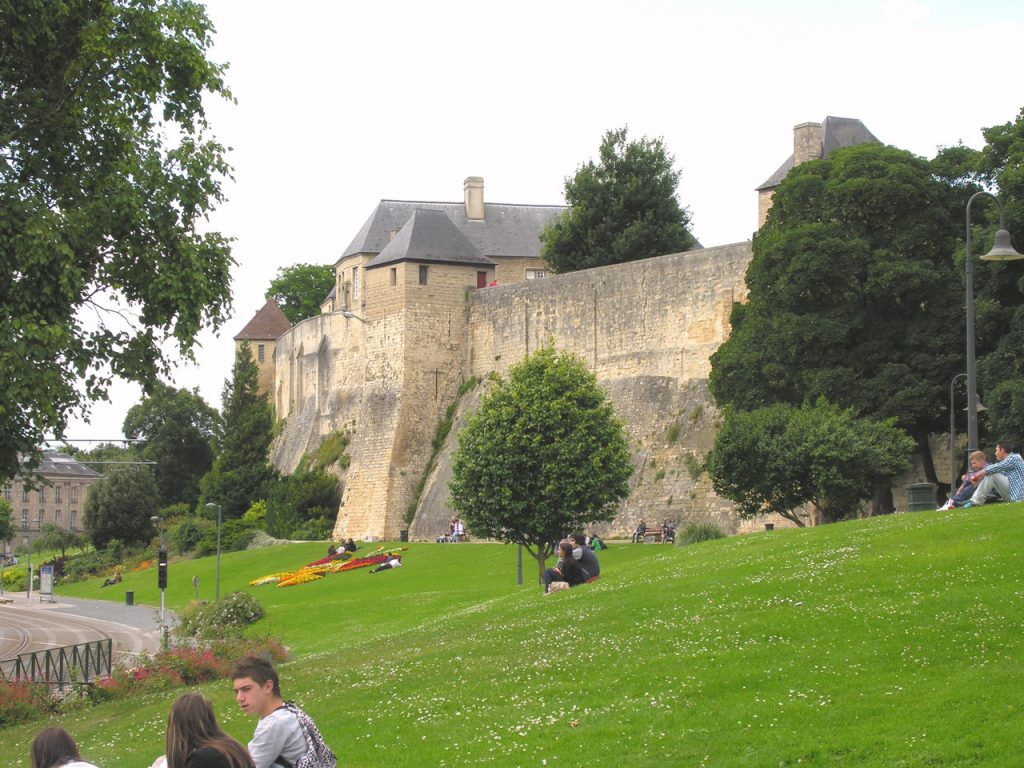
[Double slits everywhere, not for experimentation but hopefully for in-out diode functions only; Caen]

CTC for better ‘cyber’sec

You guessed it; another note on ‘cyber’security, rounding up a couple of ideas that floated by recently.

Which was triggered by this Comment. No, no, not a comment on this blog, don’t be stupid to assume that there has ever been one [rounded up].
Which made me think of actual developments in ‘cyber’ altogether [dammit, readstudy the original and see how much more profound the idea was, and how kindergarten the latter-day application to IT is]. And made me want to coin the term Cut The Crap. There’s the TL;DR for you.
And an intermission pic, since regularity is dulling you too much already [see below] and you read that as cDc which is beyond me:

[Yup, St. Lucia remote office view]
Continue reading “CTC for better ‘cyber’sec”

From here to the end of the Block

Just a reminder, about some news lately on ‘chains and where this might lead…

First, we had this, already based on first indications of class breaks. After which, this.
And now, serious stuff. Not only technology-wise, but impacting societal discussions and actions. Also, just out, this (ht @meneer).

Now, I’m not afraid of such intermediate [I estimate …] drops in progress or confidence. I’m not quite ready to believe some claims … but still would give some products built on ‘chains, the benefit of the doubt even under duress of the claims of zero-value-so-far as linked in the above.

Which brings me to the point of this: What value in ‘chains? [Not Alice but ‘value’; like this]
What parts of the functionality make the difference, and have no loose ends like the ‘improbable’ claim that the above had – as such claims will prove to be of dev/null value (again) every time; only mathematical-logical proof of non-existence of such loose ends will help. Which will fail, since humans are involved i.e., nothing is secure. Time is not your friend.
Nothing is fool-proof anyway because fools are so ingenious. Yes, I call you ingenious.

The call to actions stands: What elements of blockchain ‘technology’ do solve existing problems, and how can we apply these elements ‘irregardless’ of ‘chains’ drawbacks or in other ways ..?

For your viewing pleasure while typing your extensive answers:

[You don’t even need those to be insecure; Voorburg]

Friday’s Sobering Thoughts – IV

For today’s friday’s thoughts, a not too sobering list of thoughts, to be studied. Though I must admit I haven’t, all completely, but will. So should you!

Hanlon’s Razor: Relax, Not Everything is Out to Get You

Mental Models: The Best Way to Make Intelligent Decisions (109 Models Explained)

The Difference Between Amateurs and Professionals

How to Live on 24 Hours a Day: Arnold Bennett on Living a Meaningful Life Within the Constraints of Time

The Feynman Technique: The Best Way to Learn Anything


– and play the bongo!

Second-Order Thinking: What Smart People Use to Outperform

Ten Techniques for Quickly Building Trust With Anyone

16 Leadership Lessons from a Four Star General

How To Think


– for you, how to be Me …

The Work Required to Have an Opinion

Avoiding Stupidity is Easier than Seeking Brilliance


– I know where I am an amateur. Do you?

Richard Feynman: The Difference Between Knowing the Name of Something and Knowing Something

Arthur Schopenhauer on the Dangers of Clickbait


– could be in the Quotes category of yesteryears

Charlie Munger: 5 Simple Notions that Help Solve Problems

The Munger Two Step


– appropriately, a second one; nomen est

How to Fail at Almost Everything and Still Win Big

A Technique for Producing Ideas


– inspirational to me
and finally the eternal, ultra-modern:

All Models Are Wrong

Maverisk / Étoiles du Nord